
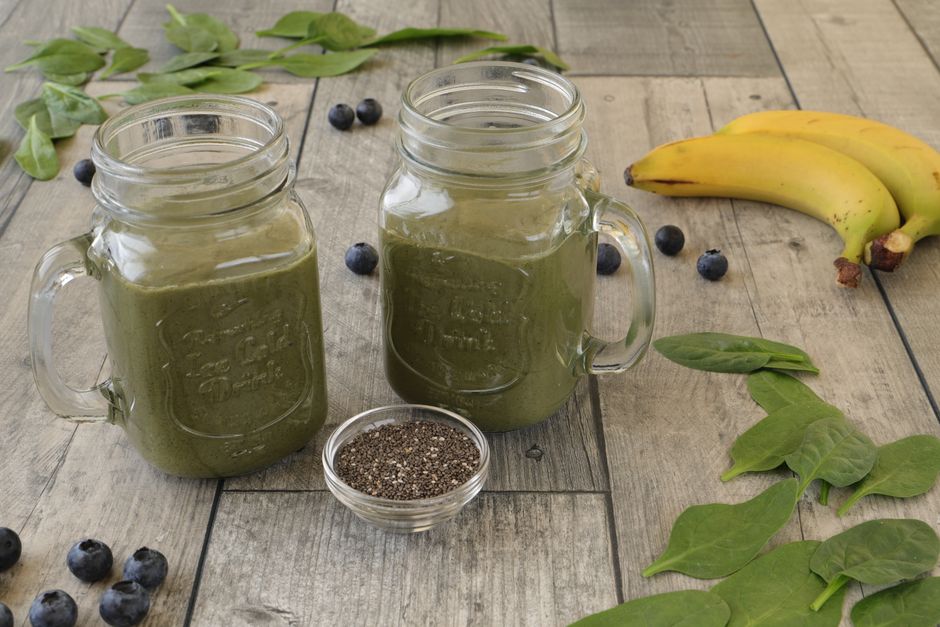
Chia seeds can support weight loss, but not in the way most marketing suggests. They are not a fat burner. What they do is add fiber, protein, and bulk to your meals, which can help you feel full on fewer calories. Used as a small, consistent part of a balanced diet, chia is a useful tool. Used as a magic ingredient on top of the same eating habits, it will change very little.
What Are Chia Seeds and Why Do They Matter for Weight Loss?
Chia seeds are the edible seeds of Salvia hispanica, a plant in the mint family. They are small, oval, and come in black, brown, white, and gray. Nutritionally they are dense: a one-ounce serving (about two tablespoons) delivers roughly 10 grams of fiber, 5 grams of protein, and 9 grams of fat, most of it the omega-3 fat alpha-linolenic acid.
That fiber content is the main reason chia shows up in weight loss conversations. Fiber slows digestion, adds volume to the stomach, and can affect appetite-regulating hormones. Chia also absorbs water and forms a gel-like coating, which increases its physical bulk in the gut.
Two clarifications worth making early. First, chia’s omega-3 is plant-based ALA, not the EPA and DHA found in fish oil. The body converts ALA to EPA and DHA inefficiently, so chia is not a substitute for fatty fish or algae oil. Second, chia is calorie-dense. Two tablespoons contain around 140 calories. Adding it to your diet without adjusting anything else adds calories, not subtracts them.
How Do Chia Seeds Help With Weight Loss?
The mechanism is appetite control, not fat burning. When chia contacts liquid it swells and forms a gel. That gel takes up space in the stomach and slows the rate at which food leaves it. Both effects can reduce how hungry you feel between meals.
Fiber also influences satiety signaling. Fermentable fiber in the colon produces short-chain fatty acids that appear to play a role in appetite regulation. This is established physiology, not a chia-specific effect. Any high-fiber food does something similar.
The protein contributes too. Protein is the most satiating macronutrient per calorie in controlled studies. Five grams is modest, but it adds to the total from a meal.
What the evidence does not support is the idea that chia itself causes measurable fat loss. Some small trials have looked at chia and body weight, and results have been mixed or modest. No large, long-term human trial has shown that adding chia to an otherwise unchanged diet produces meaningful weight loss. The honest position: chia may help you eat less by helping you feel fuller, and that indirect effect is where any benefit comes from.
How to Use Chia for Weight Loss: Practical Steps
Use chia as a replacement or a small addition, not an extra. The most common mistake is sprinkling two tablespoons on top of an already adequate meal and calling it a health upgrade. That adds about 140 calories.
Here is a simple framework:
- Start small. Begin with one tablespoon a day. Chia is high in fiber, and a sudden jump can cause bloating, gas, or cramping. Increase gradually over a week or two.
- Always add liquid. Dry chia can swell in the throat or esophagus and cause discomfort or, rarely, a blockage. Soak it or mix it into something wet. Drink water with it.
- Use it to replace, not add. Swap chia pudding for a higher-calorie breakfast. Use a chia gel to thicken a soup instead of cream. Stir it into yogurt you were already eating.
- Time it before meals. Some people find a chia gel or chia drink 20 to 30 minutes before a meal reduces how much they eat. The evidence for this specific timing is limited, but it is a reasonable experiment.
- Track total calories. Chia does not override energy balance. If you eat more calories than you burn, chia will not change the outcome.
One tablespoon of chia mixed into a cup of water or milk and left for 15 minutes makes a basic gel. That gel can go into smoothies, oatmeal, or yogurt. Two tablespoons in half a cup of liquid overnight makes a pudding.
What Does the Research Actually Show?
The research on chia and body weight is thinner than the marketing implies. Some small studies have reported reduced appetite or lower post-meal blood sugar after chia consumption. Others have found no significant effect on weight or body composition over several weeks.
A commonly cited trial looked at chia in people with type 2 diabetes and found improvements in some cardiovascular markers but no significant change in body weight. Other short trials in overweight adults have produced inconsistent results on satiety and food intake.
What is well established is that higher fiber intake is associated with lower body weight and better weight maintenance in large population studies. The mechanism is plausible and the association is consistent. But that does not mean chia specifically outperforms other fiber sources. Oats, beans, lentils, and vegetables deliver fiber with the same physiological effects.
Treat chia as one fiber-rich food among many. It is convenient, shelf-stable, and easy to add. It is not superior to other seeds or legumes in any demonstrated way for weight loss.
How Many Chia Seeds Should You Eat Per Day?
There is no official recommended daily amount of chia for weight loss. General guidance from nutrition sources suggests one to two tablespoons per day is a reasonable range for most adults. That delivers roughly 5 to 10 grams of fiber, which is a meaningful contribution toward the general fiber target of about 25 to 38 grams per day for adults.
Going higher is not automatically better. Very high fiber intake without adequate fluid can cause constipation or bloating. People with swallowing difficulties should avoid dry chia entirely. Anyone with a history of bowel obstruction or narrowing should talk to a doctor before adding large amounts of any high-fiber seed.
No clinical guidelines currently exist for chia intake in pregnant women, breastfeeding women, or children. For those groups, follow general dietary guidance and consult a clinician if unsure.
What Are the Risks and Limits of Chia for Weight Loss?
Chia is generally well tolerated, but it is not risk-free. The most documented concern is choking or esophageal blockage from dry chia. There are case reports of chia causing obstruction when eaten dry in large amounts or with insufficient fluid. Always soak it or eat it with liquid.
Chia is also calorie-dense. Two tablespoons contain about 140 calories, so it is easy to overdo. People who add chia without reducing anything else often gain weight rather than lose it.
Some people experience digestive discomfort when starting chia, especially at higher doses. Start low and increase slowly.
Chia can also affect how some medications are absorbed because of its fiber and gel-forming properties. If you take medication regularly, particularly for diabetes or with a narrow therapeutic window, separate chia from your medication by a couple of hours and ask your pharmacist.
The biggest limit is conceptual. Chia is a food, not a treatment. It does not override a calorie surplus, it does not target fat tissue, and it does not replace the fundamentals: adequate protein, whole foods, regular movement, and sleep.
How Does Chia Compare to Other Weight Loss Foods?
Chia is convenient but not unique. Here is a straightforward comparison of common fiber-rich foods per typical serving.
| Food | Typical Serving | Fiber (g) | Protein (g) | Calories |
|---|---|---|---|---|
| Chia seeds | 2 tbsp (~28 g) | ~10 | ~5 | ~140 |
| Ground flaxseed | 2 tbsp (~14 g) | ~4 | ~3 | ~75 |
| Rolled oats | 1/2 cup dry (~40 g) | ~4 | ~5 | ~150 |
| Cooked lentils | 1 cup (~200 g) | ~15 | ~18 | ~230 |
| Black beans | 1 cup cooked (~170 g) | ~15 | ~15 | ~225 |
Chia delivers the most fiber per calorie of the seeds listed, but lentils and beans deliver more fiber and protein per serving at a similar calorie cost. Flaxseed is lower in calories per tablespoon but also lower in fiber. The right choice depends on what you will actually eat consistently.
Chia’s real advantage is ease. It needs no cooking, stores for months, and mixes into almost anything. That convenience matters more for adherence than any small nutritional edge.
Frequently Asked Questions
How much chia should I eat a day for weight loss?
One to two tablespoons per day is a reasonable range for most adults, though no official guideline exists for weight loss. Start with one tablespoon and increase slowly to avoid digestive discomfort.
Do chia seeds actually help you lose weight?
They may help indirectly by increasing fullness and fiber intake, which can reduce how much you eat. No large trial has shown that chia alone causes meaningful weight loss without other dietary changes.
Can I eat chia seeds dry?
No, it is safer to soak them or mix them into a wet food first. Dry chia can swell in the throat or esophagus and has caused blockages in reported cases.
When should I take chia seeds for weight loss?
Some people take a chia gel 20 to 30 minutes before a meal to reduce appetite, but evidence for this specific timing is limited. Any time of day works as long as you account for the calories.
