
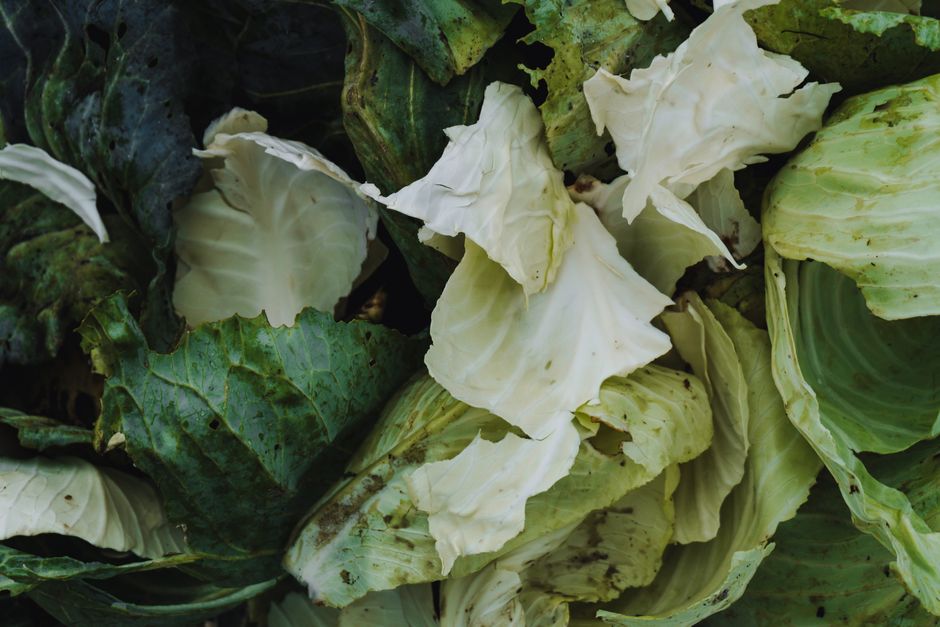
Cabbage leaf wraps are a traditional home remedy for swollen, painful joints and breasts. The practice involves chilling raw cabbage leaves, rolling them to break the cell walls, and applying them directly to the skin for about 20 minutes at a time. It is widely used in folk medicine and in some European hospitals, but the clinical evidence for it is limited and mixed.
How To Use Cabbage Leaves For Inflammation
The method is simple. Chill a few large outer leaves in the refrigerator for at least 30 minutes. Cut out the thick central stem so the leaf lies flat. Roll each leaf with a rolling pin or press it firmly with your hands until the surface looks slightly wet and bruised. This ruptures the plant cells and releases the leaf’s moisture and sulfur-containing compounds.
Place the prepared leaf directly on the skin over the swollen area. Wrap it in place with a thin cloth or soft bandage. Leave it on for about 20 minutes. Some traditional instructions say up to an hour, but shorter is generally safer for the skin. Remove the leaf, rinse the area, and pat dry. You can repeat this two or three times a day.
Use fresh leaves each time. A leaf that has warmed to body temperature and dried out has lost most of what made it useful. Do not apply a leaf to broken skin, an open wound, or a rash.
That is the whole technique. What follows is a more honest look at whether it does anything, and where the evidence stands.
What Does Cabbage Actually Contain That Might Help?
Cabbage is a cruciferous vegetable, and like its relatives broccoli and Brussels sprouts, it contains a group of sulfur-based compounds called glucosinolates. When the plant’s cells are damaged — by chopping, chewing, or rolling — an enzyme called myrosinase converts these compounds into other substances, including isothiocyanates. These are the same compounds that give cabbage and mustard their sharp smell.
In laboratory studies, some isothiocyanates have shown anti-inflammatory activity. Cabbage is also a source of vitamin C and vitamin K, and the leaf holds water well, which is part of why a cold, damp leaf feels soothing on hot, swollen skin.
Here is the important caveat. Activity in a petri dish or in isolated cell cultures does not automatically translate into a clinical effect on a human joint or breast. The concentration of these compounds in a single leaf, and how much can actually cross intact skin, is not well established. The cooling and compression of the leaf itself may account for much of the relief people report.
What Does the Research Show About Cabbage Leaf Wraps?
The evidence is thin. Most of what exists is small, older, and focused on one specific use: breast engorgement in breastfeeding women.
Some studies from the 1990s and 2000s compared chilled cabbage leaves with cold packs or with routine care for painful breast engorgement. Results were mixed. Some found cabbage leaves reduced pain and swelling; others found no meaningful difference between cabbage and a simple cold compress. Many of these studies were small and had design limitations, so they cannot support a strong conclusion either way.
For joint inflammation — arthritis, sprains, or general swelling — the picture is even weaker. There is no body of high-quality human trials showing that cabbage leaf wraps reduce joint inflammation or improve arthritis outcomes. What exists is tradition, anecdotal reports, and the general principle that cold therapy can temporarily ease pain and swelling.
So the honest position is this: cabbage leaf wraps are not proven to reduce inflammation through any specific chemical action. They may provide temporary comfort, largely through cooling and the mild pressure of the wrap. That is a real effect, but it is not the same as treating a disease.





Does Cold Therapy Itself Reduce Swelling?
Yes, and this part is well established. Applying cold to an injured or inflamed area causes blood vessels near the surface to narrow. This can reduce blood flow to the area and limit some of the fluid buildup that causes visible swelling. Cold also slows nerve conduction, which is why it numbs pain.
This is why a chilled cabbage leaf feels good. It is cold and damp, and it holds its temperature for a while. A bag of frozen peas wrapped in a towel does the same job. The cold is doing the work, not necessarily the cabbage.
Cold therapy is generally recommended for acute injuries in the first day or two. For chronic conditions like osteoarthritis, cold can still ease pain temporarily, but it does not change the underlying disease. And cold is not appropriate for every situation — people with poor circulation, numbness, or certain vascular conditions should be cautious with cold applications.
Is Cabbage Leaf Wrap Safe?
For most people with intact skin, a cabbage leaf wrap is low risk. The main concerns are skin irritation and, rarely, an allergic reaction.
Things to watch for:
- Redness, itching, or a rash where the leaf touched the skin
- Worsening pain or swelling after application
- Any sign of infection — warmth, pus, fever, or red streaks
Do not use cabbage leaves on broken skin, surgical wounds, or areas with a rash. If you have a known allergy to cabbage or other cruciferous vegetables, avoid it. Cabbage is high in vitamin K, but applied to the skin it is not a meaningful source — this matters only if you are thinking about eating large amounts while on blood-thinning medication, which is a separate question.
If swelling is severe, sudden, one-sided, or accompanied by fever or difficulty breathing, do not treat it at home. Those are signs to seek medical care.
When Should You Not Rely on Cabbage Leaves?
Cabbage leaves are a comfort measure, not a treatment for disease. Do not use them in place of medical care for any of the following:
- Joint pain that is persistent, worsening, or accompanied by redness and heat
- Breast swelling with fever, flu-like symptoms, or a red, wedge-shaped area — this can signal mastitis, which may need antibiotics
- Swelling after an injury where you cannot bear weight or move the joint
- Any swelling that comes on suddenly or affects only one leg
If you are breastfeeding and dealing with engorgement, a cold cabbage leaf is one of several comfort options some clinicians mention. But persistent or painful breast problems should be evaluated by a healthcare provider. Mastitis that goes untreated can progress.
How Does It Compare With Other Home Options?
If your goal is temporary relief from swelling and pain, several simple measures work on the same principle — cold and rest.
| Method | What it does | Evidence |
|---|---|---|
| Chilled cabbage leaf | Cools and lightly compresses the area | Limited, mixed |
| Cold pack or frozen vegetables | Cools the area, reduces blood flow | Well established for acute injury |
| Elevation | Helps fluid drain from the area | Well established |
| Rest | Prevents further irritation | Well established |
Notice that the cabbage leaf does not do anything the others cannot. Its appeal is that it is cheap, available, and easy to use. That is a fair reason to try it. It is not a reason to expect it to outperform a cold pack.
What Is the Bottom Line?
Cabbage leaf wraps are a low-risk traditional remedy that may offer temporary comfort for swollen, painful areas. The relief people feel is most likely from the cold and the gentle compression, not from any proven anti-inflammatory chemical effect of the cabbage itself.
The clinical evidence is limited, and no high-quality trials support using cabbage leaves to treat arthritis, joint disease, or any inflammatory condition. If you want to try it for minor swelling or breast engorgement, the method described above is reasonable and safe for most people with intact skin. Just do not let it delay real medical care when symptoms are serious or persistent.
Frequently Asked Questions
How long should I leave cabbage leaves on for inflammation?
About 20 minutes per application is a common and safe approach. You can repeat it two or three times a day with fresh, chilled leaves.
Do cabbage leaves actually reduce inflammation?
There is no strong clinical evidence that cabbage leaves reduce inflammation through a chemical effect. Any relief is most likely from the cold temperature and light compression.
Can I use cabbage leaves for arthritis pain?
You can try it for temporary comfort, but no quality studies show it treats arthritis or changes the disease. Persistent joint pain should be evaluated by a doctor.
Is it safe to use cabbage leaves on my skin?
For most people with intact skin, it is low risk, though irritation or allergic reactions can occur. Avoid broken skin, wounds, and rashes, and stop if you notice redness or itching.
