
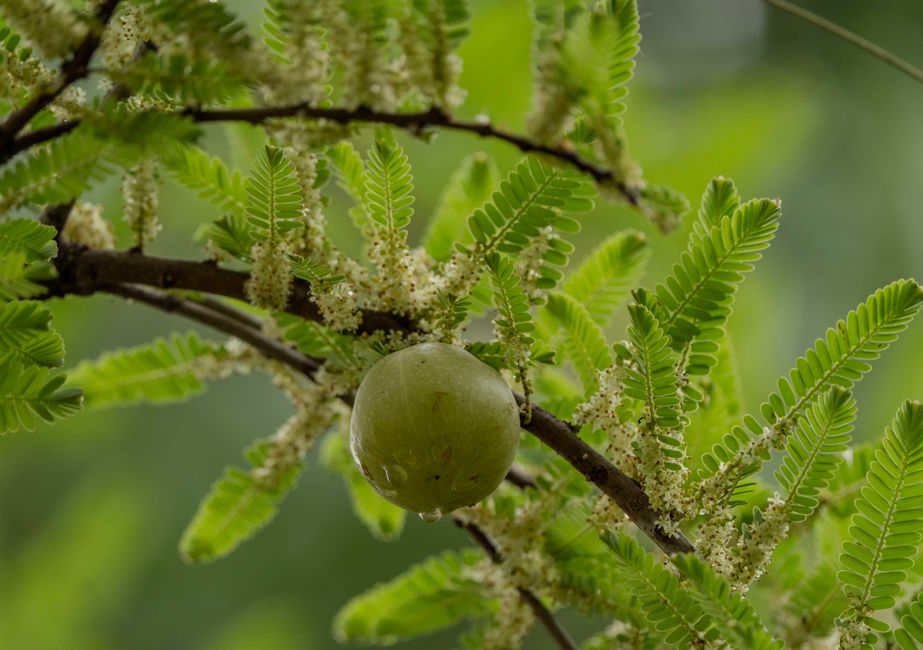
Bhumi amla (Phyllanthus niruri) is a small leafy plant used for centuries in Ayurvedic and traditional medicine. It is not a proven treatment for fatty liver disease. No clinical trial has shown that bhumi amla reverses fatty liver in humans, and no regulatory body has approved it for that purpose. What exists is laboratory and animal research suggesting possible effects on liver enzymes and fat metabolism, plus a long history of traditional use. This article explains what the evidence actually shows, how the plant is traditionally prepared, and where the honest limits are.
What Is Bhumi Amla and Why Is It Linked to Liver Health?
Bhumi amla is the common name for Phyllanthus niruri, a weed-like plant that grows in warm climates around the world. It goes by many names: stonebreaker, gulf leaf flower, and in Ayurveda, bhumyamalaki. The whole plant — leaves, stem, and root — is used in traditional preparations.
The liver connection comes from two places. First, traditional Ayurvedic texts describe the plant as a liver tonic and use it for jaundice and other liver complaints. Second, modern laboratory studies have found that extracts of the plant contain compounds with antioxidant and anti-inflammatory activity in test tubes and animal models.
That is where the solid ground ends. Antioxidant activity in a petri dish does not automatically translate to a benefit in a human liver. This distinction matters because much of the marketing around bhumi amla for fatty liver skips over it entirely.
What Does the Evidence Actually Show for Fatty Liver?
The evidence for bhumi amla in fatty liver is preliminary. Most of it comes from animal studies and small laboratory experiments, not from large, well-controlled human trials.
Some animal studies have reported improvements in liver enzyme levels and reductions in liver fat accumulation when Phyllanthus niruri extract was given to rodents fed a fat-rich diet. These findings are interesting but cannot be directly applied to people. Rodent metabolism differs from human metabolism, doses in animal studies often do not match what a person would take, and animal results frequently fail to replicate in humans.
Human research is thin. Some small studies have looked at Phyllanthus species in people with hepatitis B, with mixed results. For fatty liver specifically — whether alcohol-related or non-alcohol-related — there is no large, high-quality human trial confirming that bhumi amla reduces liver fat, improves liver scarring, or changes the course of the disease.
That gap is not a minor detail. Fatty liver disease is a real condition with real progression risk, and the treatments that do have evidence behind them are not always the ones people hear about first.
How Is Bhumi Amla Traditionally Used?
Traditional use is not the same as proven use, but understanding how the plant is prepared helps you evaluate products and avoid harm. In Ayurvedic practice, bhumi amla is typically taken as a powder made from the dried whole plant, as a decoction (a tea made by simmering the plant in water), or as a juice from fresh leaves.
Common traditional forms include:
- Powder (churna): dried plant ground into a fine powder, often mixed with water or honey
- Decoction: the plant simmered in water and strained
- Fresh juice: pressed from the leaves
- Capsules and extracts: modern commercial forms, which vary widely in strength and quality
Traditional texts describe general approaches to dosing, but these are not clinical guidelines. There is no official recommended dose for bhumi amla for fatty liver established by any regulatory or medical authority. Commercial products vary enormously in how much actual plant material they contain, and independent testing has repeatedly found that herbal supplements often do not match their labels.
If you are considering it, the responsible approach is to talk to your doctor first — especially if you take any medication, because herbal products can interact with drugs processed by the liver.
Can Bhumi Amla Reverse Fatty Liver on Its Own?
No. There is no evidence that bhumi amla alone reverses fatty liver, and treating it as a stand-alone solution is the most common mistake people make.
Fatty liver disease — particularly non-alcoholic fatty liver disease (NAFLD), now often called metabolic dysfunction-associated steatotic liver disease (MASLD) — is driven mainly by excess fat accumulation in liver cells, often linked to insulin resistance, excess body weight, and metabolic factors. The interventions with the strongest evidence are not herbal. They are weight loss, dietary change, physical activity, and management of conditions like diabetes and high cholesterol.
Weight loss is the single best-supported approach. Research consistently shows that losing a meaningful amount of body weight — roughly 5% to 10% of starting weight — can reduce liver fat and improve liver inflammation in many people with NAFLD. That is a well-established finding across multiple studies.
Bhumi amla, by contrast, has no comparable human evidence. Presenting it as a replacement for these measures would be misleading. At best, it might be considered a complementary traditional practice alongside proven lifestyle changes — and even that is a stretch given the thin evidence.
What Are the Safety Concerns and Interactions?
Bhumi amla is generally described as well tolerated in traditional use, but “generally” is doing a lot of work in that sentence. The safety data from rigorous human trials is limited, which means uncommon or long-term effects are not well characterized.
Some reported concerns include:
- Digestive upset: nausea, stomach discomfort, or loose stools have been reported with some herbal preparations
- Blood sugar effects: some laboratory and animal data suggest Phyllanthus species may affect blood glucose, which matters for people with diabetes or those on glucose-lowering medication
- Blood pressure effects: some animal studies suggest possible effects on blood pressure, relevant for people on blood pressure medication
- Liver interactions: because the plant is promoted for liver health, it is easy to assume it is harmless to the liver — that assumption is not supported by strong safety data, and some herbal products have caused liver injury
Pregnancy and breastfeeding deserve special caution. There is no reliable safety data for bhumi amla in pregnant or breastfeeding women, and it should not be assumed safe in these groups. No clinical guidelines currently exist for its use during pregnancy or breastfeeding.
If you take prescription medication — especially for diabetes, blood pressure, or blood thinning — talk to your doctor or pharmacist before starting any herbal supplement.
What Actually Helps Fatty Liver?
The approaches with real evidence behind them are unglamorous but effective. They are worth stating plainly because they are what actually moves the needle.
Losing excess weight is the best-supported intervention. Gradual, sustained weight loss through diet and activity has the strongest evidence for reducing liver fat and improving liver health.
Changing what you eat matters. Reducing added sugars, especially fructose-sweetened drinks, and limiting highly processed foods is widely recommended. The Mediterranean-style eating pattern — rich in vegetables, legumes, whole grains, fish, and olive oil — has the most consistent research support for liver and metabolic health.
Moving more helps even without weight loss. Regular physical activity has been linked to reduced liver fat independent of changes on the scale.
Managing related conditions — diabetes, high blood pressure, high cholesterol — is part of the picture, because fatty liver rarely travels alone.
Avoiding alcohol is essential if alcohol is contributing to the condition, and it is a reasonable precaution for anyone with liver disease.
None of this is exciting. But it is what the evidence supports. Bhumi amla may have a place in traditional practice, but it does not replace any of the above.
How Should You Approach Bhumi Amla Realistically?
If you want to try bhumi amla, do it with clear eyes. Understand that you are using a traditional remedy with preliminary evidence, not a proven treatment.
Reasonable steps include:
- Talk to your doctor first, especially if you have diagnosed liver disease or take any medication
- Choose products from reputable manufacturers, understanding that quality control in herbal supplements is inconsistent
- Do not stop or replace prescribed treatment or proven lifestyle measures
- Watch for digestive upset or other new symptoms and stop if they occur
- Tell your doctor about any herbal product you take, so it is part of your medical picture
The most useful thing you can do for fatty liver is not to find the right herb. It is to address the metabolic factors driving the condition, with your doctor’s guidance. Bhumi amla is, at most, a small side note in that larger effort.
Frequently Asked Questions
Does bhumi amla cure fatty liver?
No. There is no clinical evidence that bhumi amla cures or reverses fatty liver in humans, and it is not an approved treatment for the condition.
How much bhumi amla should I take for fatty liver?
No official recommended dose for fatty liver has been established by any regulatory or medical authority. Any dose you see online is based on traditional practice, not clinical guidelines, so discuss it with your doctor first.
Is bhumi amla safe to take every day?
Long-term safety data in humans is limited, so daily use cannot be assumed safe. Talk to your doctor before regular use, especially if you take medication or have liver disease.
Can I take bhumi amla with my liver medication?
You should check with your doctor or pharmacist before combining bhumi amla with any medication, because herbal products can interact with drugs processed by the liver.
