
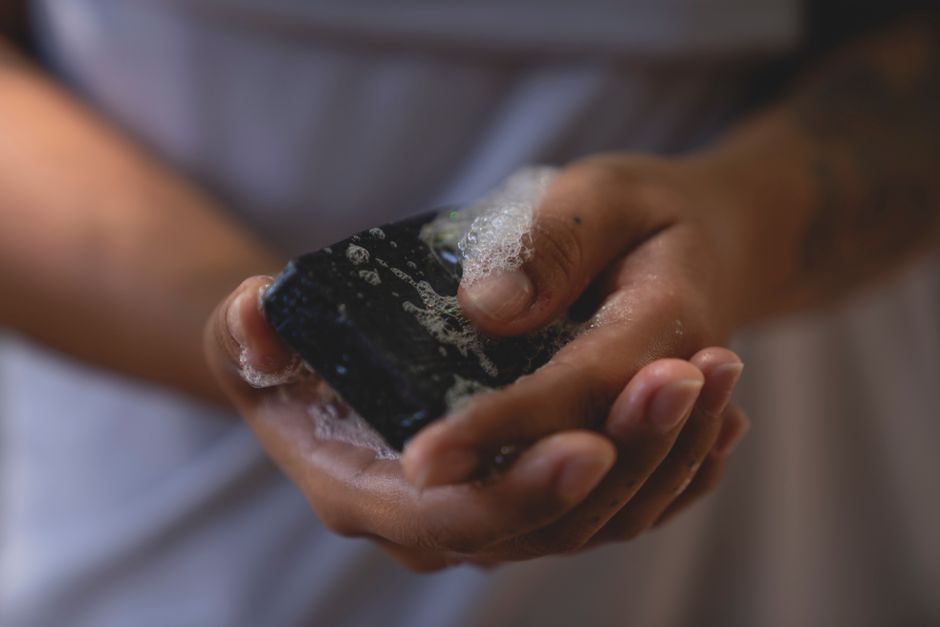
Bar soap lasts longest when it stays dry between uses. Store it on a draining dish with space for air to move around it, lather it in your hands or on a washcloth rather than holding it under running water, and keep unused bars wrapped in a cool, dry place until you need them. Those three habits — dry storage, brief lather, and proper backup storage — do more for bar longevity than any brand choice.
Bar soap is one of the few household products where the cheapest handling habits beat the fanciest product. A bar that dissolves in a puddle lasts a fraction of the time of one that dries out between showers. Here is how to get the most from every bar, and what the evidence actually says about how soap works.
How Does Bar Soap Actually Clean Your Skin?
Soap molecules have two ends that behave very differently. One end is attracted to water. The other end is attracted to oils and dirt. This dual nature is why soap works at all.
When you lather, soap molecules surround oil and dirt particles. The water-loving ends face outward, toward the rinse water. The oil-loving ends face inward, trapping grime. Water then carries the whole package away. This is called emulsification, and it is a well-established principle of chemistry.
Lather itself is mostly a visual signal. Foam does not clean anything by itself. The mechanical action of rubbing soap across your skin, plus the chemical action of the soap molecules, does the work. A modest lather is plenty. More suds do not mean more cleaning.
One clarification worth knowing: bar soap is not inherently less hygienic than liquid soap. Research has generally found that bar soap can transfer bacteria between users, but the amounts transferred are small and the bacteria do not appear to survive well on the dry bar surface. The bigger practical issue with bar soap is shared use in public settings, where liquid soap is often preferred. At home, a bar that drains and dries is a reasonable choice.
How To Use Bar Soap Lather Store And Make It Last
The single biggest factor in bar soap lifespan is water contact time. Every minute a bar sits wet, it dissolves. The fix is simple: minimize wet time and maximize dry time.
Here is a practical routine that works for most people:
- Wet your hands or washcloth first, then rub the bar briefly. Ten to fifteen seconds of rubbing is usually enough to build a workable lather.
- Set the bar down immediately instead of holding it under the running water while you wash. This one habit can meaningfully extend a bar’s life.
- Lather in your hands or on a cloth rather than scrubbing the bar directly against your body. Direct body rubbing uses more soap per wash and wears the bar down faster.
- Rinse the bar briefly after use if it feels slick or has visible residue, then let it drain.
- Keep the bar out of the shower spray between uses. A spot away from the water stream matters more than most people realize.
A washcloth or loofah changes the math. Soap on a cloth lathers with less product and reaches more surface area. If you use a cloth, rinse and dry it between uses — a damp cloth left in the shower is a better environment for microbial growth than the soap itself.
Where Should You Store Bar Soap So It Lasts?
Store bar soap on a dish that drains. That is the whole principle. A dish with raised ridges, slots, or a slanted surface lets water run off the bar instead of pooling underneath it.
A soap that sits in a puddle softens from the bottom up. Soft soap dissolves faster, cracks, and can develop a mushy layer that washes away with the next use. A draining dish prevents this.
Placement matters too. Keep the dish away from the direct line of the showerhead. Soap that gets sprayed every time someone showers will not last, no matter how good the dish is. A shelf or ledge outside the spray zone is ideal.
For unused bars, keep them wrapped and store them in a cool, dry spot. Soap absorbs moisture from humid air. A bathroom cabinet is often too humid. A linen closet or bedroom drawer works better. Do not stack unwrapped bars against each other in a damp space — they can stick together and trap moisture.
One more point: soap does not expire in the way food does. A dry, wrapped bar stored well can last for years. The fragrance may fade over time, and the bar may dry out and crack, but it will still clean. There is no safety deadline for bar soap stored dry.
Does Bar Soap Type Affect How Long It Lasts?
Yes, and the difference is real. Soap hardness and ingredient composition affect how quickly a bar dissolves.
Harder bars — often made with more saturated fats like tallow or palm oil — tend to last longer than softer bars made with more unsaturated oils. Glycerin soaps are typically softer and dissolve faster. That is a trade-off many people accept because glycerin soaps can feel gentler on skin.
Milled soaps, sometimes labeled “triple-milled,” are processed to remove excess water and air. The result is a denser, harder bar that generally lasts longer per gram than a standard poured soap. This is a well-documented difference in soap manufacturing, not a marketing claim.
Antibacterial bar soaps are a separate category. The FDA has determined that consumer antiseptic washes containing certain active ingredients — including triclosan — are not generally recognized as safe and effective for over-the-counter use, and these ingredients were removed from consumer wash products. Plain soap and water remain the standard recommendation for handwashing. For everyday body washing, plain bar soap is sufficient for most people.
What About Skin Dryness From Bar Soap?
Some bar soaps can dry out skin, especially in people with sensitive or already-dry skin. Traditional soaps have a higher pH than skin’s natural acid mantle. That higher pH can strip oils and leave skin feeling tight.
Syndet bars — synthetic detergent bars — are formulated at a lower pH and are often marketed as gentler. Some studies suggest they are less irritating to skin than traditional alkaline soaps, though individual responses vary. If a bar leaves your skin tight or flaky, a syndet bar or a soap with added moisturizers may suit you better.
For most people without skin conditions, plain bar soap used briefly and rinsed well is fine. The key is not leaving soap on the skin and not over-washing. A short wash followed by a thorough rinse and a moisturizer if needed is a reasonable approach.
Common Bar Soap Mistakes That Waste Product
Most wasted soap comes down to a handful of habits. Fixing them is free.
- Leaving the bar in the water stream — the most common cause of fast dissolution.
- Using a non-draining dish — a flat ceramic dish without drainage keeps the bar wet from below.
- Over-lathering — more suds do not mean cleaner skin. A brief lather is enough.
- Storing bars in the shower — humid air softens unused bars over time.
- Stacking wet bars — trapped moisture between bars speeds breakdown.
None of these require buying anything new except, possibly, a draining soap dish. A cheap plastic or wooden slatted dish does the job.
Frequently Asked Questions
How long does a bar of soap last?
It varies widely with bar size, hardness, and how often it is used, but a typical bar used daily with good draining storage can last several weeks. A bar left sitting in water may last only a fraction of that time.
Is it bad to leave bar soap in water?
Yes, for the soap. Standing water dissolves the bar from the bottom up and softens it, so it wears away faster. It does not make the soap unsafe, but it wastes product.
Can bacteria grow on bar soap?
Some bacteria can transfer to a bar during use, but research generally shows they do not survive well on a dry bar and transfer in small amounts. A bar that drains and dries between uses is a reasonable choice for home use.
Does bar soap expire?
Bar soap does not have a safety expiration date when stored dry. The fragrance may fade and the bar may crack over time, but it will still clean.
