

Apple cider vinegar will not remove acne scars. That is the first thing to know before you try it. There is no clinical evidence that vinegar erases scars or rebuilds the skin tissue involved in scarring. What it can do, in a limited way, is help with surface discoloration left behind after a pimple heals — and even that comes with real risks if you use it carelessly.
If you still want to try it, the safer approach is to dilute it heavily, never apply it to broken or raw skin, test it on a small patch first, and stop at the first sign of irritation. Vinegar is an acid, and undiluted apple cider vinegar can cause chemical burns. The steps below explain how to use it with more caution than most internet advice suggests.
What Is The Difference Between Acne Scars And Acne Marks?
Most people who think they have acne scars actually have post-inflammatory hyperpigmentation, or dark marks left after a breakout heals. The distinction matters because it changes what any treatment can realistically do.
True acne scars are structural changes in the skin. They include ice-pick scars, rolling scars, and boxcar scars — all forms of indentation where collagen was lost during deep inflammation. There are also raised scars called keloids. These are changes in the skin’s architecture, not just color.
Post-inflammatory hyperpigmentation is different. It is flat, it is a color change, and it fades on its own over months as skin cells turn over. Darker skin tones are more prone to it. So are people who pick at their skin or spend time in the sun without protection.
This matters for apple cider vinegar. Vinegar cannot fill in an indented scar. Nothing you apply at home can rebuild lost collagen structure. For true scars, the options that have evidence behind them are procedures done by a dermatologist — things like laser resurfacing, microneedling, chemical peels, and in some cases injectable fillers. Those are clinical decisions, not home remedies.
For flat dark marks, the picture is more hopeful, and some of the same procedures can help. But the marks also fade with time and sun protection alone.
Does Apple Cider Vinegar Actually Fade Acne Marks?
No clinical evidence currently confirms that apple cider vinegar fades acne marks. There are no large human trials showing it works for post-inflammatory hyperpigmentation or scars.
The idea comes from vinegar’s acidity. Apple cider vinegar contains acetic acid, and acids like glycolic and salicylic acid are used in skincare to encourage skin cell turnover. The logic runs: if acid helps, more acid helps more. That logic does not hold. Acetic acid is not the same as the acids used in dermatology, and the concentrations, formulations, and safety data are completely different.
Biological plausibility is not the same as demonstrated benefit. A substance having a plausible mechanism does not mean it works, and it does not mean it is safe to apply to your face.
Some people report their skin looks brighter after using diluted vinegar. That is anecdotal. It could reflect mild exfoliation, or it could be wishful thinking, or it could be irritation that temporarily changes how skin looks. None of that is evidence of scar improvement.
If your goal is fading dark marks, there are approaches with more evidence behind them. Sunscreen every day is the most important, because UV exposure keeps dark marks dark. Some clinicians recommend ingredients like niacinamide, azelaic acid, or retinoids for post-inflammatory hyperpigmentation, though response varies and results take months. A dermatologist can tell you what fits your skin.
How To Use Apple Cider Vinegar For Acne Scars Safely
If you decide to try it despite the lack of evidence, dilution is the single most important step. Undiluted apple cider vinegar applied to skin can cause chemical burns, and there are documented cases of exactly that happening.
Here is the cautious approach some people use:
- Dilute heavily. Mix one part apple cider vinegar with several parts water. Many sources suggest at least one part vinegar to three or more parts water. There is no standard clinical guideline for a safe facial dilution, so err on the side of more water.
- Do a patch test first. Apply the diluted mixture to a small area of your inner forearm. Wait 24 hours. If you see redness, burning, swelling, or a rash, do not put it on your face.
- Never apply to broken skin. That means no active pimples that are open, no picked skin, no cuts, and no freshly exfoliated skin. Vinegar on broken skin stings badly and raises infection risk.
- Apply sparingly and briefly. Some people dab it on with a cotton pad and rinse after a short time. Leaving acid on your face for long periods increases irritation risk.
- Start once or twice a week at most. More frequent use raises the chance of irritation and does not speed up results.
- Stop at the first sign of trouble. Burning, stinging that does not settle, redness, peeling, or darkening of the skin are all reasons to stop.
Keep it away from your eyes, and do not mix it with other acids, retinoids, or exfoliants. Layering acids on the same skin is a common way people end up with irritated, damaged skin barriers.




What Are The Risks Of Apple Cider Vinegar On Your Face?
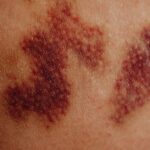
Chemical burns are the most serious risk. Case reports in the medical literature describe burns from undiluted apple cider vinegar applied to skin, sometimes leaving lasting marks. The acid is strong enough to damage the skin barrier when used at full strength.
Irritation is more common. Redness, stinging, dryness, and peeling can all follow. Irritated skin can also darken, especially in people with darker skin tones — which means a treatment aimed at fading marks could make them worse.
There is also the risk of delaying real treatment. Months spent on a home remedy that does not work are months your skin is not getting something with evidence behind it.
One more point worth knowing: apple cider vinegar does not kill the bacteria involved in acne in any way that has been shown to clear acne in people. Some lab studies have looked at vinegar’s antibacterial effects, but lab results do not translate directly to what happens on human skin.
What Actually Helps Acne Scars?
True acne scars respond to procedures that remodel skin structure, and these are done by dermatologists. The evidence is strongest for laser resurfacing, microneedling, chemical peels, and in some cases minor surgical techniques for individual scars. Results vary by scar type, skin tone, and how many sessions you have.
For dark marks, the priorities are different. Daily sunscreen is the foundation, because sun exposure keeps pigmentation going. Beyond that, some clinicians recommend ingredients like niacinamide, azelaic acid, or retinoids, though response takes months and varies between people.
Prevention matters too. Not picking at acne, treating active breakouts early, and protecting skin from the sun all reduce the chance of marks and scars forming in the first place.
If scarring is significant or bothersome, a dermatologist can assess what type you have and what is likely to help. That conversation is worth more than any home remedy.
Frequently Asked Questions
Can apple cider vinegar remove acne scars?
No. There is no clinical evidence that apple cider vinegar removes acne scars, and it cannot rebuild the collagen structure lost in indented scars.
How do you dilute apple cider vinegar for your face?
There is no standard clinical guideline for facial dilution, but a common cautious approach is one part vinegar to at least three parts water. Undiluted vinegar can burn skin, so more water is safer.
Does apple cider vinegar help with dark spots from acne?
No clinical evidence currently confirms it fades dark spots. Daily sunscreen and ingredients like niacinamide or azelaic acid have more support, though results take months.
What happens if you put undiluted apple cider vinegar on your face?
It can cause chemical burns, redness, stinging, and peeling. Case reports in the medical literature document burns from undiluted vinegar applied to skin.
