
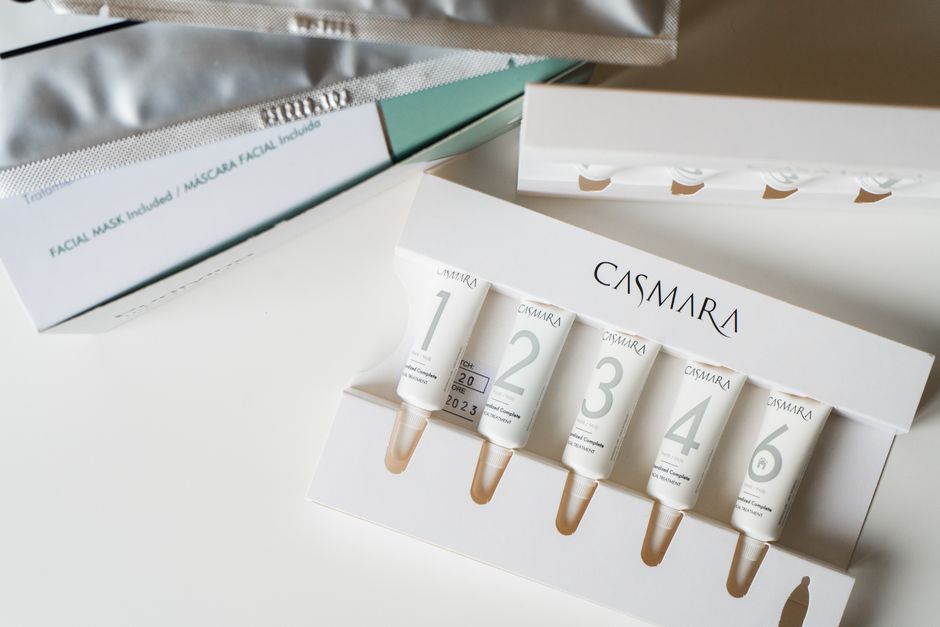
An ampoule is a concentrated treatment that you apply after toner and before moisturizer. You use it by cleansing your face first, applying toner, then dispensing a few drops of ampoule into your palm and pressing it gently into your skin. Follow with moisturizer to seal everything in. Ampoules are not daily essentials for everyone — they are targeted treatments for specific skin concerns like dullness, dehydration, or uneven texture.
What Exactly Is a Skincare Ampoule?
Ampoules are highly concentrated serums. They contain a much higher percentage of active ingredients than your regular serum or moisturizer. Think of your serum as your daily multivitamin and the ampoule as a targeted supplement for a specific issue.
Most ampoules come in small glass vials or dropper bottles. The original idea was single-use doses to keep ingredients fresh and potent. Many brands still sell them that way. Others sell larger bottles meant to last a few weeks. The key difference from serums is potency — ampoules pack more active ingredients per drop.
Common ingredients in ampoules include vitamin C for brightening, hyaluronic acid for hydration, niacinamide for pore refinement, and peptides for firmness. Some ampoules contain exfoliating acids like glycolic or lactic acid. The concentration matters because stronger is not always better for your skin.
How To Use An Ampoule In Your Skincare Routine Step by Step
The correct order matters. Apply your ampoule after toner and before moisturizer. Toner preps your skin by removing leftover residue and balancing pH. This helps the ampoule absorb better. Moisturizer seals the active ingredients in and prevents water loss.
Here is the full routine order for using an ampoule:
- Cleanse your face with a gentle cleanser
- Apply toner (or essence if you use one)
- Dispense 2-3 drops of ampoule into your palm
- Press and pat the product into your skin — do not rub or drag
- Wait 30-60 seconds for absorption
- Follow with moisturizer
- Finish with sunscreen in the morning
Do not use more than the recommended amount. More drops does not mean better results. Your skin can only absorb so much. Excess product just sits on top and may cause irritation or breakouts.
Patting is better than rubbing for ampoules. Rubbing can push the product around unevenly and cause friction. Gentle pressing motions help the ingredients absorb where your skin needs them most.
How Often Should You Use an Ampoule?
This depends entirely on the ingredients and your skin type. Some ampoules are gentle enough for daily use. Others are strong and should only be used a few times per week.
Hydrating ampoules with hyaluronic acid or glycerin can be used daily. They simply add extra moisture without irritating. Brightening ampoules with vitamin C are also generally safe for daily morning use. Just check the concentration — 10% vitamin C is gentle while 20% may cause stinging for some people.
Exfoliating ampoules with AHAs or BHAs should be used 2-3 times per week at most. Over-exfoliating damages your skin barrier and leads to redness, peeling, and sensitivity. The same caution applies to retinol ampoules. Start with once per week and slowly increase if your skin tolerates it.
A good rule: start with every other day for any new ampoule. Watch how your skin responds over two weeks. If no irritation occurs, you can increase frequency. If you see redness or breakouts, cut back.





Can You Mix Multiple Ampoules Together?
Layering ampoules is popular in some skincare routines but it carries risks. Each ampoule is already highly concentrated. Combining two strong products can overwhelm your skin and cause irritation.
Some combinations work well together. Vitamin C in the morning and niacinamide at night is a common pairing. Hyaluronic acid can layer under almost anything since it is just hydration. But mixing retinol with AHAs or BHAs in the same routine often leads to over-exfoliation.
A safer approach is to use one ampoule per routine. Use a brightening ampoule in the morning and a hydrating or firming one at night. This gives your skin time to process each ingredient without conflict.
If you really want to layer, apply the thinnest consistency first and wait a few minutes between layers. Even then, limit yourself to two ampoules max. More is not better here.
What Does Research on Ampoules Show?
Clinical studies on specific ampoule formulations are limited. Most research focuses on the active ingredients themselves rather than the delivery format. For example, we know vitamin C at 10-20% concentration effectively reduces hyperpigmentation based on studies published in the Journal of the American Academy of Dermatology. But whether that vitamin C works better as an ampoule versus a serum depends on the specific formula and packaging.
The main advantage of ampoules is stability. Because they come in small, airtight containers, the active ingredients stay fresh longer. Vitamin C is especially prone to oxidation. A single-use ampoule guarantees you are applying a fresh, potent dose every time.
Some dermatologists argue that ampoules are overhyped. They point out that a well-formulated serum with the same active ingredients at the same concentration would give identical results. The difference is mostly marketing and packaging. But others note that the single-dose format prevents contamination and ingredient degradation, which matters for certain actives.
One area where ampoules have genuine research backing is in clinical settings. Dermatologists sometimes use professional-grade ampoules for in-office treatments. These have higher concentrations than anything sold over the counter. But those are not the same products you buy at a beauty store.
What Are the Side Effects and Risks of Ampoules?
The main risk is irritation from high concentrations of active ingredients. Because ampoules are potent, they can cause redness, stinging, peeling, or breakouts — especially if you use them too often or combine them incorrectly.
People with sensitive skin need to be extra careful. Even hydrating ampoules can cause reactions if they contain botanical extracts or essential oils. Always check the ingredient list before buying. Fragrance is a common irritant even in products labeled as gentle.
Another risk is using ampoules past their expiration date. Single-use vials are fine if you use them right away. But larger bottles can degrade over time. Oxidized vitamin C turns brown and may actually irritate your skin rather than help it. If the color or smell changes, throw it out.
Overuse is the most common mistake people make. Using an exfoliating ampoule every day thinking it will speed up results can damage your skin barrier. A damaged barrier leads to dehydration, sensitivity, and breakouts — the opposite of what you want.
| Feature | Ampoule | Serum |
|---|---|---|
| Active ingredient concentration | Higher | Lower to moderate |
| Typical usage | Short-term targeted treatment | Daily maintenance |
| Packaging | Small vials or dropper bottles | Larger bottles with pumps |
| Risk of irritation | Higher | Lower |
| Cost per ounce | More expensive | Less expensive |
| Shelf life after opening | Shorter | Longer |
Do You Actually Need an Ampoule in Your Routine?
Most people do not need an ampoule. A solid basic routine — cleanser, moisturizer, sunscreen — covers the essentials. Adding a serum addresses most common concerns like aging, brightness, or hydration. Ampoules are an extra step for when you want faster results or are targeting a specific issue.
People who benefit most from ampoules include those with stubborn hyperpigmentation, severe dehydration that moisturizer alone cannot fix, or fine lines that need a boost. If your skin is generally healthy and you are happy with your current routine, an ampoule is optional.
Some people report that ampoules give them noticeable results within a few weeks. This is plausible because the high concentration of actives can work faster than lower-dose serums. But the effect is temporary for most concerns. Once you stop using the ampoule, your skin gradually returns to its baseline.
If you decide to try one, pick a single concern to address. Do not buy a multi-purpose ampoule that claims to do everything. Pick one problem — dullness, dehydration, or uneven texture — and find an ampoule with one or two proven ingredients for that issue.
Common Mistakes to Avoid With Ampoules
Skipping moisturizer after your ampoule is a common error. Ampoules are not occlusive — they do not seal moisture in. Without moisturizer on top, the active ingredients can evaporate and your skin may feel tight or dry.
Using an ampoule on wet skin can dilute the formula. Your skin should be slightly damp from toner, but not dripping wet. Pat excess water off before applying the ampoule. This ensures the concentration stays as intended.
Storing ampoules in direct sunlight or a warm bathroom degrades the ingredients quickly. Keep them in a cool, dark place. Some vitamin C ampoules even need refrigeration. Check the packaging instructions for storage.
Another mistake is expecting overnight results. Even the most potent ampoule takes time. Visible improvements usually take 4-8 weeks of consistent use. If you see dramatic changes in a few days, it is likely irritation or a placebo effect, not real improvement.
Frequently Asked Questions
Can I use an ampoule every day?
It depends on the ingredients. Hydrating ampoules are safe for daily use. Exfoliating or retinol ampoules should only be used 2-3 times per week.
Do I need to refrigerate my ampoules?
Some vitamin C ampoules require refrigeration to stay stable. Check the product packaging for specific storage instructions.
Can I use an ampoule with retinol?
Yes but do not use them in the same routine. Use retinol at night and a different ampoule in the morning. Combining them can cause irritation.
How long does one ampoule bottle last?
Single-use vials last one application. Multi-dose bottles typically last 2-4 weeks depending on how much you use each time.
