
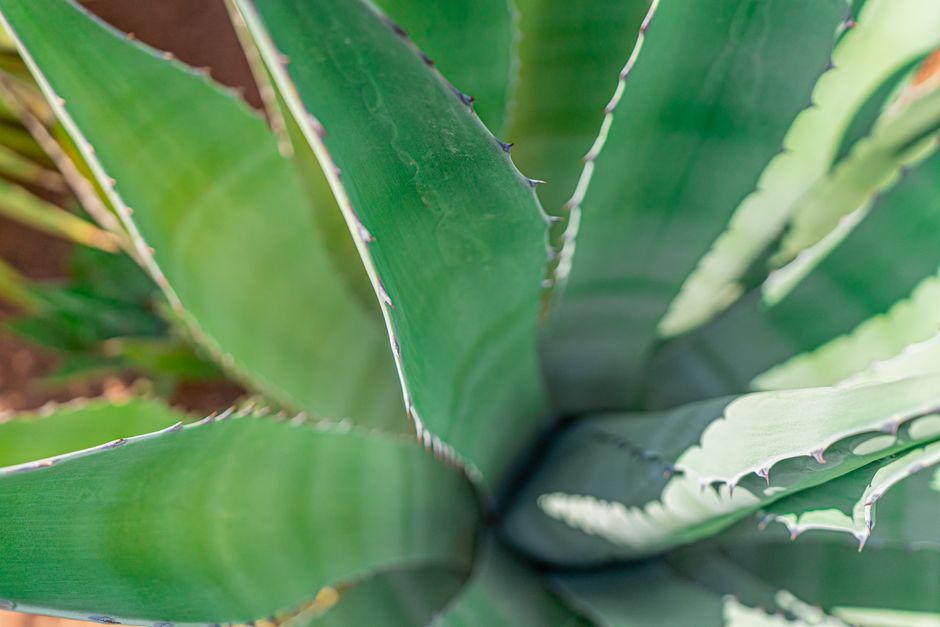
Agave syrup is a liquid sweetener made from the sap of the agave plant, and it works in cooking, baking, and drinks much like honey or maple syrup — but with some important differences that affect how your recipes turn out. It dissolves easily in cold drinks, blends smoothly into sauces and dressings, and can replace sugar in many baked goods when you adjust the liquid and the oven temperature. The catch is that agave is sweeter than table sugar, so using it cup-for-cup will make your food too sweet.
What Is Agave Syrup and How Is It Different From Sugar?
Agave syrup is a liquid sweetener produced mainly from the blue agave plant. Producers extract the sap, then heat or process it to break down complex carbohydrates into simple sugars. The result is a syrup that is roughly 1.4 to 1.5 times sweeter than table sugar, depending on the brand and how it was processed.
The sugar profile is what sets agave apart. Table sugar (sucrose) is about half glucose and half fructose. Agave syrup is mostly fructose — often around 70 to 90 percent, though this varies widely by product. Fructose is sweeter than glucose, which is why agave tastes so sweet.
That high fructose content has a real consequence: agave has a low glycemic index compared to many sweeteners. The glycemic index measures how quickly a food raises blood sugar. Because fructose is metabolized differently than glucose, agave causes a smaller spike in blood glucose.
This is where a common misunderstanding lives. A low glycemic index does not automatically mean a sweetener is healthier. Fructose still provides calories and still affects the body. Large amounts of fructose are processed in the liver, and research has linked high fructose intake to metabolic concerns. The American Heart Association recommends limiting added sugars overall, and agave counts as an added sugar. So agave is not a free pass — it is simply a different sweetener with a different sugar composition.
How To Use Agave In Cooking Baking And Drinks
Agave is one of the easiest sweeteners to work with because it is already liquid. It dissolves without heat, which makes it useful in cold preparations where sugar would stay gritty.
In drinks, agave is straightforward. Stir it into iced tea, lemonade, cocktails, smoothies, or coffee. Because it dissolves in cold liquid, you do not need to make a simple syrup first. Start with a small amount and taste. A little goes a long way.
In cooking, agave works well in sauces, marinades, salad dressings, and glazes. It adds sweetness and a bit of viscosity. It can also help balance salty or acidic flavors. One thing to watch: agave browns faster than sugar when heated, so keep an eye on glazes under a broiler or on a hot grill.
In baking, agave can replace some or all of the sugar in many recipes, but you cannot swap it one-for-one without adjustments. Three things change when you use agave:
- Sweetness: Agave is sweeter than sugar, so you use less.
- Liquid: Agave adds moisture, so you usually reduce other liquids in the recipe.
- Browning: Agave browns faster, so you often lower the oven temperature.
As a general starting point, many bakers replace each cup of sugar with about two-thirds cup of agave, then reduce the other liquid in the recipe by roughly a quarter cup, and lower the oven temperature by about 25°F. These are common kitchen adjustments, not strict rules. Results vary by recipe. Cakes and quick breads tend to adapt well. Cookies and candies are trickier because sugar does more than sweeten — it affects structure, spread, and texture.
If you are new to baking with agave, try replacing only part of the sugar at first. This keeps the recipe’s structure intact while you get a feel for how agave behaves.
Can You Substitute Agave for Honey, Maple Syrup, or Sugar?
Agave swaps fairly easily with other liquid sweeteners, but each one has its own sweetness and flavor.
Compared to honey, agave is slightly less sweet and has a milder, more neutral taste. Honey brings its own flavor, so a swap will change the taste of the final dish. Compared to maple syrup, agave is sweeter and lacks maple’s distinct flavor. In recipes where the sweetener’s flavor matters — like a maple glaze — swapping changes the result.
Compared to table sugar, agave is sweeter and adds liquid. This is the swap that requires the most adjustment, as described above.
Here is a rough comparison of how these sweeteners differ:
| Sweetener | Relative Sweetness | Main Sugar Type | Form |
|---|---|---|---|
| Table sugar (sucrose) | Baseline | About half glucose, half fructose | Dry |
| Agave syrup | Sweeter than sugar | Mostly fructose | Liquid |
| Honey | Sweeter than sugar | Mostly glucose and fructose | Liquid |
| Maple syrup | Less sweet than sugar | Mostly sucrose | Liquid |
These are general patterns. Exact sweetness and sugar composition vary by brand and product, so taste as you go.





Is Agave Healthier Than Sugar?
Agave is not clearly healthier than sugar, despite its reputation. This is one of the most common myths about the sweetener.
The claim rests on agave’s low glycemic index. That part is true — agave does raise blood sugar less than table sugar. But glycemic index is only one measure of a food’s effect on the body. It does not capture everything.
Agave is high in fructose. The body handles fructose differently than glucose. Fructose is metabolized mainly in the liver, and eating large amounts over time has been linked in research to fatty liver, insulin resistance, and other metabolic issues. Much of this research involves high intakes, not the small amounts used to sweeten a drink. Still, the idea that agave is a health food does not hold up.
Agave also provides calories — about the same as sugar, roughly 60 calories per tablespoon. Some brands retain small amounts of minerals from the plant, but the amounts are too small to matter nutritionally. Agave is an added sugar. The American Heart Association recommends keeping added sugars limited, and agave counts toward that limit just like sugar, honey, or maple syrup.
For people with diabetes, agave’s lower glycemic impact might seem appealing, but the fructose content is a genuine consideration. Anyone managing blood sugar should talk with their doctor or a dietitian before making agave a regular part of their diet. No single sweetener is a substitute for medical guidance.
How Much Agave Should You Use?
There is no official recommended serving size for agave syrup. It falls under general added-sugar guidance rather than having its own daily limit.
The American Heart Association recommends limiting added sugars to no more than about 6 teaspoons (25 grams) per day for most women and about 9 teaspoons (36 grams) per day for most men. These limits apply to all added sugars combined — agave, sugar, honey, and maple syrup together. One tablespoon of agave contains roughly 15 grams of sugar, so a single tablespoon uses up a large share of a day’s added-sugar budget.
These figures are general adult guidance. Recommendations differ for children, pregnant women, and people with specific medical conditions. No clinical guidelines set an agave-specific limit for those groups, so it is best to follow general added-sugar advice and consult a healthcare provider for personal guidance.
Does Agave Have Any Downsides in Cooking?
Agave has a few practical quirks worth knowing before you cook with it.
It browns faster than sugar, which can lead to burning in high-heat recipes. It adds moisture, which can make baked goods denser or softer if you do not adjust other liquids. And because it is a liquid, it does not cream with butter the way sugar does, so it does not work well in recipes that depend on that step, like some cookie and shortbread recipes.
Agave also has a milder flavor than honey or maple syrup, which is either a plus or a minus depending on what you are making. In a neutral recipe, that mildness is helpful. In a recipe where the sweetener is meant to shine, it can fall flat.
None of these are dealbreakers. They are just things to expect. Agave is a useful sweetener with its own behavior, not a drop-in replacement for every recipe.
Frequently Asked Questions
Can you use agave syrup in baking instead of sugar?
Yes, agave can replace sugar in many baked goods, but not cup-for-cup. Use less agave because it is sweeter, reduce other liquids, and lower the oven temperature slightly to prevent over-browning.
Is agave syrup healthier than regular sugar?
No, agave is not clearly healthier than sugar. It has a lower glycemic index, but it is high in fructose and still counts as an added sugar with about the same calories.
Does agave syrup dissolve in cold drinks?
Yes, agave dissolves easily in cold liquids, so you can stir it straight into iced tea, lemonade, or cocktails without making a syrup first.
How much agave should I use in a drink?
There is no official serving size for agave, so start with a small amount and taste. Keep in mind that added sugars should stay within general daily limits.
