
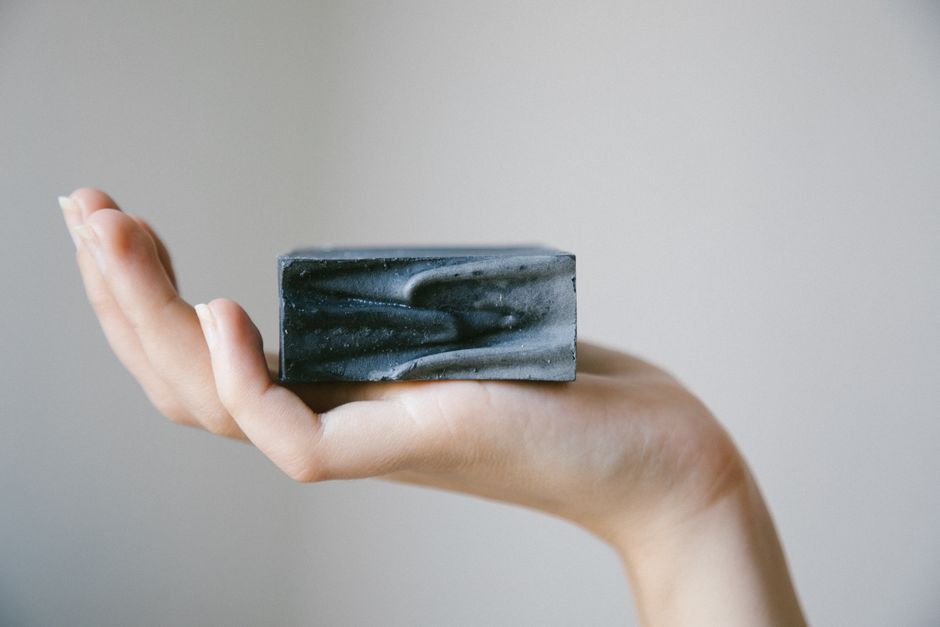
Activated charcoal can reduce odors because its surface is covered in millions of tiny pores that trap odor molecules. Place it in a breathable container — like a cloth bag or a bowl with a paper towel over the top — and set it where the smell is worst. Replace or refresh it every few weeks. It works best in small, enclosed spaces like closets, shoes, refrigerators, and cars, not as a whole-room air purifier.
What Makes Activated Charcoal Different From Regular Charcoal?
Activated charcoal is regular charcoal that has been treated with heat and steam or chemicals to create a huge network of internal pores. That process gives it an enormous surface area relative to its weight. A single gram can have a surface area of hundreds of square meters.
Those pores are what capture odor molecules. When smelly gases pass through the charcoal, they get pulled onto the pore surfaces and held there. This is called adsorption — the molecules stick to the surface rather than being absorbed into the material.
Regular charcoal from a campfire has some of this ability, but far less. The activation step is what makes the difference. This is also why you cannot substitute charcoal briquettes for the activated kind. Briquettes contain additives and binders that you do not want in your fridge or near your food.
One thing worth knowing: the pores do not last forever. Once the available surface fills up, the charcoal stops working. That is why replacement matters, and why a bag of charcoal left in a closet for a year is probably doing very little.
How To Use Activated Charcoal To Eliminate Odors in Common Spaces
The basic method is the same everywhere: put the charcoal where the air is, keep it dry, and give the air a way to reach it. The container matters more than most people realize. Sealed plastic blocks the charcoal from doing anything at all.
Use a cloth bag, a mesh bag, a paper bag with holes punched in it, or an open bowl. Anything that lets air through but keeps the charcoal contained works. Here is how this looks in practice:
- Refrigerator: Place an open container or a small cloth bag on a shelf toward the back. Replace it roughly every month or two, or sooner if odors return.
- Shoes: Fill a cloth bag or a sock with charcoal and leave it inside overnight. Two bags for a pair of shoes is reasonable.
- Closets and drawers: Hang a cloth bag or set a bowl on a shelf. Airflow in a closed closet is limited, so the effect will be modest.
- Cars: Set a container on the floor or under a seat. This tends to help with mild lingering smells, not with a spill that has soaked into upholstery.
- Trash cans: A bag at the bottom under the liner can reduce odors between empties.
Keep the charcoal away from direct moisture. Wet charcoal loses its ability to trap gases and can grow mold if it stays damp. If a bag gets wet, replace the contents.
How Much Activated Charcoal Do You Need?
There is no official guideline for how much charcoal to use for odor control. No regulatory body sets a standard dose for household air or odor use. This is one area where honest information is thin.
In general, more charcoal and more airflow means more odor reduction. A small pouch in a large room will have little measurable effect. A container in a small enclosed space will do more. That relationship is straightforward physics — more surface area and closer contact with the air means more molecules get trapped.
Be skeptical of products that promise a specific result for a specific square footage. Those claims are not backed by a standard testing method for household odor control. Use enough charcoal that the container looks reasonably full, and place it as close to the odor source as you can.
Where Activated Charcoal Works — and Where It Does Not
Activated charcoal performs best on certain kinds of odors and poorly on others. It is good at trapping many volatile organic compounds — the gases that come off paint, cleaning products, and some foods. It is also used in water filters and in some industrial air cleaning systems for this reason.
It is less reliable for strong, persistent smells that come from a source you have not removed. A bag of charcoal in a room with a mold problem or a hidden leak will not fix anything. The source has to go first.
It also does not kill bacteria or mold, and it does not clean surfaces. If a smell is coming from bacteria growing somewhere, charcoal will mask it at best. That is a meaningful difference — masking an odor is not the same as removing the cause.
For whole-room air cleaning, a small pouch of charcoal is not comparable to a HEPA air purifier. HEPA filters capture particles, and some purifiers add a carbon layer for gases. A standalone bowl of charcoal moves very little air on its own, so its reach is limited.
How Often Should You Replace Activated Charcoal?
Activated charcoal stops working once its pores fill up, and there is no reliable way to tell by looking. Most household charcoal products suggest replacing every one to three months, depending on the space and the strength of the odor.
You can sometimes refresh charcoal by spreading it in a thin layer in direct sun for a few hours. This may release some trapped compounds, but the evidence that it fully restores capacity is limited. For the cost involved, replacing it is usually the more dependable choice.
Do not try to reactivate used charcoal in a home oven. The temperatures needed for true reactivation are far higher than a kitchen oven reaches, and heating charcoal indoors carries risks.
Safety Points Worth Knowing
Activated charcoal for household odor control is generally low-risk when used as directed, but a few things matter. Keep loose charcoal away from children and pets. It is not toxic in small amounts, but it is a choking risk and can make a mess that is hard to clean.
Do not confuse the charcoal you use around the house with activated charcoal sold as a supplement. They are not the same product, and the safety profile for swallowing charcoal is different from using it in a bowl. Charcoal taken by mouth can interfere with how the body absorbs some medications, which is why it is used in medical settings only under supervision.
If you have a serious odor problem — a gas smell, persistent damp mustiness, or a chemical odor — treat it as a possible safety issue rather than an air-freshening problem. A natural gas smell is an emergency. Musty smells can point to a moisture or mold problem that needs fixing at the source.
Does Activated Charcoal Actually Work for Odors?
Yes, but modestly and locally. The physics of adsorption is well established, and activated charcoal is genuinely used in water treatment and air filtration for exactly this reason. What is less established is how much a small household pouch changes the air in a room.
No large studies have measured how well a bowl of charcoal reduces odors in a typical home. The mechanism is real. The real-world effect of a small amount in a large space is likely small. Set your expectations around small enclosed spaces and mild odors, and you will get what the product can actually deliver.
Frequently Asked Questions
Does activated charcoal really remove odors?
Yes, activated charcoal traps many odor-causing gases on its pore surfaces through a process called adsorption. The effect is strongest in small, enclosed spaces and weaker in large open rooms.
How long does activated charcoal last for odor control?
Most household products suggest replacing it every one to three months, depending on the space and odor strength. Replace it sooner if odors return or if the charcoal gets wet.
Can I put activated charcoal in my refrigerator?
Yes, an open container or cloth bag on a shelf is a common way to reduce fridge odors. Replace it roughly every month or two and keep it away from moisture.
Is activated charcoal safe around pets and children?
It is generally low-risk in small amounts, but loose charcoal is a choking risk and makes a difficult mess. Keep it in a secured container and out of reach.
