
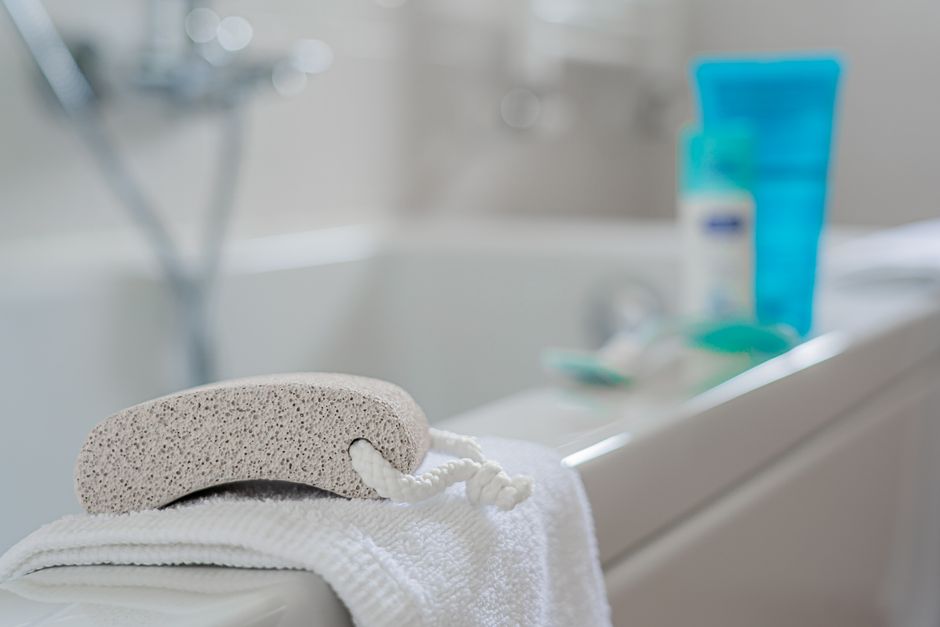
A pumice stone is a simple, inexpensive tool for removing dead skin and calluses from your feet. To use one correctly, soak your feet in warm water for 5 to 10 minutes, then gently rub the wet stone over the callused area in a circular motion. Rinse the stone often, apply lotion afterward, and stop if you feel any pain. This guide walks through each step in detail, plus how to care for the stone and when to skip it entirely.
What Is a Pumice Stone and How Does It Work?
A pumice stone is a lightweight, porous volcanic rock. When you rub it against thickened skin, the rough surface acts like fine sandpaper. It buffs away the top layers of dead skin cells, leaving the healthier skin underneath smoother.
The stone works best when your skin is softened by water. Dry skin is tougher and harder to remove, which can lead to pressing too hard and causing damage. That is why the soaking step matters more than most people realize.
How To Use a Pumice Stone: Step By Step
Start by filling a basin or tub with warm—not hot—water. Hot water can dry out your skin and increase the risk of burns, especially if you have diabetes or nerve damage in your feet.
- Soak your feet for 5 to 10 minutes. This softens the callus and makes it easier to remove.
- Wet the pumice stone in the same water. A dry stone is too abrasive and can scratch healthy skin.
- Rub the stone gently over the callused area in a circular or sideways motion. Apply light to moderate pressure only.
- Rinse the stone frequently to clear away the dead skin buildup on its surface.
- Check your progress every 30 to 60 seconds. Stop as soon as the skin feels smooth or slightly pink. Do not try to remove the entire callus in one session.
- Rinse and dry your feet thoroughly, especially between the toes.
- Apply a moisturizer or foot cream immediately after drying. This locks in the moisture and helps prevent new calluses from forming.
Most people only need to do this once or twice a week. Daily use can irritate the skin and trigger more callus formation as a protective response.
How To Choose the Right Pumice Stone
Not all pumice stones are the same. Some are natural volcanic rock, while others are synthetic. Both can work, but natural stones tend to be more porous and gentler on the skin.
Look for a stone that fits comfortably in your hand. A stone with a handle is easier to use if you have limited flexibility or arthritis. If you have very thick calluses, a stone with a coarser texture will work faster. For maintenance and thinner calluses, a finer texture is safer.
Avoid metal files or graters that look like kitchen tools. These are far more aggressive than pumice and can easily cut the skin. The risk of infection goes up significantly once the skin is broken.





What Not To Do When Using a Pumice Stone
Several common mistakes can turn a harmless foot care routine into a painful problem.
- Do not use a dry stone. It will drag and pull at the skin instead of buffing it smoothly.
- Do not press hard. The stone does the work, not your arm. Heavy pressure can cause friction burns or bleeding.
- Do not use it on broken skin. Cuts, cracks, sores, or blisters are open entry points for bacteria. Wait until the skin is fully healed.
- Do not use it on moles, warts, or unusual growths. If you are not sure what a spot is, have a doctor look at it first. Rubbing it can cause irritation or bleeding and delay a proper diagnosis.
- Do not share your stone. Pumice stones can carry bacteria and fungi from one person to another. Treat yours like a toothbrush—personal use only.
If you feel sharp pain, stop immediately. Mild discomfort is normal when removing thick calluses, but sharp pain means you are hitting live tissue.
How To Clean and Store Your Pumice Stone
A wet pumice stone left in a damp bathroom is a breeding ground for mold and bacteria. Rinse it thoroughly after each use and squeeze out any trapped water.
Let the stone air dry completely on a rack or a dry surface. Do not store it in a closed container while it is still wet. Some people soak their stone in a diluted bleach solution once a week, but plain soap and water is usually enough for personal use.
Replace your pumice stone every few months. Over time, the surface wears down and becomes smooth, which means it stops working effectively. If the stone develops a sour smell that does not wash away, throw it out.
Who Should Avoid Using a Pumice Stone
Pumice stones are safe for most healthy adults, but certain groups should be cautious or avoid them entirely.
People with diabetes should not use a pumice stone without checking with their doctor first. Diabetes can reduce sensation in the feet, which means you might not feel a cut or sore until it becomes infected. Diabetic foot infections can be serious and slow to heal.
People with peripheral artery disease or poor circulation in the legs face similar risks. Reduced blood flow means injuries heal more slowly and infections are harder to fight off.
If you have very thin or fragile skin—common with age or long-term steroid use—a pumice stone may be too abrasive. A gentle foot file or a cream containing urea may be a better alternative. Some dermatologists recommend these options for maintenance instead of physical exfoliation.
Are There Better Alternatives to a Pumice Stone?
Pumice stones are effective, but they are not the only option. Chemical exfoliants offer an alternative for people who cannot tolerate friction on their feet.
Creams containing urea or lactic acid help break down the protein bonds holding dead skin cells together. These are applied daily and work gradually over weeks. They are a common recommendation for people with diabetes or neuropathy because they do not require any rubbing or pressure.
Electric foot files are popular but more aggressive than pumice stones. They can remove skin quickly, which is helpful for very thick calluses, but they also carry a higher risk of over-removal and injury. Use them at the lowest setting and for short sessions.
For severe, painful calluses that do not respond to home care, a podiatrist can trim them safely with a scalpel. This is a medical procedure, not a DIY project. Never attempt to cut calluses at home with a razor blade or scissors.
How To Prevent Calluses From Forming
Prevention is easier than removal. Calluses form in response to repeated pressure and friction, so reducing those forces is the most effective strategy.
Wear shoes that fit properly. Shoes that are too tight squeeze the toes, while loose shoes allow the foot to slide and rub. Both scenarios create calluses. Cushioned insoles can help distribute pressure more evenly across the foot.
Moisturize your feet daily. Dry skin cracks and thickens more readily than well-hydrated skin. A simple fragrance-free lotion applied after bathing is enough for most people.
If you walk barefoot frequently, especially on hard surfaces, consider wearing slippers or supportive sandals at home. The repeated impact of bare feet on tile or wood floors is a common cause of heel calluses.
Frequently Asked Questions
How long should I soak my feet before using a pumice stone?
Soak your feet for 5 to 10 minutes in warm water. This softens the callus enough for gentle removal without over-softening the skin.
Can I use a pumice stone on dry skin without soaking?
No, using a pumice stone on dry skin is not recommended. Dry skin requires more pressure to remove, which increases the risk of scraping or injuring healthy tissue.
How often should I use a pumice stone on my feet?
Once or twice a week is enough for most people. More frequent use can irritate the skin and cause the body to produce thicker calluses in response.
Is it safe to use a pumice stone if I have diabetes?
Check with your doctor first. Diabetes can reduce feeling in the feet, so you may not notice a cut until it becomes infected, and those infections can be serious.
