
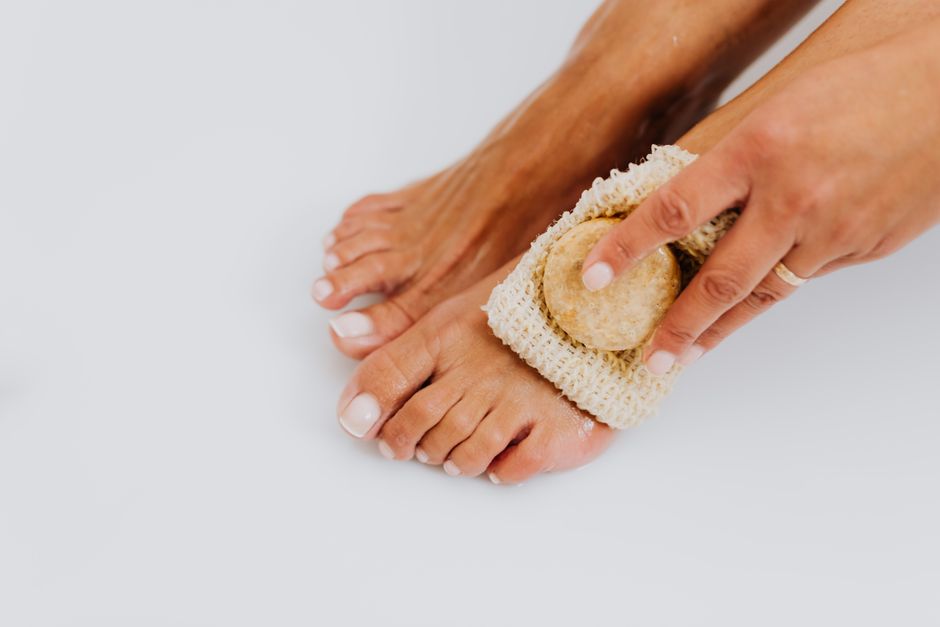
A pumice stone is a natural volcanic rock that grinds away dead skin on the feet. Used correctly on wet skin with light pressure, it smooths calluses and rough patches. Used too hard or too often, it can leave skin raw, sore, and more vulnerable to cracking. The technique matters more than the tool.
How To Use A Pumice Stone On Feet Step By Step
Soak your feet in warm water for about 10 to 15 minutes first. Dry skin is more likely to tear than smooth skin. The water softens the hard layer so the stone removes it with less friction.
Wet the pumice stone. Working on dry skin with a dry stone is the most common mistake and the fastest way to irritate your feet.
Rub the stone against the callused area using gentle, circular motions. Use light pressure. Let the rough surface do the work rather than pressing down hard. Spend 20 to 30 seconds on each area, then check the skin.
Stop when the skin feels smooth. Do not keep going until you reach soft pink tissue. That deeper layer is living skin, and removing it causes pain, bleeding, and a higher risk of infection.
Rinse your feet and the stone. Pat dry. Apply a moisturizer while the skin is still slightly damp so it holds in water.
Repeat no more than once a week for most people. If your skin is sensitive, try every other week and see how it responds. Daily use is not necessary and often backfires.
What Does a Pumice Stone Actually Do to Your Skin?
Skin on the feet thickens in response to pressure and friction. This buildup is called a callus, and it is the body’s way of protecting itself. A pumice stone removes the top layer of that dead, hardened skin through abrasion.
This is a mechanical effect, not a chemical one. The stone does not dissolve skin or treat any underlying condition. It physically wears down the surface. That is why technique and pressure matter so much.
Calluses form for a reason. They appear where the foot takes repeated pressure or friction, often from shoes that rub or from how a person walks. If you remove the callus but the cause stays the same, it will come back. The stone manages the symptom, not the source.
One detail worth knowing: a callus is not the same as a corn or a wart. A corn is a small, concentrated patch of thickened skin with a hard center, usually from focused pressure. A wart is caused by a virus and has its own treatment. Filing a wart with a pumice stone can spread the virus to other parts of your foot and to the stone itself. If a rough patch has tiny black dots, bleeds when filed, or disrupts the normal skin lines, it is more likely a wart than a callus. Have a clinician look at it before using a stone on it.
How Often Should You Use a Pumice Stone on Your Feet?
Once a week is enough for most people. Some people with very thick calluses may use one every few days at first, then cut back once the skin is smoother. Others with thin or sensitive skin do better every two weeks or less.
The signal to slow down is your own skin. If it stings, looks red, or feels tender after filing, you went too hard or too often. Give it time to recover before the next session.
There is no clinical guideline that sets an exact schedule for pumice stone use. The once-a-week figure reflects common practice, not a formal recommendation from a medical body. The principle behind it is sound: skin needs time to rebuild its surface between sessions.
If you find yourself needing to file constantly to keep calluses down, that is a sign to look at the cause. Shoes that fit poorly, standing for long hours, or certain foot shapes can keep producing calluses no matter how often you file.





Choosing and Caring for a Pumice Stone
Pumice comes in a few forms. Natural volcanic pumice is porous and lightweight. Synthetic pumice is made from a mix of materials and tends to be more uniform. Both work. The difference is mostly texture and how long they last.
Look for a stone with a medium grit. Very coarse stones remove skin fast, which sounds good but raises the risk of going too deep. A finer grit is gentler and easier to control.
Some stones come with a handle or are shaped like a paddle. These can be easier to grip, especially if you have limited hand strength or trouble reaching your feet.
Clean your stone after every use. Rinse it under running water and scrub out any trapped skin with a small brush. Let it air dry completely. A damp, dirty stone can harbor bacteria and fungus.
Replace the stone when it becomes smooth, worn down, or starts to crumble. A smooth stone no longer files effectively, which tempts people to press harder. That is when injuries happen.
Never share a pumice stone with another person. Skin cells, bacteria, and fungi can pass from one person to another through the stone. This matters most if anyone in the household has a foot fungus or wart.
Who Should Be Careful With a Pumice Stone
People with diabetes need to take extra care with their feet. Nerve damage from diabetes can reduce feeling in the feet, so a person may not notice that they are filing too hard or causing a wound. Poor circulation also slows healing. For anyone with diabetes, foot injuries can become serious quickly. Clinicians generally advise people with diabetes to have a professional handle calluses rather than filing at home. This is one area where established guidance leans strongly toward caution.
People with poor circulation, peripheral artery disease, or neuropathy from any cause face similar risks. Reduced blood flow means slower healing and higher infection risk from even small breaks in the skin.
Avoid using a pumice stone on:
- Open sores, cuts, or blisters
- Signs of infection, such as redness, warmth, swelling, or pus
- Warts or any growth you have not had checked
- Skin that is cracked and bleeding
- Areas that are numb or where you cannot feel pressure
If you are unsure whether a rough patch is a callus, a corn, a wart, or something else, have a clinician look at it first. Filing the wrong thing can make it worse.
Pumice Stone vs Other Ways to Smooth Feet
A pumice stone is one option among several. Each has trade-offs. The table below compares common approaches.
| Method | How it works | Notes |
|---|---|---|
| Pumice stone | Manual abrasion | Inexpensive, easy to control, needs regular cleaning |
| Foot file or rasp | Manual abrasion | Often coarser, can remove skin faster, easier to overdo |
| Chemical exfoliant (urea or salicylic acid creams) | Softens and loosens dead skin | Works gradually, may irritate sensitive skin |
| Professional pedicure | Trained removal of calluses | Useful for thick calluses or when self-care is risky |
No single method is proven best for everyone. The right choice depends on how thick the callus is, your skin sensitivity, and your overall health. For most healthy people, a pumice stone used gently and not too often is a reasonable option.
Common Mistakes That Cause Problems
Most pumice stone injuries come from a small set of habits.
Filing dry skin is the most common. It creates friction without softening, which tears skin instead of smoothing it.
Pressing too hard is next. More pressure does not mean faster results. It means deeper damage and a longer recovery.
Filing too often leaves no time for skin to recover. The surface stays raw and becomes more prone to cracking.
Using a dirty or worn-out stone spreads germs or forces you to press harder to get results.
Ignoring the cause of the callus means it keeps coming back, and you keep filing. Over time this cycle can thin the skin and make the area more sensitive, not less.
The fix for all of these is the same: soften first, use light pressure, stop when smooth, and give your skin time between sessions.
Frequently Asked Questions
Can I use a pumice stone on dry feet?
No, you should soak your feet first so the skin softens. Filing dry skin is more likely to tear and irritate it than to smooth it.
How often is it safe to use a pumice stone?
Once a week is enough for most people, though there is no formal clinical guideline setting an exact schedule. If your skin stings or looks red afterward, you are filing too hard or too often.
Is a pumice stone safe for people with diabetes?
Clinicians generally advise people with diabetes to have a professional handle calluses rather than filing at home. Reduced feeling and slower healing make foot injuries more serious for this group.
How do I know when to stop filing?
Stop as soon as the skin feels smooth to the touch. Do not file down to soft pink tissue, which is living skin and can bleed or become infected if removed.
