
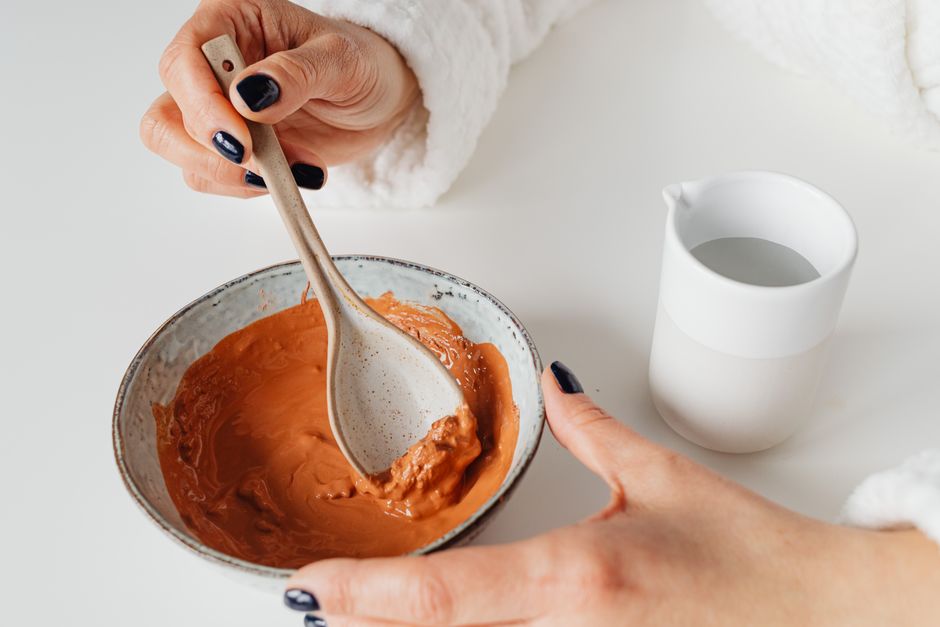
A hair mask works best when you apply it to clean, damp hair, keep it off your scalp unless the product is made for it, and leave it on for the time the label states — usually somewhere between 5 and 30 minutes. Timing matters more than technique for most people. Leave it on too briefly and the conditioning agents have little chance to bind to the hair surface. Leave it on far longer than directed and you gain nothing extra. The steps below cover how to prepare, apply, time, and rinse a mask so you get what the product can actually deliver.
What Does A Hair Mask Actually Do To Your Hair?
A hair mask is a concentrated conditioning treatment. Most contain the same families of ingredients as a regular conditioner — fatty alcohols, silicones, oils, proteins, and humectants — but at higher concentrations and with a thicker texture.
The outer layer of each hair strand is the cuticle, made of overlapping scales. Daily washing, heat styling, and chemical processing can lift and roughen those scales. Conditioners and masks smooth the cuticle and coat the surface with ingredients that reduce friction and help the hair hold moisture. This is a surface effect. It is real, and it is temporary.
Here is the part that gets oversold. Hair is not living tissue once it leaves the follicle. A mask cannot repair split ends or regrow damaged structure. What it can do is make hair feel softer, look shinier, and comb more easily until the next wash. That is a meaningful benefit, but it is cosmetic and short-lived.
How To Use A Hair Mask: Steps, Tips And Timing
Follow the product directions first. They are written for that specific formula, and a protein mask and a moisturizing mask do not behave the same way. The general sequence below applies to most rinse-out masks.
- Start with damp hair. Most masks spread more evenly on hair that has been wetted and gently towel-dried. Some products are designed for dry application, so check the label.
- Decide on clean versus dirty hair. Many masks work fine on unwashed hair. If your hair has heavy buildup from styling products, a quick shampoo first helps the mask reach the strand.
- Section the hair. Part it into two to four sections so you can reach the mid-lengths and ends without missing patches.
- Apply from mid-length to ends. These areas are older, more weathered, and drier than hair near the scalp. Use more product where hair is driest.
- Be careful at the scalp. Unless the product is labeled for scalp use, keep it off the roots. Scalp skin produces its own oils, and heavy conditioning there can leave roots flat or greasy.
- Comb through gently. A wide-tooth comb distributes the product. Work from ends upward to avoid tugging.
- Time it as directed. Set a timer. The label time is the tested time.
- Rinse thoroughly with lukewarm water. Cooler water does not “seal the cuticle” the way some advice claims, but it is gentler on the scalp than very hot water. Rinse until the water runs clear.
A non-obvious point: more product is not better. A thick layer that never fully rinses out can leave hair limp and weighed down. A moderate amount worked through the ends usually does more than a heavy coating.
How Long Should You Leave A Hair Mask On?
Leave it on for the time on the label. For most rinse-out masks that is somewhere between 5 and 30 minutes. The product was tested at that duration, and the conditioning ingredients have had time to do their work by then.
Leaving a mask on longer than directed is one of the most common mistakes. The extra time does not add extra conditioning. It can, however, let the product dry on the hair, which makes it harder to rinse and can leave a stiff or tacky feel.
Overnight masks exist, but they are a separate category. Only leave a mask on overnight if the product is specifically made for it. A standard rinse-out mask left on all night is not what the manufacturer intended and may irritate the scalp.
If your hair feels dry after a mask, the problem is usually frequency, not duration. Using a mask too often, or using a heavy one on fine hair, can cause buildup that mimics dryness.
How Often Should You Use A Hair Mask?
Once a week is a reasonable default for most people. That is common practice rather than a strict rule backed by trials, so treat it as a starting point and adjust.
Fine or thin hair often does better with less frequent use, or with a lighter formula. Thick, coarse, or chemically treated hair may tolerate more frequent masking. If hair starts to feel weighed down or looks dull, cut back.
People with a healthy scalp and undamaged hair may not need a mask at all. Regular conditioner does much of the same work. A mask is most useful when hair is genuinely dry, rough, or hard to comb.
Do You Put A Hair Mask On Wet Or Dry Hair?
Most masks are made for damp hair. Water helps the product spread and lets conditioning agents distribute evenly across the strand.
Some masks are formulated for dry hair, often as a pre-wash treatment. Those directions will say so. If the label does not specify, damp hair is the safer choice.
One practical tip: squeeze excess water out before applying. Hair that is dripping wet dilutes the mask and makes it slide off rather than absorb into the surface.
Should You Use A Hair Mask Before Or After Shampoo?
With most rinse-out masks, you shampoo first, then apply the mask, then rinse. Shampoo cleans the hair so the mask can coat a clean surface. Applying a mask to hair still loaded with oils or styling products limits how well it can work.
Pre-shampoo masks are the exception. These are applied to dry or damp hair before washing, left on for the stated time, then shampooed out. They are often heavier oil-based treatments. Follow the label on these — the order is part of how the product is designed to work.
How Do You Choose The Right Hair Mask?
Match the mask to your hair’s main problem rather than to marketing claims. The categories below are broad, and individual products vary.
- Dry or rough hair: look for moisturizing ingredients such as fatty alcohols, oils, and humectants.
- Fragile or over-processed hair: protein-containing masks are often used, but protein needs vary. Too much protein can leave some hair feeling stiff or brittle, so watch how your hair responds.
- Frizzy or hard-to-comb hair: silicones and oils can smooth the surface and reduce friction.
- Fine hair: lighter formulas rinse cleaner and are less likely to weigh hair down.
Ignore claims that a mask “repairs” hair at a structural level. No rinse-out product rebuilds broken bonds inside the hair. Bond-building treatments are a different product category, and even those work on specific chemical bonds rather than restoring hair to its original state.
What Mistakes Weaken A Hair Mask’s Results?
The most common mistakes are applying too much, leaving it on too long, and putting it on the scalp when it is meant for the ends. Each of these tends to leave hair greasy or limp rather than soft.
Rinsing with very hot water can strip some of the conditioning effect and irritate the scalp. Rinsing too quickly leaves residue. Both are easy to fix.
Using a mask as a substitute for regular trims does not work. Split ends cannot be mended by conditioning. Trimming is the only way to remove them.
Finally, watch for scalp reactions. If a mask causes itching, redness, or flaking, stop using it. Some people are sensitive to fragrances or specific preservatives, and a patch test on a small area is a reasonable precaution with any new product.
Frequently Asked Questions
How long should I leave a hair mask on?
Follow the time on the label, which for most rinse-out masks is between 5 and 30 minutes. Leaving it on longer than directed does not add benefit and can make the product harder to rinse out.
Can I leave a hair mask on overnight?
Only if the product is specifically made for overnight use. A standard rinse-out mask left on all night is not what it was designed for and may irritate the scalp.
Should I apply a hair mask to wet or dry hair?
Most masks go on damp hair, which helps the product spread evenly. Check the label, because some are made for dry application as a pre-wash treatment.
How often should I use a hair mask?
Once a week is a reasonable starting point for most people. Adjust based on how your hair feels — fine hair often needs less frequent use, and heavy buildup can make hair look dull.
