
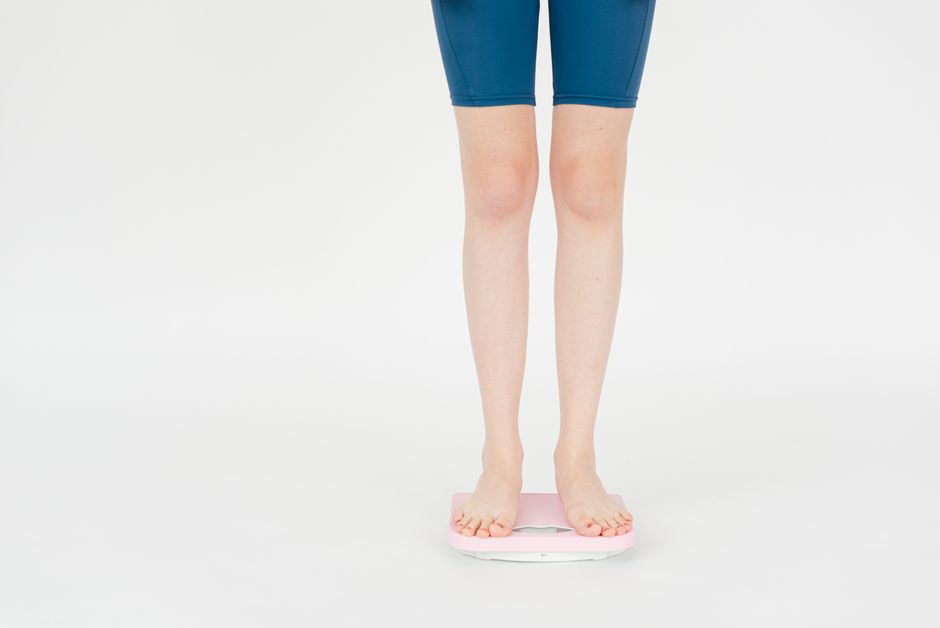
Weighing your food is the most accurate way to know how many calories and macronutrients you are actually eating. The method is simple: place your plate or container on the scale, press the tare button to reset it to zero, add your food, then log the weight in grams using a nutrition app or database. That number, not the size of the scoop or the “one cup” on the label, is what you enter to get your calories, protein, carbs, and fat.
Most people who track food without a scale are guessing, and research on portion estimation shows those guesses are often off by a meaningful margin. A scale removes the guesswork. It does not tell you what to eat. It tells you what you are actually eating, which is the starting point for almost everything else.
How To Use A Food Scale For Calories And Macros
The basic routine takes about ten seconds once you have done it a few times. The steps are the same whether you are weighing chicken, oats, or peanut butter.
- Turn the scale on and make sure it reads zero. If it does not, press tare.
- Set your empty plate, bowl, or food container on the scale. Press tare again so the display returns to zero.
- Add the food. For liquids, use a measuring cup or pour directly into the container on the scale.
- Read the weight in grams. Grams are the standard unit in nutrition databases and give you the most precision.
- Enter that weight into your tracking app or look it up in a nutrition database.
The reason grams matter more than ounces here is resolution. One ounce is about 28 grams, so a small error in ounces becomes a large error in grams. Most nutrition data is published per 100 grams, which makes the math clean.
If you are weighing something that comes in a package, you can skip the plate entirely. Put the whole container on the scale, tare it, then take out what you are eating and note how much the reading dropped. This is called the negative tare method, and it is useful for things like ice cream or cereal where you do not want to dirty an extra dish.
Why Weighing Beats Measuring Cups And Spoons
Volume measurements are unreliable for solid and semi-solid foods because the same cup can hold very different weights depending on how the food settles.
A cup of chopped nuts, for example, can weigh noticeably more or less depending on the size of the pieces and how tightly they pack. Flour is a classic case. A cup of flour scooped straight from the bag can weigh substantially more than a cup that was spooned in and leveled. The same recipe can end up with very different calorie totals depending on technique alone.
This is not a small issue for someone tracking macros. If your “cup” of oats is actually 20 percent heavier than the label assumes, your breakfast is 20 percent higher in calories and carbs than you logged. Over weeks, that gap adds up.
Liquids are different. Water, milk, and oil measure reasonably well by volume. But even here, a scale is often faster once you are used to it, and it avoids the mess of multiple measuring cups.
Raw Versus Cooked Weight: A Common Source Of Error
This is where a lot of tracking quietly goes wrong. Nutrition labels and databases usually list meat, grains, and vegetables in their raw or dry state unless they say otherwise.
When you cook rice, it absorbs water and gains weight. One hundred grams of dry rice becomes roughly two to three times that weight once cooked, depending on how much water it absorbs. If you weigh cooked rice and log it as if it were dry, you will record far more calories and carbs than you actually ate. The reverse mistake happens too.
The fix is simple. Decide which state you are logging and stay consistent. If the database entry says “raw” or “dry,” weigh before cooking. If it says “cooked,” weigh after. When in doubt, weigh raw and cook from there.
Meat loses water and fat during cooking, so cooked meat weighs less than raw. A raw chicken breast that weighs 150 grams might weigh closer to 110 grams after cooking. Logging the cooked weight against a raw database entry undercounts your protein and calories.



How To Handle Foods That Are Hard To Weigh
Some foods resist easy weighing. Mixed dishes, restaurant meals, and anything someone else prepared are the main challenges.
For home-cooked mixed dishes, the most accurate approach is to weigh each ingredient as you add it and divide the total by the number of portions. This takes more effort upfront but pays off if you eat the same dish several times.
For restaurant food, a scale is not practical. You are working from estimates. Nutrition information published by chain restaurants is often based on standard portions, and actual servings can vary. Treat these numbers as approximations, not measurements.
For foods you eat straight from a shared container, the negative tare method works well. Put the whole bag or jar on the scale, tare it, eat what you want, then weigh the container again. The difference is what you took.
One thing a scale cannot do is account for cooking oil, butter, or sauces that stay in the pan. If you cook with two tablespoons of oil and most of it remains in the skillet, you did not eat all of it. Weighing the oil before cooking overestimates your intake slightly. This is a small error for most people, but it is worth knowing it exists.
Reading Nutrition Labels With A Scale
Nutrition labels in the United States list calories and macros per serving, and the serving size is usually given in both a household measure and grams. The gram figure is the one to trust.
If a label says one serving is 30 grams and you weigh out 45 grams, you are eating 1.5 servings. Multiply every number on the label by 1.5. This is straightforward but easy to forget when you are in a hurry.
A few practical notes on labels:
- The grams listed are for the food as sold, not as cooked, unless stated.
- “About” servings per container means the number is rounded and not exact.
- Calories are rounded, so small discrepancies between your math and the label are normal.
- Fiber and sugar alcohols are listed separately because they affect net carbs differently, though how to count them varies by person and goal.
For foods without a label, such as fresh produce or bulk items, use a nutrition database. The values for basic whole foods like apples, chicken breast, and brown rice are well established.
Do You Need To Weigh Everything Forever
No. A scale is a tool for calibration, not a life sentence.
Many people use a scale consistently for a period of weeks or months to learn what real portions look like. After that, they often weigh only the calorie-dense foods where eyeballing fails, and estimate the rest.
Calorie-dense foods are the ones worth weighing most. Oils, nut butters, nuts, cheese, and butter pack a lot of calories into a small volume. A small handful of nuts can easily be double the portion you intended. These are the foods where a scale earns its place on the counter.
Low-calorie, high-volume foods like leafy greens and most vegetables are more forgiving. Being off by 30 grams of spinach changes almost nothing. Being off by 30 grams of peanut butter changes a lot.
There is also a psychological piece worth naming. Some people find weighing food helpful and neutral. Others find it stressful or obsessive. If tracking starts to feel like it is running your life rather than supporting your goals, that is a signal to step back. A registered dietitian can help you find an approach that fits. For anyone with a history of disordered eating, calorie and macro tracking may not be appropriate at all, and that is worth discussing with a clinician.
Common Mistakes That Throw Off Your Numbers
Most tracking errors come from a handful of repeatable slips.
- Forgetting to tare. If you do not zero out the plate or container, its weight gets added to your food.
- Mixing raw and cooked. Logging cooked weight against raw data, or the reverse, is one of the most common and largest errors.
- Weighing frozen food and logging it as fresh. Frozen items often include added water or ice glaze, which adds weight but not calories.
- Not accounting for oil and sauces. These can add a lot of calories that never make it onto the plate but do make it into your body.
- Trusting the label’s household measure over grams. The gram figure is the accurate one.
- Weighing once and assuming it stays the same. Portions drift over time. Re-weigh occasionally.
None of these are hard to fix. They just require attention until the habit forms.
A food scale does not make you eat better on its own. It removes the uncertainty about what you are eating. What you do with that information is a separate question, and one that depends on your goals, your preferences, and in many cases the guidance of a qualified professional.
Frequently Asked Questions
Do I weigh my food before or after cooking?
Weigh it in the same state the nutrition database uses. Most entries for meat, rice, and pasta are for the raw or dry weight, so weigh before cooking unless the entry says “cooked.”
Is a food scale more accurate than measuring cups?
Yes, for solid and semi-solid foods, because the same cup can hold different weights depending on how the food packs. Liquids measure reasonably well by volume, but a scale is still more precise.
Do I need to weigh every single food I eat?
No. Many people weigh consistently for a while to learn portion sizes, then focus on calorie-dense foods like oils, nuts, and cheese where small errors matter most.
Why do my calories not match the label when I weigh my food?
Labels round their numbers, and serving sizes are often approximate, so small differences are normal. Larger gaps usually mean a raw-versus-cooked mix-up or a forgotten tare.
