
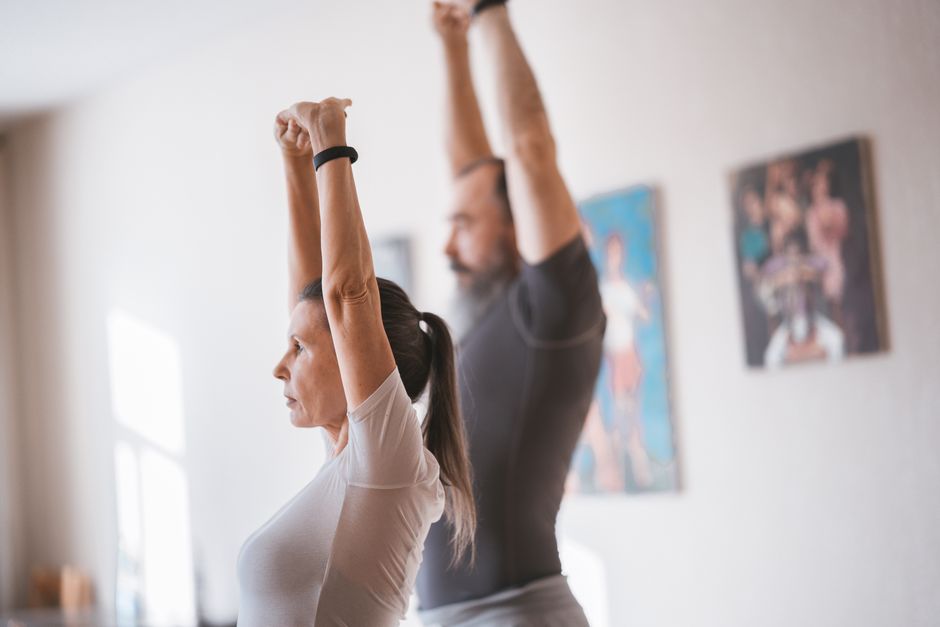
A locked or stuck sacroiliac joint usually means the joint has lost normal movement, not that something has physically snapped out of place. You can often improve it on your own with gentle movement, breath work, and targeted exercises that restore motion to the pelvis. The key is knowing which movements help, which ones make it worse, and when to stop and see a professional.
The sacroiliac joint sits where the base of your spine meets your pelvis. Two of them, one on each side. They do not move much — just a few millimeters — but that small motion matters. When one side stops gliding normally, the surrounding muscles can tighten, and you feel it as pain, stiffness, or a deep ache in the low back, buttock, or groin.
What Does It Mean When Your SI Joint Feels Locked?
A locked SI joint is a description of how it feels, not a formal medical diagnosis. The joint has not dislocated. What has likely happened is a change in how the joint moves, combined with muscle guarding around the pelvis.
The SI joints are held together by some of the strongest ligaments in the body. They are built for stability, not for large ranges of motion. Normal movement at this joint is measured in millimeters. When muscles around the pelvis — the glutes, deep hip rotators, hamstrings, and lower back muscles — become tight or imbalanced, they can restrict that already small motion.
This is why the sensation of a joint being “stuck” or “out” is real but the explanation is usually mechanical, not structural. Something in the surrounding system has changed how the joint glides.
Pain from the SI joint typically shows up in a specific area. It sits below the belt line, often on one side. It may radiate into the buttock or the back of the thigh. It usually does not travel below the knee. That last detail matters because pain that shoots down the leg past the knee is more typical of nerve involvement from the spine, which is a different problem.
How To Unlock SI Joint By Yourself: What Actually Helps
The goal is not to force the joint. It is to reduce the muscle tension that is holding it, then restore gentle movement. Forcing a locked joint rarely works and can make things worse.
Start with breathing. The diaphragm and pelvic floor work together, and slow breathing can reduce the guarding pattern in the deep muscles around the pelvis. Lie on your back with your knees bent. Breathe in through your nose for a slow count, then out through your mouth. Let your lower ribs expand. Do this for a few minutes before any movement.
From there, these movements tend to be the most useful:
- Knee-to-chest: Lie on your back and bring one knee toward your chest, holding it with both hands. Keep the other foot flat. Hold for a slow breath, then switch sides.
- Figure-four stretch: Lie on your back with both knees bent. Cross one ankle over the opposite knee and gently pull the supporting leg toward you. You should feel this in the buttock, not the low back.
- Pelvic tilts: Lie on your back with knees bent. Gently flatten your lower back toward the floor, then release. Small, slow movements.
- Supine twist: Lie on your back, drop both knees to one side while keeping your shoulders down, then switch. Keep it gentle.
- Cat-cow on hands and knees: Alternate arching and rounding your spine slowly. This moves the whole pelvis, not just the SI joint.
Move slowly. If a movement causes sharp pain or sends pain down your leg, stop. A dull stretch is fine. Sharp pain is a signal to back off.
One thing worth knowing: the SI joint does not “pop back in” the way some people describe. When a joint feels better after a movement, it is usually because the surrounding muscles released, not because a bone shifted. That distinction matters because it changes what you should do next.
Which Muscles Matter Most for SI Joint Movement?
The glutes do most of the work of stabilizing the pelvis during walking, standing, and lifting. When they are weak, other muscles compensate. Over time, that pattern can restrict normal SI joint motion.
The deep hip rotators — a group of small muscles behind the hip — also play a role. When they are tight, they can limit the small gliding motion the SI joint needs.
Strengthening the glutes, especially the gluteus medius on the side of the hip, is a common part of treatment. Clamshells, side-lying leg lifts, and bridges are typical starting points. These are widely used in physical therapy, though the evidence for any single exercise being the best is not strong. What the research does support is that graded strengthening and movement generally help low back and pelvic pain more than rest alone.
Stretching the hip flexors and hamstrings can also help if they are tight. But stretching alone rarely fixes the problem. The pattern that tends to work is: release tension, restore motion, then build strength so the joint stays mobile.




What Makes an SI Joint Worse?
Certain positions and habits load the SI joint unevenly. Standing on one leg for long periods, sitting with a wallet in a back pocket, or sleeping in a twisted position can all contribute.
So can doing too much too soon. When a joint starts to feel better, the temptation is to push harder. That often triggers the same guarding pattern again.
Movements that tend to aggravate a sensitive SI joint include:
- Deep lunges or split squats
- High-impact running on uneven ground
- Heavy deadlifts or squats with poor form
- Sitting cross-legged for long stretches
- Standing with weight shifted onto one hip
This does not mean these are off-limits forever. It means during a flare, they are usually not the best choice. Once the joint is calmer and the muscles around it are stronger, many people return to them without issue.
When Should You See a Professional Instead?
Self-treatment works for many mild cases. It does not work for everything, and some symptoms need a proper evaluation.
See a doctor or physical therapist if:
- Pain travels below the knee
- You have numbness, tingling, or weakness in the leg
- You lose control of your bladder or bowel
- Pain follows a fall or accident
- Symptoms get worse instead of better after a few weeks of self-care
- You have fever, unexplained weight loss, or pain that wakes you at night
The last two on that list are not typical SI joint symptoms. They point to something else and need medical attention.
A physical therapist can assess how your pelvis moves, check for leg length differences, and look at your walking pattern. Some clinicians use a belt or taping around the pelvis to test whether support changes your pain. That test can help confirm the SI joint is involved, though it is not perfect.
For persistent cases, some doctors offer corticosteroid injections into the joint. These can reduce pain, but they treat the symptom, not the underlying movement problem. They are usually combined with physical therapy, not used alone.
How Long Does It Take to Feel Better?
Mild SI joint irritation often improves within a few weeks of consistent, gentle movement and activity modification. That timeline is a general pattern, not a guarantee. Some people feel better in days. Others take longer, especially if the problem has been building for months.
What tends to matter most is consistency. A few minutes of gentle movement most days is more useful than an aggressive session once a week. The joint responds to regular, low-level input, not to being forced.
If nothing changes after several weeks of sensible self-care, that is a signal to get assessed. It does not mean you did something wrong. It means the problem may need a different approach.
Frequently Asked Questions
Can you fix a locked SI joint on your own?
Many mild cases improve with gentle movement, breathing, and strengthening exercises done at home. If pain is severe, lasts more than a few weeks, or travels down the leg, you should see a professional.
How do you know if your SI joint is out of place?
The SI joint does not typically go “out of place” in the way people describe — it loses normal movement rather than dislocating. A feeling of being stuck usually reflects muscle guarding and restricted motion, not a bone that has shifted.
What is the fastest way to relieve SI joint pain?
There is no single fastest method, but gentle movement, avoiding aggravating positions, and reducing muscle tension around the pelvis are common first steps. Some people find short-term relief from ice or heat, though evidence for either is limited.
Should you stretch or strengthen a locked SI joint?
Both usually help, but the order matters — releasing tension first, then building strength, tends to work better than stretching alone. Strengthening the glutes helps stabilize the pelvis so the joint can move normally.
