
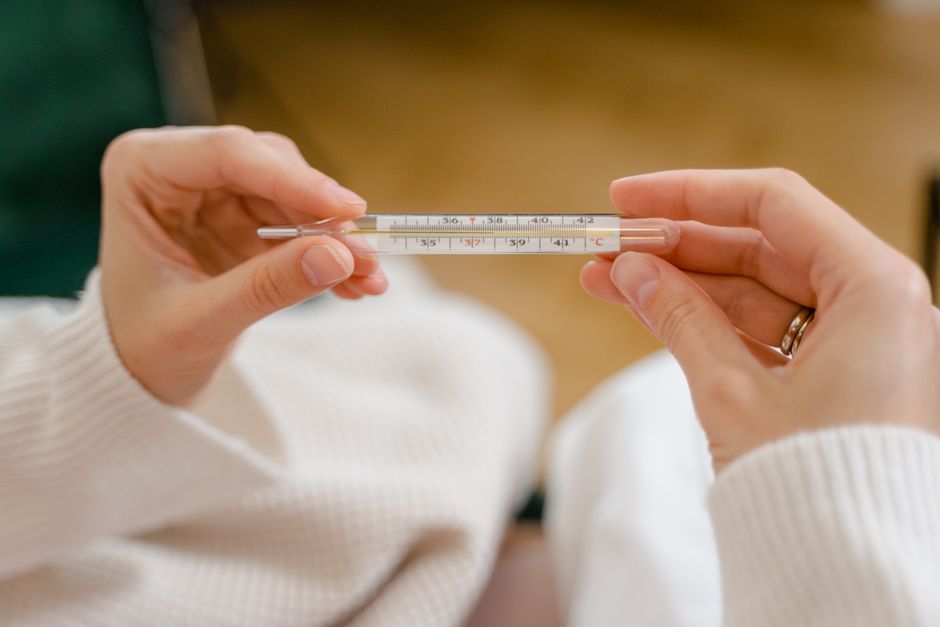
The Celsius scale is a temperature system where water freezes at 0 degrees and boils at 100 degrees at standard atmospheric pressure. To convert between Celsius and Fahrenheit, use two simple formulas: multiply Celsius by 1.8 and add 32 to get Fahrenheit, or subtract 32 from Fahrenheit and divide by 1.8 to get Celsius. Once you know a handful of reference points — like 37°C for body temperature and 20°C for a comfortable room — you can estimate most everyday temperatures without doing any math at all.
How To Understand Celsius Scale And Conversions?
Celsius is built on a decimal scale. The gap between freezing and boiling water is divided into exactly 100 equal degrees. That clean structure is why most of the world uses it.
Anders Celsius, a Swedish astronomer, proposed the scale in 1742. It was later refined and adopted as part of the metric system. Today it is the standard temperature scale in nearly every country except the United States, which still uses Fahrenheit for everyday weather and cooking.
The scientific community uses Celsius almost universally. You will also see it written as °C. In scientific writing, temperatures are sometimes expressed in kelvins, which use the same degree size as Celsius but start at absolute zero. One kelvin equals one degree Celsius in size, so the two scales move together.
The key insight most people miss: Celsius and Fahrenheit are not measuring different things. They measure the same physical property — the average kinetic energy of molecules — using different reference points and different degree sizes. A Fahrenheit degree is smaller than a Celsius degree. That is why a change of 1°C equals a change of 1.8°F.
What Is The Formula To Convert Celsius To Fahrenheit?
The formula is: °F = (°C × 1.8) + 32.
Start with your Celsius temperature. Multiply it by 1.8. Then add 32. The result is the Fahrenheit equivalent.
Here is a worked example. Suppose it is 25°C outside. Multiply 25 by 1.8 to get 45. Add 32 to get 77. So 25°C equals 77°F.
Another example: 0°C. Multiply 0 by 1.8 to get 0. Add 32 to get 32. So 0°C equals 32°F — the freezing point of water on the Fahrenheit scale.
The factor 1.8 is sometimes written as 9/5. Both give the same result. If you prefer fractions, multiply by 9, divide by 5, then add 32.
Why 1.8? Because the Fahrenheit scale places freezing and boiling water 180 degrees apart, while Celsius places them 100 degrees apart. The ratio of 180 to 100 is 1.8. That is the entire basis of the conversion factor.
How Do You Convert Fahrenheit To Celsius?
The reverse formula is: °C = (°F − 32) ÷ 1.8.
Subtract 32 from your Fahrenheit temperature first. Then divide by 1.8. That gives you Celsius.
Example: 98.6°F. Subtract 32 to get 66.6. Divide by 1.8 to get 37. So 98.6°F equals 37°C — normal human body temperature.
Example: 72°F. Subtract 32 to get 40. Divide by 1.8 to get approximately 22.2. So 72°F is about 22°C.
A common mistake is dividing before subtracting. The order matters. If you divide 98.6 by 1.8 first, you get about 54.8, then subtracting 32 gives about 22.8 — which is wrong. Always subtract 32 first, then divide.





What Are The Key Reference Points To Memorize?
Memorizing a few anchor temperatures lets you estimate conversions in your head without reaching for a calculator. These are among the most useful:
- −40°C = −40°F. This is the one temperature where both scales read the same number.
- 0°C = 32°F. Water freezes.
- 10°C = 50°F. A cool day; light jacket weather.
- 20°C = 68°F. Comfortable room temperature.
- 30°C = 86°F. A warm summer day.
- 37°C = 98.6°F. Normal human body temperature.
- 40°C = 104°F. A fever; also a hot day.
- 100°C = 212°F. Water boils at sea level.
With these anchors, you can estimate any temperature within a few degrees. If someone says it is 28°C, you know it is between 68°F and 86°F — closer to 82°F. That is often precise enough for everyday decisions.
For cooking, the anchors matter more. Oven temperatures in Celsius and Fahrenheit are far apart numerically, so guessing is risky. A recipe calling for 180°C means 356°F, not 180°F. Always convert exactly when baking or roasting, because the difference between 350°F and 356°F can affect delicate recipes.
Why Does The United States Still Use Fahrenheit?
The US adopted Fahrenheit before the metric system became widespread, and switching a country’s everyday measurement system is enormously disruptive. The US did attempt metrication in the 1970s, but the effort was voluntary and largely stalled.
Fahrenheit remains in daily use for weather, cooking, and home thermostats in the US. However, Celsius is used in American science, medicine, and engineering. This creates a split: a US weather forecast is in Fahrenheit, but a US medical chart may list body temperature in Celsius.
This dual system is why conversion skills matter for Americans in particular. If your doctor says your temperature is 38.5°C, you need to know that is about 101.3°F — a fever.
Where Does Celsius Matter Most In Health And Medicine?
Body temperature is measured in Celsius throughout most of the world and in most clinical settings. Understanding the Celsius values helps you interpret medical information accurately.
Normal body temperature is generally cited as around 37°C (98.6°F), but this is an average, not a fixed number. Normal temperature varies by person, time of day, and measurement method. Some research suggests the true population average may be slightly lower than 37°C, and it can shift depending on where on the body you measure.
Fever is generally defined as a temperature at or above 38°C (100.4°F). This is a widely used clinical threshold. Temperatures between 37.5°C and 38°C are sometimes called low-grade elevations, though definitions vary.
Hypothermia in adults is generally defined as a core body temperature below 35°C (95°F). This is a medical emergency. The Celsius values here are important because emergency guidance and clinical protocols often use them.
If you are converting a temperature reading for a child or during pregnancy, use exact conversion rather than estimation. Small differences matter more in these groups, and clinical guidance should always come from a healthcare provider rather than a conversion table.
What Common Mistakes Should You Avoid?
Most conversion errors come from a few predictable sources.
- Reversing the formula. Adding 32 before multiplying, or subtracting before dividing, gives wrong answers. Follow the order exactly.
- Confusing the scales’ degree sizes. A change of 1°C is larger than a change of 1°F. A 5°C increase equals a 9°F increase.
- Assuming 0°F means freezing. Water freezes at 32°F, not 0°F. Zero Fahrenheit is about −18°C.
- Forgetting that −40 is the crossover point. Below −40, the Celsius number is higher than the Fahrenheit number. Above it, the reverse is true.
One more point worth clarifying: the “degree” in Celsius and Fahrenheit is not the same unit. This is why you cannot simply add or subtract a fixed number to convert. The scales start at different points and use different interval sizes. Both facts are baked into the formulas.
How Can You Convert Quickly Without A Calculator?
For rough estimates, use the “double and add 30” shortcut. Double the Celsius temperature, then add 30. This gives a Fahrenheit estimate that is close for most everyday temperatures.
Example: 20°C. Double it to get 40. Add 30 to get 70°F. The exact answer is 68°F. The estimate is off by 2 degrees, which is fine for weather.
Example: 30°C. Double to get 60. Add 30 to get 90°F. The exact answer is 86°F. The estimate is off by 4 degrees.
This shortcut works best between 0°C and 30°C. Outside that range, the error grows. For anything precise — cooking, medical readings, science — use the exact formula.
To go the other way, subtract 30 from the Fahrenheit temperature, then divide by 2. This reverses the shortcut and gives a rough Celsius estimate.
Frequently Asked Questions
What is 100 degrees Fahrenheit in Celsius?
100°F equals approximately 37.8°C. Subtract 32 from 100 to get 68, then divide by 1.8 to get about 37.8.
Is 37 degrees Celsius a fever?
No. 37°C (98.6°F) is generally considered normal body temperature, not a fever. Fever is typically defined as 38°C (100.4°F) or higher.
What temperature is 40 degrees Celsius in Fahrenheit?
40°C equals 104°F. Multiply 40 by 1.8 to get 72, then add 32 to get 104.
Why is Celsius easier than Fahrenheit?
Celsius uses 0 for freezing and 100 for boiling water, making it a base-100 scale that is simple to remember. Fahrenheit places those same points at 32 and 212, which requires more memorization.
