
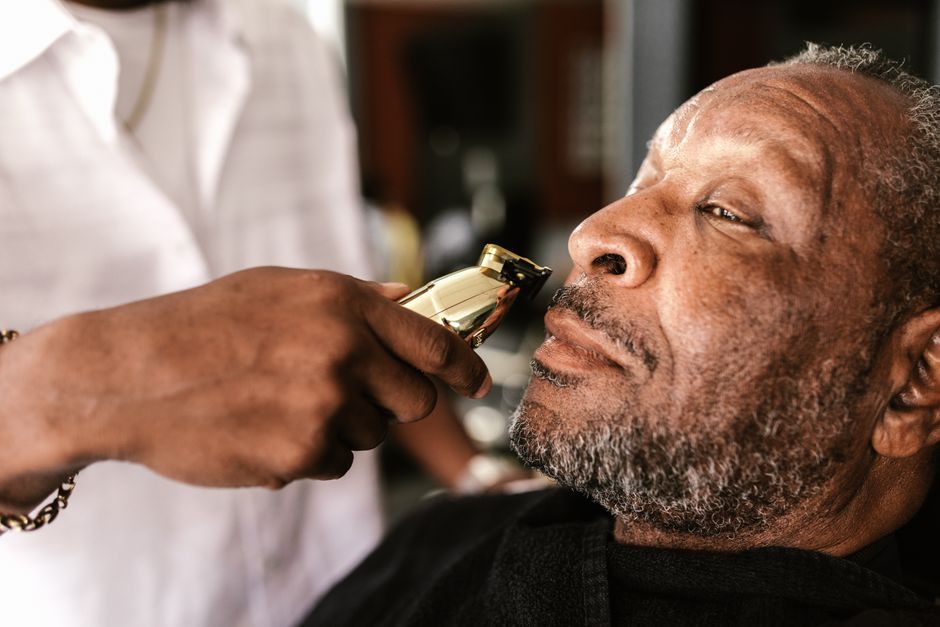
Trimming your own hair at home is a practical skill that saves money and works well for short styles, clipper cuts, and simple cleanups. The basic method is to cut less than you think you need, work in small sections with sharp tools, and use mirrors to check your progress from multiple angles. Most men can maintain a short haircut between professional visits with a few inexpensive tools and a little patience.
What Tools Do You Actually Need to Trim Your Own Hair?
A basic home trimming setup costs far less than two or three barber visits. You do not need professional-grade equipment to get a clean result, but you do need tools that are sharp and consistent.
The essentials include:
- Hair clippers with adjustable guards or attachment combs. Corded models tend to have more consistent power than cordless ones.
- Barber shears (not kitchen scissors) for any scissor work. Dull or wrong-purpose scissors crush hair and create uneven lines.
- A fine-tooth comb for lifting hair away from the scalp before cutting.
- Spray bottle with water for dampening hair when cutting with scissors.
- A hand mirror plus a wall-mounted or bathroom mirror so you can see the back of your head.
- Clipper oil and a small brush for maintaining the blades.
Sharp blades matter more than brand names. Dull clippers pull hair and leave uneven patches. Clean and oil your clippers after each use to keep them cutting smoothly.
How Should You Prepare Your Hair Before Cutting?
Start with clean, dry hair for clipper work. Clean hair moves through clipper blades more smoothly, and dry hair shows its true length. If you plan to cut with scissors, slightly damp hair is easier to control because it stays in place rather than slipping between your fingers.
Comb your hair in the direction it naturally grows. Look at your hairline, cowlicks, and any areas where the hair grows in different directions. These patterns affect how the finished cut will look. Cutting against the natural growth pattern can create spots that stick up or lie flat unexpectedly.
Decide on your target length before you start. Once hair is cut, it cannot be put back. For clipper cuts, this means choosing your guard size carefully. Guard numbers correspond to the length of hair left behind, though exact lengths vary slightly between manufacturers. A guard that leaves 6 millimeters of hair produces a very short cut; a guard that leaves 12 millimeters leaves noticeably more length.
Set up good lighting. Shadows cause you to miss uneven areas. A bathroom with bright overhead light and a mirror you can angle works better than a dim room.
How Do You Cut the Back of Your Head by Yourself?
The back of the head is the hardest part to reach. A hand mirror held at an angle to a wall mirror lets you see what you are doing. Some men also use a second mirror propped at eye level or a three-way mirror if available.
Start at the bottom near the neckline and work upward. Move the clippers in slow, overlapping strokes. Do not press hard against the scalp; let the guard do the work. Rushing causes missed spots and uneven lines.
For a fade, you will need to switch guards gradually. Begin with the shortest guard near the neck and lower sides, then move to longer guards as you work upward. Blending between guard lengths takes practice. The transition zone is where most home haircuts look uneven, so overlap your strokes and check frequently in the mirror.
If you are only maintaining an existing cut, you can often just touch up the neckline and around the ears with a shorter guard or the clippers without a guard. This keeps the shape without risking the rest of the cut.





How Do You Trim the Sides and Around the Ears?
The sides are easier to reach but still require attention around the ears. Fold the ear down gently with one hand to protect it while running clippers along the hairline. Use the corner of the blade for tight areas rather than pressing the full blade flat.
Work from the bottom upward on the sides, just as you did on the back. Keep the clipper strokes parallel to the hair growth direction. If you are creating a fade, the same gradual guard-switching approach applies.
Around the ears, a common mistake is cutting too high or leaving stragglers. Use a comb to lift the hair near the ear and trim with scissors or a detail trimmer for a cleaner line. Take your time here. These small areas are visible and mistakes show quickly.
For the sideburns, decide on a length and shape before cutting. Most men keep sideburns level with the middle of the ear or slightly below. Trim them with a detail trimmer or scissors, checking both sides for symmetry.
How Do You Trim the Top and Blend It With the Sides?
The top is the easiest section to reach. If you are keeping length on top, use scissors and a comb. Lift a small section of hair with the comb, hold it between your fingers, and cut just above your fingers. Work in small sections across the top of your head.
Cut less than you think you need. You can always take more off, but you cannot add it back. Start with a conservative amount and check the result before continuing.
Blending the top with the sides is where many home haircuts fall short. The transition should be gradual. If the top is noticeably longer than the sides with a harsh line between them, the cut looks disconnected. Use scissors to point-cut the transition area, or use a longer guard on the clippers to soften the line.
Point-cutting means holding the scissors vertically and snipping into the ends of the hair rather than cutting straight across. This creates a softer edge and helps blend two lengths together. It takes practice but is one of the most useful techniques for a natural-looking result.
What Mistakes Should You Avoid When Cutting Your Own Hair?
The most common mistake is cutting too much too fast. Hair grows slowly, and a bad cut takes weeks to correct. Always start with a longer guard or leave more length than your target, then refine.
Other frequent errors include:
- Using dull tools. Dull clippers and scissors create uneven cuts and pull hair.
- Cutting wet hair with clippers. Wet hair clumps and can jam clippers. Save wet cutting for scissor work only.
- Ignoring natural growth patterns. Cowlicks and whorls need to be worked with, not against.
- Skipping the mirror check. Always check the back and sides from multiple angles before finishing.
- Cutting in poor lighting. You will miss uneven areas that are obvious in daylight.
Another mistake is trying to fix a bad area by cutting more. If something looks off, stop and assess. Cutting more hair usually makes the problem worse rather than better.
When Should You See a Professional Instead?
Home trimming works well for maintenance between professional cuts. It is less reliable for major style changes, complex fades, or dramatic length changes. If you want a completely different look, a barber or stylist has the training and tools to shape it correctly the first time.
Some hair types and textures are harder to cut evenly at home. Very curly hair, for example, behaves differently when cut dry versus wet, and the final shape can be unpredictable. Coarse or thick hair may require more powerful clippers than home models provide.
If you have a special event coming up or you are not confident in your ability to blend the sides and top, a professional cut is the safer choice. There is no shame in getting help for the parts you cannot see or reach well.
For most men with short to medium-length hair, though, regular home trims between professional visits are entirely manageable. The key is patience, good tools, and a willingness to go slowly.
Frequently Asked Questions
Can you trim your own hair with just clippers?
Yes, clippers alone can maintain short haircuts, especially if you use guard attachments for consistent length. For longer styles or blending, scissors are usually needed as well.
How do you cut the back of your head without help?
Use two mirrors positioned so one reflects the back of your head into the other. Work slowly from the neckline upward and check your progress frequently.
Should you cut your hair wet or dry?
Cut with clippers on dry hair and with scissors on slightly damp hair. Wet hair clumps and can jam clippers, while damp hair stays in place better for scissor cutting.
How often should you trim your own hair?
For short styles, most men need a trim every two to four weeks to maintain shape. Longer styles can go six to eight weeks between trims.
