
Elbow tendonitis is an overuse injury, and the core of treatment is calming the irritated tendon while keeping the arm moving in ways that do not make it worse. Most people improve with load management, relative rest, and a graded strengthening program over weeks to months. Anti-inflammatory measures can help with pain in the short term, but they do not repair the tendon. Surgery is reserved for the minority who do not improve after a genuine, consistent course of non-surgical care.
What Is Elbow Tendonitis, Exactly?
Tendonitis means inflammation of a tendon — the tough cord of tissue that attaches muscle to bone. In the elbow, two main problems get called tendonitis.
Lateral elbow tendonitis, often called tennis elbow, affects the tendons on the outside of the elbow. These attach the forearm extensor muscles to a bony bump called the lateral epicondyle. Medial elbow tendonitis, or golfer’s elbow, affects the tendons on the inside of the elbow, where the forearm flexor muscles attach to the medial epicondyle.
Here is a clarification that matters. Research using tissue samples has shown that long-standing tendon pain often involves very little true inflammation. Instead, the tendon shows a breakdown and disrepair of its collagen structure. Some researchers call this tendinopathy rather than tendonitis, because the problem is degenerative more than inflammatory.
This distinction is not academic. It helps explain why anti-inflammatory drugs can ease pain without fixing the underlying problem, and why loading the tendon through exercise is central to recovery.
What Causes Elbow Tendonitis?
Repetitive strain is the usual cause. The forearm muscles contract thousands of times during tasks that involve gripping, twisting, or lifting, and the tendon takes the cumulative load.
Common triggers include:
- Racket sports and throwing
- Typing and mouse use with poor wrist and arm posture
- Manual work involving gripping tools or repeated wrist motion
- Lifting weights with heavy pulling or gripping
- Sudden increases in activity after a period of rest
Age matters too. These injuries most often appear between ages 35 and 55. That said, cause is often multifactorial. A single clear trigger is not always identifiable, and many people with the same activities never develop symptoms. Weak forearm and shoulder muscles, poor technique, and abrupt changes in workload are commonly cited contributing factors, though the evidence linking each one specifically is not equally strong.
How To Treat Tendonitis Elbow?
Treatment works best in stages, and the sequence matters more than any single remedy.
Step one is load management. This does not mean total rest. Complete immobilization can weaken the tendon and the muscles around it. Instead, reduce or modify the activities that provoke pain while keeping the arm active in pain-free ranges. Many clinicians describe this as relative rest.
Step two is pain control during the early phase. Ice may reduce pain for some people, though evidence that it speeds healing is limited. Over-the-counter pain relievers such as acetaminophen, or nonsteroidal anti-inflammatory drugs such as ibuprofen, are commonly used for short-term symptom relief. These treat symptoms, not the tendon itself.
Step three is progressive strengthening. This is the part most strongly supported by evidence. Eccentric and isometric exercises — movements where the muscle lengthens under tension or holds a steady contraction — are widely used for elbow tendinopathy. A physical therapist can set an appropriate starting load and progress it. Expect this to take weeks to months, not days.
Step four is addressing the cause. If the problem is tied to a workstation, a racket grip, or a lifting technique, changing that pattern reduces the chance of recurrence.
Other options exist but carry more uncertainty. Corticosteroid injections can reduce pain in the short term, but research indicates they are associated with worse outcomes over the longer term compared with other approaches, and repeated injections carry risk. Platelet-rich plasma injections have been studied, and results are mixed. Some studies suggest benefit; others do not. No large, consistent body of evidence confirms they work better than placebo or than simpler treatment.
Surgery — typically releasing or repairing the affected tendon — is generally considered only after a substantial period of non-surgical treatment has failed. The exact timeline varies by clinician, but it is usually measured in months, not weeks.





What Exercises Help Elbow Tendonitis?
Exercise is the backbone of recovery, but the type and dose matter. The general principle is to load the tendon enough to stimulate repair without provoking a flare.
For lateral elbow tendonitis, common exercises include wrist extension movements performed slowly with a light weight, and isometric holds where the wrist is held in a fixed position against resistance. For medial elbow tendonitis, similar principles apply to wrist flexion and forearm rotation.
A useful rule many therapists use: some discomfort during exercise is acceptable, but pain should not spike sharply or linger well past the session. If it does, the load is too high.
This is where a physical therapist earns their value. The right starting resistance, the right number of repetitions, and the right progression are individual. No single protocol works for everyone, and the evidence does not identify one best exercise routine. What the evidence does support is that progressive loading, done consistently, helps more than rest alone.
Do Braces, Straps, and Ice Help?
Counterforce braces and straps are popular, and some people report less pain while wearing them. The evidence for their effectiveness is limited and mixed. They may help by changing how force is distributed across the forearm, but they are not a treatment for the underlying tendon problem.
Ice is widely used for pain relief. It can numb the area and reduce discomfort temporarily. Whether it changes healing is not well established.
Stretching is often recommended, but aggressive stretching can irritate a painful tendon. Gentle, pain-free stretching is generally better tolerated than forced stretching.
One honest point: many of these tools are used because they are low-risk and may help symptoms, not because strong trials prove they change the course of recovery. That is a reasonable reason to use them, as long as they are not a substitute for loading and activity modification.
How Long Does Elbow Tendonitis Take To Heal?
Recovery timelines vary widely, and this is one place where honesty matters more than encouragement. Many people improve within several weeks to a few months with consistent treatment. Others take longer, and a portion continue to have some symptoms for a year or more.
Factors that seem to slow recovery include long duration of symptoms before treatment starts, continued aggravation of the tendon, and certain health conditions. The evidence on exactly which factors predict a slower course is not fully settled.
What is clear is that patience and consistency matter. Tendons heal slowly because they have limited blood supply compared with muscle. Programs that are stopped after a week or two, or restarted and abandoned repeatedly, tend to produce poor results.
When Should You See a Doctor?
See a healthcare provider if pain is severe, if it follows a specific injury, if there is numbness, tingling, or weakness, or if symptoms are not improving after several weeks of self-care.
These signs can point to something other than tendonitis. Nerve compression, arthritis, and other conditions can cause elbow and forearm pain, and the treatment differs. A proper exam helps sort this out.
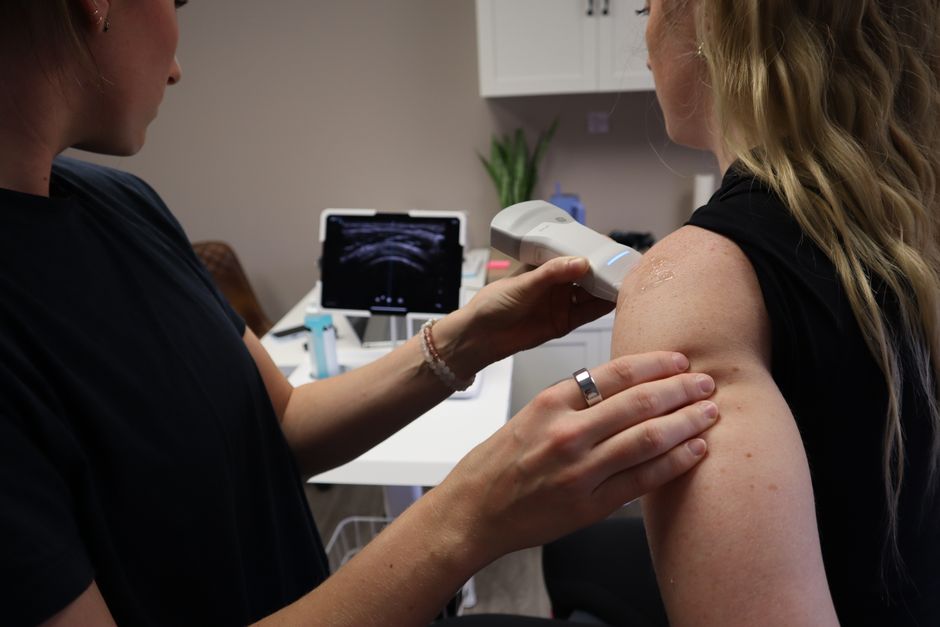
Imaging such as ultrasound or MRI is not always needed. It is sometimes used when the diagnosis is unclear or when symptoms persist despite treatment.
Can You Prevent Elbow Tendonitis From Coming Back?
Recurrence is common, especially if the activities that caused it continue unchanged. Prevention focuses on the same principles as treatment.
- Build forearm and shoulder strength gradually
- Increase activity loads slowly rather than in jumps
- Adjust tools, grips, and workstation setup to reduce strain
- Take breaks from repetitive gripping and typing
- Address pain early rather than pushing through it
None of these steps guarantees prevention. They reduce risk based on the general understanding of how overuse injuries develop, and the evidence supporting each specific measure varies.
Frequently Asked Questions
Does elbow tendonitis go away on its own?
Many cases improve over time with activity modification, though recovery can take weeks to months. Complete rest is generally not recommended because it can weaken the tendon and surrounding muscles.
Is it better to rest or exercise an elbow tendonitis?
Relative rest — avoiding the activities that provoke pain — combined with progressive strengthening is generally better than total rest. Exercise loads the tendon in a controlled way that supports repair.
Do cortisone shots cure elbow tendonitis?
Corticosteroid injections can reduce pain in the short term, but research links them to worse longer-term outcomes compared with other treatments. They are not considered a cure for the underlying tendon problem.
How long before I should consider surgery for elbow tendonitis?
Surgery is usually considered only after months of consistent non-surgical treatment have failed. The exact timeline varies, and most people improve without it.
