
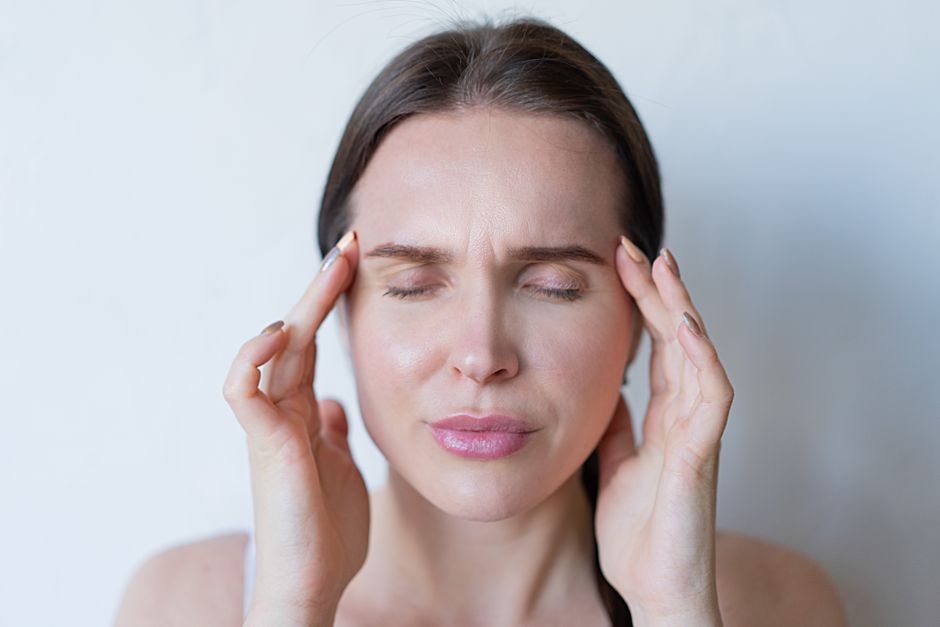
A dental crown that sits too high can cause a headache that feels like it is coming from your jaw, temple, or the top of your head. The fix is almost always to have the dentist adjust the crown’s biting surface, not to treat the headache with medication. Until that bite correction happens, over-the-counter pain relievers and soft foods can reduce discomfort, but they do not solve the underlying problem.
How To Treat Headaches From Misplaced Crown Pain
The treatment is a bite adjustment at the dentist’s office. This is usually a quick procedure where the dentist uses articulating paper, a thin colored film you bite down on, to see exactly where the crown is hitting too hard or too early. Those high spots get gently reshaped with a fine drill or polishing bur until your bite feels even on both sides.
Most people feel relief within a day or two of the adjustment. Some need a second visit because the bite can shift slightly as the anesthesia wears off or as the jaw muscles relax. That is normal and not a sign anything went wrong.
What does not work is waiting it out for weeks, grinding the crown down yourself, or taking painkillers indefinitely while ignoring the source. A high crown keeps the problem going every time you chew, swallow, or clench.
What the dentist actually does
- Checks your bite with articulating paper in several positions
- Identifies the high spots on the crown
- Reshapes the surface in small increments
- Rechecks the bite after each adjustment
- Schedules a follow-up if the bite still feels off
If the crown is too high to fix by reshaping, the dentist may need to remove it and take a new impression. This is less common but happens when the crown was seated incorrectly from the start.
Why Does a High Crown Cause Headaches?
A crown that sits even slightly higher than your natural tooth changes how your upper and lower teeth meet. That small change forces your jaw muscles to work differently every time you close your mouth. Over hours and days, those muscles tighten and fatigue.
The muscles involved in chewing — the masseter and temporalis — connect to the sides of your head and temples. When they stay tense, they refer pain upward. That is why a problem at the tooth level can show up as a headache near your temple, behind your eye, or across your forehead.
The trigeminal nerve, which carries sensation from your face and jaw, also plays a role. Irritation in the jaw joint or surrounding muscles can send signals that your brain interprets as head pain. This is a well-documented pattern in dental and orofacial pain research.
One detail worth knowing: the headache often does not appear right after the crown is placed. It can take days or even a week or two for the muscle tension to build up enough to cause noticeable pain. That delay is why some people do not connect the headache to the dental work at all.
What Does a Misplaced Crown Headache Feel Like?
The pain is usually on the same side as the crown, though it can spread. It often feels like a dull ache or pressure rather than a sharp throb. Many people describe it as starting near the ear or jaw and radiating toward the temple.
Common patterns include:
- Aching in the temple or side of the head, often worse on one side
- Jaw soreness, especially in the morning or after eating
- A feeling that your bite is uneven or that one tooth hits first
- Clicking or popping in the jaw joint
- Headache that gets worse with chewing or clenching
These symptoms overlap with several other conditions, including temporomandibular disorders, sinus problems, and tension-type headaches. That is why a dental exam is the right first step if the headache started or worsened after a crown was placed. A dentist can confirm whether the crown is the cause rather than guessing.
If the pain is severe, sudden, or comes with vision changes, confusion, fever, or numbness, that is not a crown problem. Seek medical care right away.




Can You Treat It at Home Before Seeing the Dentist?
You can manage the discomfort, but you cannot fix the cause at home. The crown needs to be adjusted by a dentist. Anything you do on your own is temporary relief while you wait for an appointment.
Reasonable steps include:
- Take an over-the-counter pain reliever such as ibuprofen or acetaminophen, following the label directions
- Stick to soft foods that need less chewing
- Apply a warm compress to the jaw muscles to help them relax
- Avoid gum, hard candy, and anything that forces heavy chewing
- Try not to clench or grind your teeth during the day
Do not try to file or sand the crown yourself. You can damage the crown, expose the underlying tooth, or make the bite worse. Do not ignore a bite that feels wrong for more than a few days either.
If you cannot get to a dentist quickly and the pain is affecting your sleep or daily function, call the office and explain the situation. Many practices keep same-day slots open for bite problems after crown work.
How Long Does It Take to Feel Better?
Once the bite is corrected, most people notice improvement within 24 to 48 hours. The muscles that were overworked need a little time to relax, so the headache may fade gradually rather than disappear instantly.
If the headache is still present a week after the adjustment, go back. The bite may need another tweak, or something else may be contributing to the pain. Persistent headaches after a dental procedure should always be rechecked rather than managed with painkillers alone.
In cases where the crown has been high for a long time, the jaw muscles may have adapted in ways that take longer to settle. Some dentists recommend gentle stretching or refer patients to a physical therapist who works with jaw and neck muscles. This is not needed for most people, but it can help when the tension has become chronic.
When Should You Call the Dentist Instead of Waiting?
Call the dentist if the headache started within a few weeks of getting a crown, if your bite feels uneven, or if one tooth hits before the others when you close your mouth. These are clear signs the crown needs adjustment.
Also call if:
- The pain is getting worse instead of better
- You feel pain when you bite down on the crowned tooth
- The crown feels loose or comes off
- You have swelling around the tooth or in your jaw
- Over-the-counter pain relievers are not helping
Some of these signs point to problems other than a high bite, such as an infection or a crown that does not fit properly. A dentist can tell the difference with an exam and an X-ray if needed.
Do not wait months hoping it will settle on its own. A high crown that goes uncorrected can lead to ongoing jaw muscle pain, wear on the opposing tooth, and in some cases, damage to the tooth under the crown. The longer it stays high, the more the surrounding muscles and joint adapt to the wrong bite.
What If the Headache Does Not Go Away After Adjustment?
If the headache continues after the bite is corrected, the crown may not be the whole story. Headaches have many causes, and a dental trigger can overlap with tension headaches, migraines, or sinus issues.
Your dentist may refer you to a physician or a specialist in orofacial pain if the headache persists. Conditions like temporomandibular disorders can produce similar symptoms and may need a different approach, including bite guards, physical therapy, or other treatments.
It is also possible that the headache was never caused by the crown in the first place. If the timing lines up, the crown is the likely culprit. If it does not, other causes deserve a look. Being honest with your dentist about when the headaches started and what makes them better or worse helps narrow it down.
Frequently Asked Questions
Can a misplaced crown really cause headaches?
Yes. A crown that sits too high changes your bite and forces your jaw muscles to work harder, which can refer pain to your temples or the side of your head. This is a recognized pattern in dental and orofacial pain.
How do dentists fix a high crown?
They use articulating paper to find the high spots and gently reshape the crown’s surface until your bite is even. Most adjustments take only a few minutes and are done in a single visit.
How long until the headache goes away after adjustment?
Most people feel better within 24 to 48 hours as the jaw muscles relax. If the headache is still there after a week, go back for a recheck.
Can I just wait and see if it gets better on its own?
Waiting is not recommended because a high crown keeps irritating the jaw muscles every time you chew or swallow. The problem usually does not resolve without a bite adjustment.
