
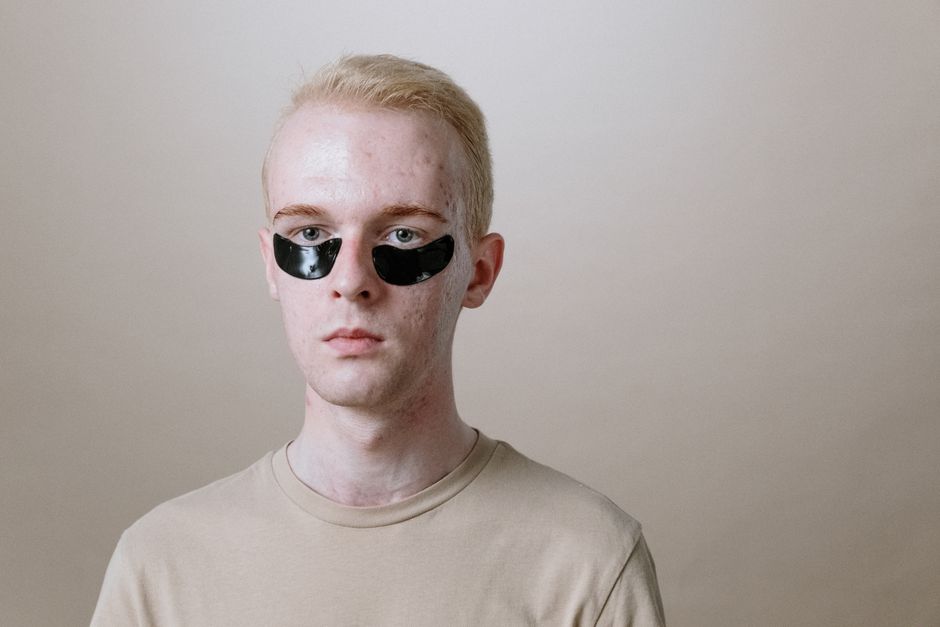
That deep, tender bump under the skin is not a normal whitehead, and squeezing it rarely helps. Hard pimples — often called blind pimples, nodules, or cysts — form when inflammation and debris sit deep in the follicle, below the surface where a simple squeeze can reach. The way to treat them without making things worse is to avoid picking, use targeted over-the-counter ingredients like benzoyl peroxide or salicylic acid, apply a warm compress for comfort, and see a dermatologist when a bump is large, painful, or not improving. Deep nodules and cysts often need prescription treatment because topical products alone cannot reach them.
What Makes a Pimple Hard and Deep?
A hard pimple starts the same way any pimple does: a pore gets blocked by oil and dead skin cells. What changes everything is where the blockage sits and how the body responds.
When Cutibacterium acnes bacteria multiply inside a blocked follicle, the immune system sends inflammatory cells to the area. In a surface pimple, that inflammation stays near the top of the skin. In a deep pimple, the follicle wall breaks lower down, and the inflammation spreads into the surrounding tissue. That is what creates the firm, painful lump you can feel but cannot pop.
Dermatologists classify these by depth. A papule is a small red bump without a visible white center. A pustule contains pus near the surface. A nodule is a solid, deep, painful lump. A cyst is deeper still and often contains fluid or pus. Nodules and cysts are the ones most likely to scar, and they are the ones most likely to resist anything you apply to the surface of your skin.
This is why squeezing backfires. The blockage and inflammation are not at the surface. Pressure pushes the contents sideways and downward, rupturing the follicle wall further and spreading inflammation into healthy tissue. That is how a pimple that might have faded becomes a scar that lasts.
How To Treat Hard Pimples Without Making Them Worse
The single most effective step is to keep your hands off it. Everything else supports that one decision.
If the bump is not yet open, a warm compress can help. A clean washcloth soaked in warm — not hot — water, held against the area for a few minutes a few times a day, may ease discomfort and encourage drainage if the pimple is close to coming to a head. This is comfort care, not a cure. It will not dissolve a deep nodule.
For surface-level inflamed pimples, benzoyl peroxide is one of the best-studied over-the-counter options. It kills C. acnes bacteria and reduces inflammation. Salicylic acid, a beta-hydroxy acid, helps unclog pores and is useful for milder breakouts. Neither reaches a deep nodule effectively, but they can help prevent new ones from forming around it.
What to avoid:
- Picking, squeezing, or popping — this is the main cause of scarring and spread.
- Needle tools, even “sterile” ones sold online. They push infection deeper.
- Toothpaste, lemon juice, baking soda, and other home remedies. These irritate skin and can cause burns or dark marks.
- Heavy oil-based products on the area, which can worsen clogging.
- Repeatedly touching or resting your face on the bump.
If the pimple is already open and draining on its own, keep it clean, apply a small amount of benzoyl peroxide, and cover it with a bandage to prevent picking. Do not dig at it to “finish the job.”
When Should You See a Dermatologist for a Hard Pimple?
Deep nodules and cysts are a medical problem, not a cosmetic one. A dermatologist can treat them in ways that topical products cannot.
See a doctor if:
- The bump is larger than a pencil eraser, very painful, or getting bigger.
- You have several deep nodules or cysts at once.
- The pimple has not improved after a few weeks of careful home care.
- You notice fever, spreading redness, or warmth around the area — signs of possible infection.
- You scar easily or already have scars from past breakouts.
Prescription options for deep acne include oral antibiotics, which reduce bacteria and inflammation; isotretinoin, a powerful vitamin A derivative reserved for severe or scarring acne; and for some women, hormonal treatments such as certain combined oral contraceptives or spironolactone. A dermatologist may also inject a stubborn cyst with a diluted corticosteroid to reduce inflammation quickly. These are clinical decisions that depend on your history, and they are not do-it-yourself treatments.
One clarification worth knowing: a hard, painful lump is not always acne. Boils, epidermoid cysts, and other skin conditions can look similar. A doctor can tell the difference, and the treatment is not the same.





What Actually Helps a Deep Pimple Heal Faster?
Time is the main healer for a deep pimple, but a few habits support the process instead of fighting it.
Keep the area clean with a gentle, non-abrasive cleanser twice a day. Use a non-comedogenic moisturizer so the skin barrier stays intact — irritated skin heals more slowly and is more prone to dark marks. Sun protection matters too, because ultraviolet exposure can darken the red or brown marks left behind after a pimple resolves.
If you use benzoyl peroxide, apply it only to the pimple, not your whole face, unless a doctor directs otherwise. It can bleach fabric, so use white pillowcases and towels. Start with a lower concentration and use it once daily to reduce irritation.
Resist the urge to “check” the bump by pressing it. Every press restarts the inflammation cycle.
Does Popping a Hard Pimple Ever Help?
No. Popping a deep pimple does not release the contents the way squeezing a surface whitehead can. The material is trapped below the skin, so pressure has nowhere to go but sideways into healthy tissue.
The result is often a bigger, more painful bump, a longer healing time, and a higher chance of a permanent scar or a dark mark called post-inflammatory hyperpigmentation. In rare cases, squeezing can push bacteria deeper and cause a serious skin infection that needs medical treatment.
Dermatologists sometimes drain cysts in a clinic under sterile conditions, but that is a procedure, not something to attempt at home.
Can You Prevent Hard Pimples From Forming?
You cannot prevent every deep pimple, especially if you are prone to cystic acne, which has a strong genetic component. But you can reduce how often they happen.
Consistent use of an acne treatment — benzoyl peroxide, salicylic acid, or a prescription retinoid — helps keep pores from clogging in the first place. Skipping days or stopping when skin clears tends to bring breakouts back.
Other steps that help:
- Wash your face gently twice daily. Scrubbing irritates skin and can trigger more breakouts.
- Choose skincare and makeup labeled non-comedogenic.
- Remove makeup before bed.
- Keep hair products off your face and wash pillowcases regularly.
- Manage stress where you can, since stress can worsen acne in some people.
Diet’s role in acne is debated. Some research suggests high-glycemic diets and possibly dairy may worsen acne in some people, but the evidence is not strong enough to make firm dietary recommendations for everyone. If you notice a pattern, it is reasonable to discuss it with a doctor.
What About Scars and Dark Marks Left Behind?
Hard pimples are the acne type most likely to leave marks. There are two main kinds, and they behave differently.
Post-inflammatory hyperpigmentation is a flat, dark spot. It is not a true scar and often fades over months, though it can take a long time in darker skin tones. Sun protection and ingredients like azelaic acid or retinoids may help it fade faster.
True scars — indentations or raised tissue — are structural changes in the skin and do not fade on their own. Treatments include laser therapy, microneedling, chemical peels, and fillers, all performed by a dermatologist. The best way to limit scarring is to treat deep acne early and never pick at it.
Frequently Asked Questions
How do you get rid of a hard pimple fast?
You usually cannot get rid of a deep pimple quickly at home; a warm compress and benzoyl peroxide may help, but deep nodules often need a dermatologist. A doctor can inject a stubborn cyst with a corticosteroid to reduce it within a day or two.
Should you pop a hard pimple?
No. Popping a deep pimple pushes inflammation and bacteria deeper into the skin, which can cause worse swelling, scarring, and in rare cases a serious infection.
What causes hard pimples under the skin?
They form when a blocked pore becomes inflamed deep in the follicle, often due to C. acnes bacteria, excess oil, and genetics. Because the blockage sits below the surface, it feels like a firm, painful lump.
When should a hard pimple see a doctor?
See a dermatologist if the bump is large, very painful, not improving after a few weeks, or if you have several deep pimples at once. Fever or spreading redness needs prompt medical attention.
