
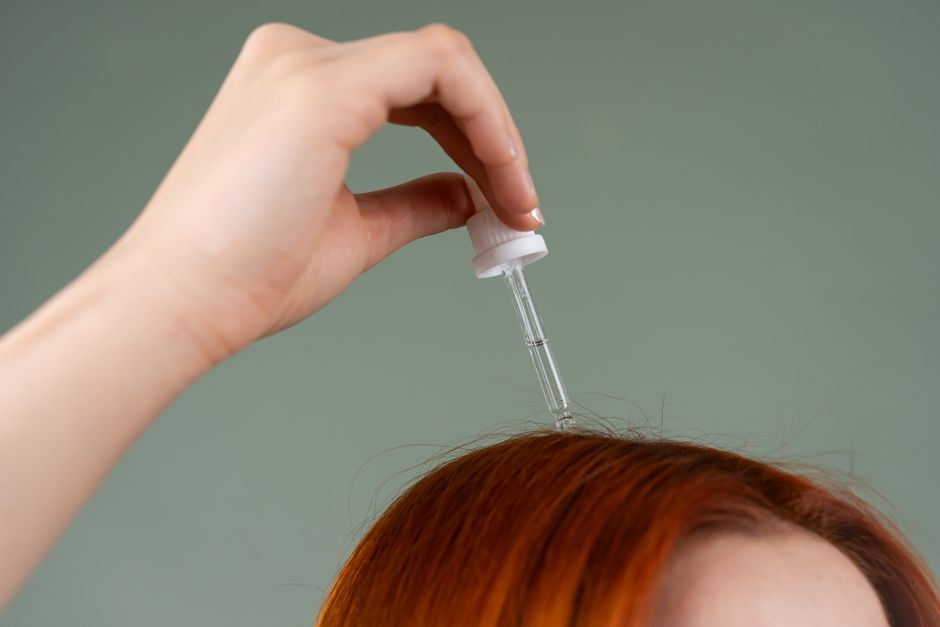
Hair loss in women is not the same as male pattern baldness, and treating it requires a different approach. Most women experience thinning hair rather than complete baldness, and the causes range from genetics to stress to nutrient deficiencies. The most effective treatments target the specific reason for your hair loss, not just the symptoms. Here is what the evidence actually says about treating female hair loss.
What Causes Hair Loss in Women?
Female pattern hair loss, also called androgenetic alopecia, is the most common cause. It affects roughly 30 million women in the United States according to the American Academy of Dermatology. This type is genetic and related to hormones called androgens. Hair follicles gradually shrink and produce thinner, shorter hairs over time.
Other common causes include telogen effluvium, which is temporary shedding after a physical or emotional stressor like childbirth, surgery, or rapid weight loss. Thyroid disorders, iron deficiency anemia, and polycystic ovary syndrome (PCOS) can also trigger hair thinning. Some medications, including certain antidepressants and blood pressure drugs, list hair loss as a side effect.
Less common causes include alopecia areata, an autoimmune condition where the immune system attacks hair follicles, and traction alopecia from tight hairstyles. The key point is that cause determines treatment. Using a product designed for male pattern baldness when your issue is iron deficiency will not help.
What Treatments Have the Strongest Evidence?
The only FDA-approved topical treatment for female pattern hair loss is minoxidil, sold under the brand name Rogaine. Research published in the Journal of the American Academy of Dermatology found that 5% minoxidil applied once daily significantly increased hair regrowth in women compared to placebo. The 2% version is also effective but less so. Minoxidil works by stimulating hair follicles and prolonging the growth phase of the hair cycle.
Oral finasteride is not FDA-approved for women and is generally not recommended for those who could become pregnant due to birth defect risks. However, some dermatologists prescribe it off-label for postmenopausal women with female pattern hair loss. A 2020 review in the International Journal of Dermatology found mixed results, with some studies showing benefit and others showing none.
Low-level laser therapy (LLLT) has moderate evidence. Devices like laser caps and combs emit red light that may stimulate cellular activity in hair follicles. A 2020 meta-analysis in Dermatologic Surgery found that LLLT significantly increased hair density compared to sham devices. The effect is modest but real.
Spironolactone, an oral medication that blocks androgen receptors, is commonly used off-label. A 2017 study in the Journal of the American Academy of Dermatology found that 75% of women with female pattern hair loss who took spironolactone reported stabilization or improvement. It is not FDA-approved for this use but has decades of clinical experience behind it.
Do Supplements and Diet Changes Actually Help?
This is where most overhyped content lives. The truth is that supplements only help if you have a genuine deficiency. Iron deficiency is common in women with heavy menstrual periods, and research in the Journal of the American Academy of Dermatology found that iron supplementation improved hair loss in women who were deficient. But taking iron when your levels are normal will not help and can cause side effects.
Vitamin D deficiency has been linked to hair loss in some studies, though the evidence is not strong enough to recommend routine testing. A 2020 review in Dermatology and Therapy found that low vitamin D levels were more common in people with alopecia areata and female pattern hair loss, but supplementation studies have not shown consistent benefit.
Biotin is one of the most popular hair supplements, but the evidence for its use is weak. The National Institutes of Health states that biotin deficiency is rare, and supplementation in people with normal levels has not been shown to improve hair growth. Most of the claims come from small, poor-quality studies or anecdotal reports.
Saw palmetto, a herbal supplement that may block DHT, has some preliminary evidence but nothing conclusive. A 2020 study in the Journal of Alternative and Complementary Medicine found that saw palmetto improved hair growth in women with female pattern hair loss compared to placebo, but the study was small and short-term. More research is needed before recommending it.





What About Platelet-Rich Plasma (PRP) Therapy?
PRP involves drawing your blood, spinning it in a centrifuge to concentrate the platelets, and injecting it into your scalp. The idea is that growth factors in platelets stimulate hair follicles. Evidence is growing but still mixed.
A 2021 meta-analysis in the Journal of Cosmetic Dermatology reviewed 11 studies and found that PRP significantly increased hair density and thickness compared to placebo or no treatment. However, the studies varied widely in how PRP was prepared and injected. There is no standardized protocol, which makes comparing results difficult.
Cost is a major factor. PRP treatments typically cost $500 to $2,000 per session, and most insurance does not cover it. Multiple sessions are usually needed, and maintenance treatments every few months are common. The American Academy of Dermatology considers PRP a reasonable option for female pattern hair loss but notes that evidence is not strong enough to recommend it as a first-line treatment.
What Hair Loss Treatments Should Women Avoid?
Many products marketed for hair loss have no evidence behind them. Shampoos claiming to block DHT, for example, do not stay on the scalp long enough to have any meaningful effect. The concentration of active ingredients in most hair growth shampoos is too low to work.
Supplements that claim to “balance hormones” or “detoxify the scalp” are not backed by science. The body has its own detoxification systems, and there is no evidence that scalp detox products do anything useful. Beware of any product that promises results in a few weeks. Hair grows slowly, about half an inch per month, and visible improvement from any treatment takes at least three to six months.
Essential oils like rosemary and peppermint are widely claimed to help hair growth. A 2015 study in Skinmed found that rosemary oil was as effective as 2% minoxidil for male pattern baldness after six months. But this was a single small study, and it has not been replicated in women. While these oils are generally safe, they are not a proven treatment.
Avoid treatments that involve microneedling without professional supervision. At-home derma rollers can cause infection and scarring if not used properly. Professional microneedling combined with PRP or minoxidil has some evidence, but doing it yourself is risky.
| Treatment | Evidence Level | Typical Cost | Time to See Results |
|---|---|---|---|
| Minoxidil 5% topical | Strong | $20-40/month | 3-6 months |
| Spironolactone oral | Moderate to strong | $10-30/month | 6-12 months |
| Low-level laser therapy | Moderate | $200-800 device | 3-6 months |
| PRP injections | Moderate | $500-2000/session | 3-6 months |
| Iron supplements (if deficient) | Strong for deficiency | $5-15/month | 3-6 months |
| Biotin supplements | Weak | $5-20/month | No evidence in normal levels |
When Should You See a Dermatologist for Hair Loss?
If you notice sudden or patchy hair loss, see a dermatologist. The same goes for hair loss accompanied by itching, burning, or scaling on your scalp. These symptoms may indicate an autoimmune or inflammatory condition that needs medical treatment, not over-the-counter products.
Gradual thinning over years is common with female pattern hair loss, but it is still worth seeing a dermatologist for a proper diagnosis. A doctor can perform a scalp biopsy, blood tests for iron and thyroid function, and hormone panels to identify the cause. Many women spend months or years trying products that do not match their condition.
A dermatologist can also rule out less common causes like scarring alopecia, which requires prompt treatment to prevent permanent hair loss. The International Society of Hair Restoration Surgery reports that about 40% of women experiencing hair loss do not seek medical help. Early treatment generally produces better outcomes.
Treatment for hair loss is often a long-term commitment. Minoxidil, for example, must be used continuously to maintain results. If you stop, any regrown hair will fall out within a few months. Understanding this upfront helps set realistic expectations and avoids disappointment.
Frequently Asked Questions
Can stress cause permanent hair loss in women?
Stress-related hair loss called telogen effluvium is usually temporary. Hair typically regrows within six to nine months after the stressor is resolved.
Does minoxidil work for women with thinning hair?
Yes, minoxidil is FDA-approved for female pattern hair loss and has strong evidence supporting its effectiveness. It works best when started early in the thinning process.
Is hair loss in women reversible without medication?
It depends on the cause. Hair loss from nutrient deficiencies or stress often reverses when the underlying issue is corrected. Genetic hair loss typically requires ongoing treatment to maintain results.
