
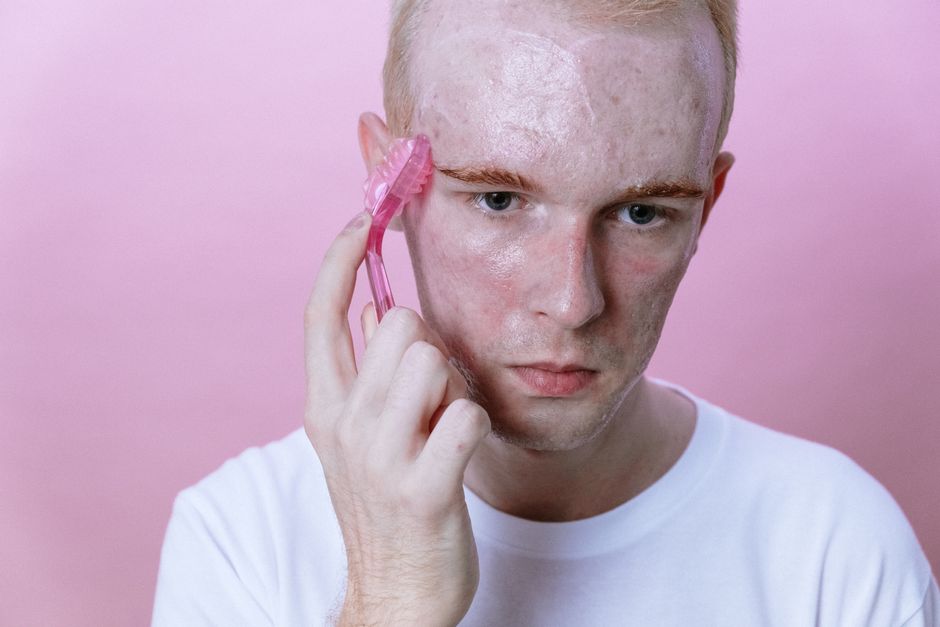
Fungal acne is not acne at all. The bumps come from an overgrowth of yeast on the skin, not from clogged pores and bacteria, which is why acne treatments often make it worse instead of better. Treating it means using antifungal ingredients, addressing the conditions that let yeast multiply, and knowing when to see a doctor for prescription treatment.
What Is Fungal Acne, Exactly?
The medical name is Malassezia folliculitis. It happens when a yeast called Malassezia, which normally lives on everyone’s skin, grows inside hair follicles and triggers inflammation.
Malassezia is a fungus, not a bacterium. That single fact explains almost everything about this condition. It also explains why the standard acne toolkit often fails.
Because the condition is not true acne, it is not a pimple problem in the usual sense. There is no plug of oil and dead skin cells blocking a pore. There is yeast colonizing the follicle. The immune system responds with redness and small itchy bumps.
One clarification worth knowing: the term “fungal acne” is a popular label, not a formal medical diagnosis. A dermatologist will call it Malassezia folliculitis or Pityrosporum folliculitis. If you search for treatment advice, knowing both names helps.
How Do You Know It Is Fungal Acne and Not Regular Acne?
The pattern of bumps and how they feel are the strongest clues. Fungal acne tends to be uniform, itchy, and clustered on the chest, back, and forehead.
Here is how the two commonly differ:
- Itch: Fungal acne usually itches. Regular acne often does not.
- Shape: Fungal bumps are small, similar in size, and evenly spaced. Acne lesions vary more in size and type.
- Location: Fungal acne favors the forehead, hairline, chest, and upper back. Regular acne shows up more on the face, especially the cheeks and chin.
- Contents: Fungal bumps rarely come to a whitehead you can pop. Acne often does.
- Response to treatment: Fungal acne does not improve with standard acne products and may worsen.
None of these signs is perfect on its own. The two conditions can also occur together, which complicates self-diagnosis. If you are unsure, a dermatologist can confirm the diagnosis, sometimes by scraping a lesion and examining it under a microscope.
What Causes the Yeast to Overgrow?
Malassezia feeds on oil, so anything that increases oil production or traps moisture and heat on the skin can encourage it to multiply. Sweat is a common trigger.
Known contributors include:
- Wearing tight, non-breathable clothing during workouts
- Leaving sweaty workout clothes on for hours
- Hot, humid climates
- Heavy moisturizers or oils that sit on the skin
- Antibiotics, which reduce skin bacteria and can let yeast expand
- Weakened immune function
- Some medications, including certain immunosuppressants
Antibiotics deserve special mention. People are often prescribed antibiotics for what looks like stubborn acne, the antibiotics kill off competing bacteria, and the yeast overgrowth gets worse. This cycle is one reason the condition is frequently misdiagnosed for months.

How To Treat Fungal Acne: Tips That Actually Target the Yeast
Treatment works by reducing the yeast itself and removing the conditions that let it thrive. Over-the-counter antifungal ingredients are the usual first step, and many people respond to them.
Ingredients commonly used include:
- Ketoconazole: an antifungal available in shampoos and creams
- Selenium sulfide: found in dandruff shampoos
- Zinc pyrithione: also common in dandruff products
- Clotrimazole and miconazole: standard antifungal creams
- Terbinafine: another antifungal option
Dandruff shampoos are used off-label for this condition because the yeast involved in dandruff is the same Malassezia species. A common approach is to apply the shampoo to the affected skin, leave it on briefly, and rinse. This is a widely used practice, though it is not backed by large dedicated trials for body application.
If over-the-counter products do not clear it after a reasonable trial, a doctor can prescribe stronger topical antifungals or oral medication. Oral antifungals are effective but carry real risks, including liver effects, and require medical supervision. They are not something to self-prescribe.
What to stop doing
Just as important as what you add is what you remove. Standard acne treatments can work against you here.
- Stop heavy oil-based moisturizers and body oils on affected areas
- Stop using thick, occlusive sunscreens on the chest and back if you can switch to lighter formulas
- Do not keep taking antibiotics for a condition antibiotics cannot fix
- Avoid over-scrubbing, which irritates skin without removing yeast
One non-obvious point: exfoliating acids like salicylic acid can help with regular acne but do little against yeast. Reaching for stronger and stronger acne products when they are not working often makes the irritation worse without touching the cause.
What About Lifestyle and Prevention?
Prevention centers on keeping skin cool, dry, and free of excess oil. These steps reduce the conditions yeast needs to overgrow.
- Shower soon after sweating, especially after workouts
- Change out of damp workout clothes promptly
- Wear loose, breathable fabrics like cotton or moisture-wicking synthetics
- Wash workout clothes and towels after each use
- Choose lightweight, non-greasy skin products
- Keep the hairline clean if you use heavy hair products
These measures are sensible and low-risk, but it is honest to say the evidence that they prevent recurrence is based mainly on the known biology of the yeast rather than on large prevention trials. They are not a guaranteed fix, but they remove obvious fuel.
When Should You See a Doctor?
See a doctor if the bumps do not improve after several weeks of consistent antifungal treatment, if they spread, or if the itching is severe. Persistent or recurrent cases usually need a prescription.
You should also seek medical care if you have a weakened immune system, since the condition can be more stubborn and harder to control in that situation. And if you are not certain what you are treating, a diagnosis is worth the visit. Treating the wrong condition wastes time and can cause new problems.
Prescription options a doctor may consider include stronger topical antifungals, oral antifungals, or both. Because oral antifungals can affect the liver, they are used carefully and typically for limited courses. This is a genuine reason not to obtain them without medical guidance.
How Long Does It Take to Clear Up?
With effective treatment, many people notice improvement within a few weeks, though timelines vary widely and some cases take longer. Recurrence is common because the yeast is a normal skin resident that can regrow when conditions allow.
Because the yeast never fully leaves the skin, the goal is usually control rather than permanent elimination. That means ongoing attention to the triggers, and sometimes repeat treatment when flare-ups return. Anyone promising a permanent cure is overstating what is currently possible.
Frequently Asked Questions
Is fungal acne contagious?
No. The yeast involved is a normal part of everyone’s skin, so it is not passed from person to person. The condition develops when that yeast overgrows on your own skin.
Can I use regular acne products for fungal acne?
Generally no. Standard acne treatments target bacteria and clogged pores, not yeast, and they often fail or worsen the condition. Antifungal ingredients are the right category of treatment.
Does diet cause fungal acne?
There is no strong evidence that a specific diet causes or cures it. Some people report flares with certain foods, but this is not well established, and diet changes are not a proven treatment.
How do I stop fungal acne from coming back?
Keep skin cool and dry, shower after sweating, and avoid heavy oily products on affected areas. Because the yeast is always present, some people need repeat antifungal treatment when flare-ups return.
