
Bowel obstruction is a medical emergency, not a condition you treat at home. If you have severe abdominal pain, vomiting, a swollen belly, and cannot pass gas or stool, go to an emergency room immediately. The treatment depends on where the blockage is, what is causing it, and whether the bowel tissue is still healthy — and in many cases, surgery is the only way to fix it.
What Is a Bowel Obstruction?
A bowel obstruction happens when something blocks the normal movement of food, fluid, and gas through your intestines. The blockage can be partial or complete. It can occur in the small intestine or the large intestine, and the location matters a great deal for treatment.
When the bowel is blocked, contents back up behind the blockage. The intestine stretches and fills with fluid and gas. If the pressure continues to build, blood flow to the bowel wall can be cut off. That is called strangulation, and it is life-threatening. Tissue that loses blood supply can die within hours.
This is why obstruction is treated as an emergency. Waiting to see if it resolves on its own can allow a reversible problem to become a surgical crisis.
What Causes Bowel Obstruction?
The causes differ depending on whether the blockage is in the small or large intestine. In adults, the most common cause of small bowel obstruction is scar tissue from previous abdominal surgery, called adhesions. These bands of tissue can twist or pinch the intestine.
Other causes include hernias, tumors, Crohn’s disease, and twisting of the bowel. In the large intestine, cancer is a leading cause. Diverticulitis and severe constipation can also block the colon.
A related but different problem is called paralytic ileus. Here, there is no physical blockage. Instead, the bowel muscles simply stop working. This can happen after surgery, with certain medications, or during severe illness. It looks similar to obstruction but is treated differently.
What Are the Warning Signs?
The classic symptoms come on as a cluster, not one at a time. Cramping abdominal pain that comes in waves is common. So is vomiting, which may become feculent — meaning it smells like stool — if the blockage is lower down. The abdomen often becomes swollen and tender.
The most telling sign is the inability to pass gas or have a bowel movement. If you have not passed gas in many hours and your belly is distending, that is a red flag.
Signs that the bowel may be losing blood supply include constant severe pain rather than waves, fever, rapid heart rate, and a rigid or very tender abdomen. These require immediate surgery. Do not wait for an appointment.



How To Treat Bowel Obstruction: The Medical Approach
Treatment always starts with stabilization. Patients are given nothing by mouth so the bowel can rest. Intravenous fluids replace what is lost through vomiting and third-spacing — fluid that leaks into the bowel wall and abdominal cavity. A nasogastric tube is often placed through the nose into the stomach to decompress the bowel and relieve pressure.
From there, the path splits based on the cause and whether the bowel is still viable.
Non-Surgical Treatment
Some cases resolve without surgery. Adhesions sometimes release on their own with bowel rest and decompression. This is more likely with a partial obstruction and no signs of strangulation. Doctors monitor closely with exams and imaging. If symptoms do not improve within a day or two, or if they worsen, surgery becomes necessary.
For certain colon obstructions, a stent can be placed during colonoscopy to open the blockage. This is often used as a bridge to surgery or for patients too ill for an operation. It does not cure the underlying cause.
Surgical Treatment
Surgery is required when the bowel is strangulated, when there is a complete obstruction that does not resolve, or when a tumor or hernia is the cause. The surgeon removes the blockage, repairs the hernia, or resects the damaged section of bowel.
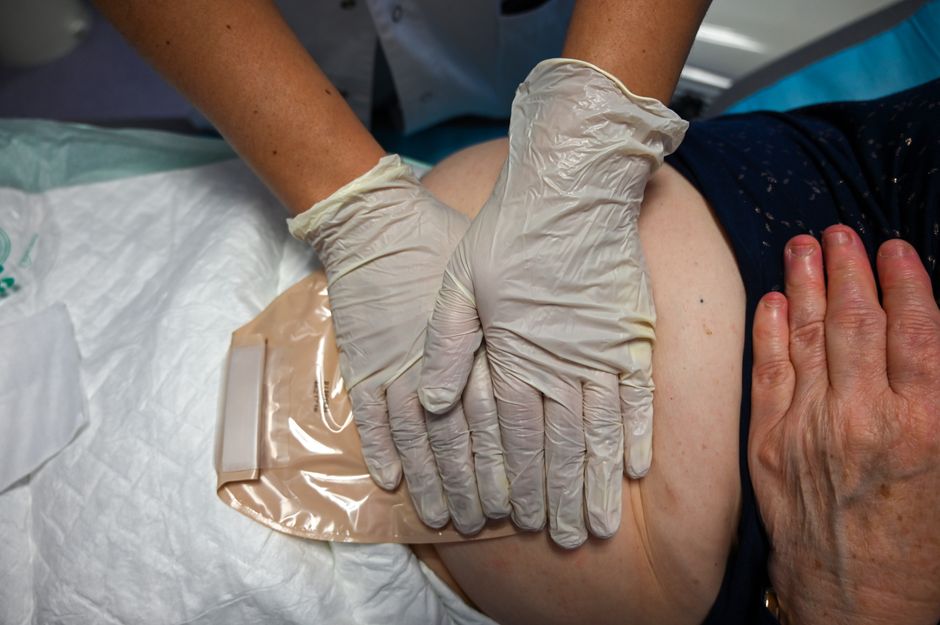
If a segment of bowel has died, it must be removed. The remaining healthy ends may be reconnected, or a stoma may be created temporarily or permanently. The choice depends on the patient’s condition and the location of the blockage.
Laparoscopic surgery is sometimes possible, but open surgery is often needed in emergencies because the surgeon must see and feel the entire abdomen quickly.
What Happens If a Bowel Obstruction Is Not Treated?
An untreated complete obstruction leads to strangulation, perforation, and peritonitis — infection of the abdominal cavity. This can progress to sepsis and death. The timeline varies, but a strangulated bowel can become non-viable within hours.
Partial obstructions that are not treated can also worsen over time. Chronic or recurring obstructions, often from adhesions, may need surgical management if they keep coming back.
Can Bowel Obstruction Be Prevented?
There is no sure way to prevent obstruction, but some steps reduce risk. If you have had abdominal surgery, be aware that adhesions are a common cause and report symptoms early. Managing conditions like Crohn’s disease and diverticulitis with your doctor can lower the chance of obstruction from those diseases.
For people with known adhesions, some clinicians recommend a low-fiber diet during flare-ups, but evidence for this is limited. Follow your own doctor’s guidance rather than general advice. There is no diet or supplement proven to prevent adhesive obstructions.
When to Get Emergency Help
Go to an emergency room if you have severe abdominal pain, vomiting, a swollen belly, and cannot pass gas or stool. Do not try to treat this at home with laxatives, enemas, or dietary changes. Laxatives can worsen a blockage and increase the risk of perforation.
If you have a known history of obstructions or abdominal surgery and develop these symptoms, tell the emergency team about your history. It speeds up diagnosis and treatment.
Frequently Asked Questions
Can a bowel obstruction clear on its own?
Some partial obstructions, especially from adhesions, can resolve with bowel rest and decompression in the hospital. Complete obstructions and those with signs of strangulation do not resolve on their own and require surgery.
How long can you wait with a bowel obstruction?
You should not wait at all if you have symptoms. A strangulated bowel can become non-viable within hours, so obstruction is always treated as an emergency.
What is the main treatment for a bowel obstruction?
Initial treatment is stabilization with IV fluids and nasogastric decompression. Surgery is the definitive treatment when the bowel is strangulated, when the obstruction is complete, or when a tumor or hernia is the cause.
Can you eat with a bowel obstruction?
No. Patients are kept with nothing by mouth until the obstruction resolves or is surgically treated. Eating can worsen the blockage and increase the risk of vomiting and aspiration.
