
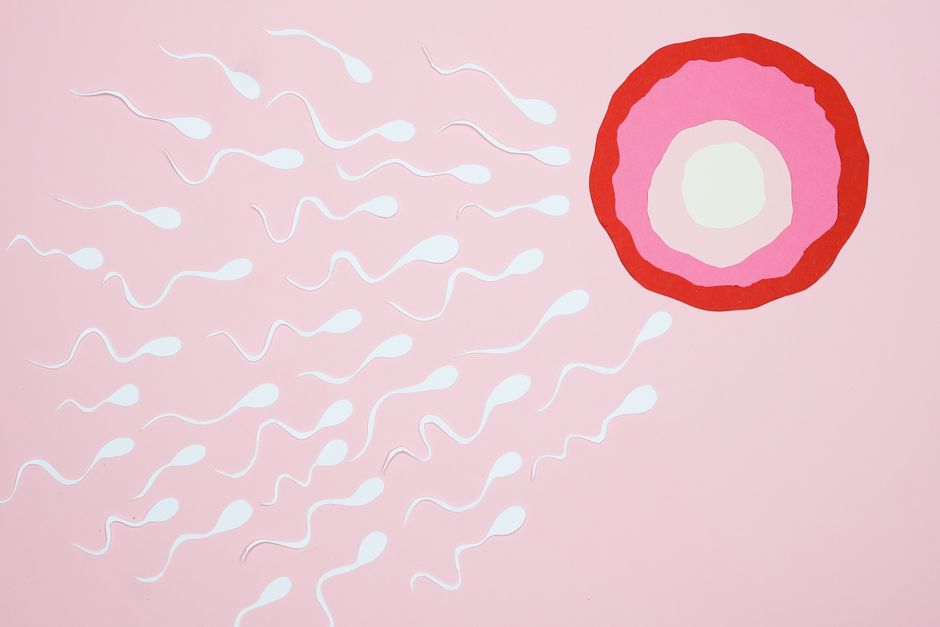
Ovulation is the release of a mature egg from an ovary, and it happens once per menstrual cycle in most people who menstruate. You can track it with several methods that have real evidence behind them. They include basal body temperature charting, cervical mucus observation, urine-based ovulation predictor kits, and cycle-tracking apps used correctly. Each method tells you something different, and each has limits.
The most reliable approach combines more than one method. No single at-home method predicts ovulation with perfect accuracy, but together they give you a clear picture of your fertile window. That window is the days when pregnancy is possible, and it typically lasts about six days ending on the day of ovulation.
What Actually Happens During Ovulation?
Ovulation is triggered by a surge in luteinizing hormone, or LH, released by the pituitary gland. That surge causes a mature follicle in the ovary to rupture and release an egg. The egg then travels into the fallopian tube, where it can be fertilized for roughly 12 to 24 hours after release.
This timing matters because sperm can survive in the reproductive tract for up to about five days. That is why the fertile window starts before ovulation, not on the day itself. The best chance of conception comes from intercourse in the days leading up to ovulation.
After ovulation, the empty follicle becomes a structure called the corpus luteum. It produces progesterone, which raises basal body temperature slightly and stays elevated until the next period. This temperature shift is real and measurable, but it happens after ovulation has already occurred. That is the key limitation of temperature tracking.
How To Track Ovulation Methods That Actually Work
Four methods have solid physiological grounding, and each measures a different signal. Used together, they compensate for each other’s blind spots. Used alone, each has a real weakness you should understand before relying on it.
Basal Body Temperature
Basal body temperature is your resting temperature first thing in the morning, before you get out of bed. After ovulation, progesterone causes a small rise, typically a few tenths of a degree Fahrenheit. You need a basal thermometer that reads to two decimal places, and you need to take your temperature at the same time each morning after at least three hours of sleep.
The catch is that temperature confirms ovulation after the fact. It tells you ovulation happened, usually a day or two earlier, not that it is about to happen. For predicting the fertile window in a current cycle, temperature alone is weak. For confirming that you did ovulate and understanding your pattern over several cycles, it is genuinely useful.
Cervical Mucus
Cervical mucus changes in response to estrogen. In the days before ovulation, it becomes clearer, wetter, and stretchier, similar to raw egg white. This type of mucus helps sperm survive and travel. After ovulation, progesterone makes it thicker and less hospitable.
Tracking mucus gives you a real-time signal that ovulation may be approaching, which temperature cannot do. The weakness is that it is subjective. Illness, intercourse, and certain medications can make it harder to interpret. Some people find it clear and easy to read. Others do not.
Ovulation Predictor Kits
Urine-based ovulation predictor kits detect the LH surge that precedes ovulation. In most people, ovulation occurs roughly 24 to 36 hours after the surge begins, though this varies. These kits are the most direct at-home predictor of impending ovulation available without a lab.
One important limitation: a positive LH test means the surge happened, not that an egg was definitely released. Some cycles produce an LH surge without ovulation. This is more common in people with conditions like polycystic ovary syndrome. The kits also work best when you test at a consistent time and know roughly when in your cycle to start testing.
Cycle-Tracking Apps
Apps that use calendar math alone are guessing. They predict ovulation from past cycle lengths, which works reasonably well for people with very regular cycles and poorly for everyone else. Apps that let you input temperature, mucus, and LH results are more useful because they organize real data rather than estimate it.
An app is a record-keeping tool, not a measurement. It cannot detect anything your body is not telling you through the other methods. The value is in the pattern it reveals across several cycles.
How Do These Methods Compare?
Each method measures a different signal at a different point in the cycle. The table below shows what each one can and cannot do.
| Method | What It Detects | Timing | Main Limitation |
|---|---|---|---|
| Basal body temperature | Temperature rise from progesterone | After ovulation | Confirms ovulation after it happens |
| Cervical mucus | Estrogen-driven mucus changes | Days before ovulation | Subjective and easily disrupted |
| Ovulation predictor kit | LH surge in urine | About 24 to 36 hours before ovulation | Surge does not guarantee ovulation |
| Calendar or app estimate | Pattern from past cycles | Predicted in advance | Unreliable with irregular cycles |
The strongest approach pairs an LH kit with mucus tracking for the days before ovulation, and adds temperature charting to confirm ovulation occurred. That combination covers prediction and confirmation.
Why Does Cycle Regularity Matter So Much?
Cycle regularity determines how well any tracking method works. A typical menstrual cycle runs about 28 days, but normal cycles range from roughly 21 to 35 days in adults. Ovulation usually occurs about 14 days before the next period starts, not necessarily on day 14 of the cycle.
That last point trips up a lot of people. The second half of the cycle, from ovulation to the next period, is more consistent in length than the first half. So in a longer cycle, ovulation is often later than day 14, not earlier. Calendar predictions that assume day 14 fail many people.
If your cycles are irregular, calendar estimates become close to useless. Irregular cycles can have many causes, including thyroid conditions, polycystic ovary syndrome, significant weight change, and perimenopause. If you are tracking ovulation and your cycles are consistently irregular, that is worth discussing with a clinician rather than working around with an app.
What Are the Limits of At-Home Ovulation Tracking?
At-home methods estimate ovulation. They do not confirm it with certainty. Only a clinician can confirm ovulation directly, through blood tests for progesterone or ultrasound monitoring, and those are typically used in fertility evaluation rather than routine tracking.
Another limit is that tracking tells you when you are likely fertile. It does not tell you whether you are fertile in a broader sense. Age, medical conditions, and other factors affect fertility in ways no tracking method can measure.
There is also a practical strain. Daily temperature checks, mucus observation, and timed testing take effort and can become stressful. Some research suggests that stress and pressure around timed intercourse can affect the experience of trying to conceive, though the relationship is not fully understood. If tracking starts to feel like a burden, that is a real signal worth paying attention to.
One clarification that surprises people: ovulation tracking is used for two opposite goals. Some use it to conceive, and others use it to avoid pregnancy through fertility awareness methods. For avoiding pregnancy, the effectiveness depends heavily on correct and consistent use, and it is generally less effective than hormonal contraception or intrauterine devices. The evidence on typical-use effectiveness for fertility awareness methods is limited and varies by method.
When Should You See a Clinician?
Talk to a clinician if you have been tracking for several months and are not getting clear signals, or if your cycles are consistently irregular. General guidance suggests seeking evaluation after about a year of trying to conceive if you are under 35, and after about six months if you are 35 or older. Those timelines are widely used clinical guidance, though your situation may call for earlier evaluation.
Seek care sooner if you have very long cycles, cycles that stop, significant pain with periods, or a known condition that affects ovulation. These are reasons to get medical input rather than to keep adjusting your tracking method.
Frequently Asked Questions
What is the most accurate way to track ovulation at home?
Ovulation predictor kits that detect the LH surge are the most direct at-home predictor of upcoming ovulation. Combining them with cervical mucus tracking and basal body temperature gives both prediction and confirmation.
Can you ovulate without a temperature rise?
Yes, and a missing rise can happen for several reasons, including poor sleep, illness, or taking your temperature at inconsistent times. A single cycle without a clear shift is not necessarily a sign of a problem.
How many days after a positive ovulation test do you ovulate?
Ovulation usually occurs about 24 to 36 hours after the LH surge is first detected. This timing varies between people and between cycles.
Do cycle-tracking apps predict ovulation accurately?
Apps that rely only on calendar math are unreliable, especially with irregular cycles. Apps are more useful when you enter real measurements like temperature, mucus, and LH test results.
