
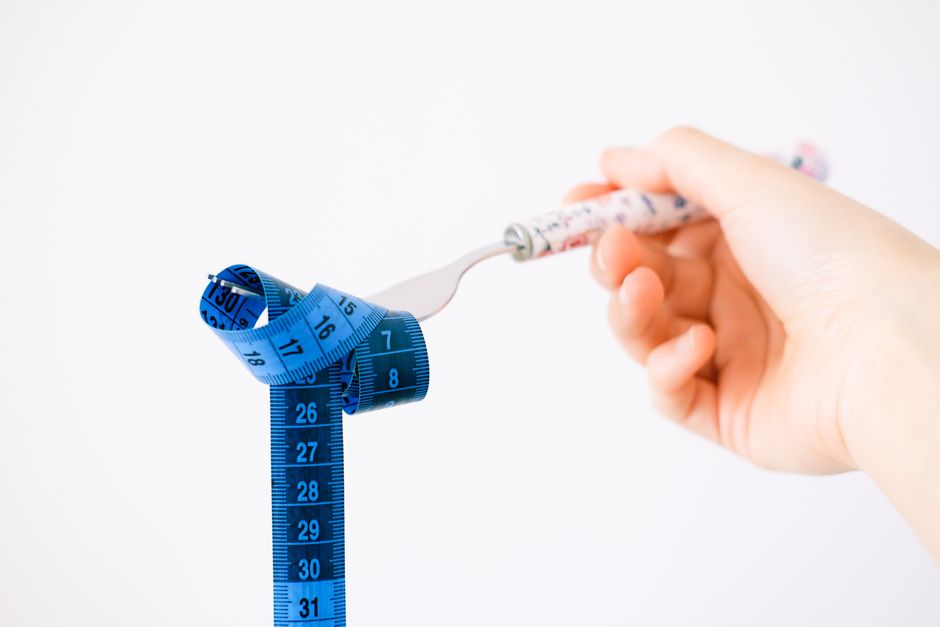
Tracking fat loss means measuring several things over time, not just watching the number on your scale. The scale shows your total body weight, which includes fat, muscle, water, and food still in your digestive system. To actually track fat loss, you need to combine the scale with a tape measure, and sometimes body composition scans. No single measurement tells the whole story, and day-to-day changes are mostly noise.
Why Does The Scale Go Up And Down So Much?
Your body weight can shift by several pounds in a single day without any change in body fat. This surprises people, and it leads many to quit tracking too early.
Most of that swing is water. Sodium intake, carbohydrate intake, hormones, stress, sleep, and even room temperature can change how much water your body holds. A high-carb meal causes the body to store water with the carbs. A salty meal does the same with sodium. For women, menstrual cycle hormones can move the scale by a few pounds on their own.
Food and drink still in your gut also count as weight. If you drink a liter of water, you weigh more right after — not because you gained fat, but because that water is physically inside you until you excrete it.
Fat loss itself is slow. A reasonable and sustainable rate is roughly 0.5 to 1 pound of fat per week for many adults, though this varies with body size, starting point, and calorie deficit. That means real fat loss can be completely hidden by a two-pound water shift. This is the single most important thing to understand about tracking: you are looking for a trend over weeks, not a number on any given morning.
How Should You Use The Scale Correctly?
The scale is still useful — it is just a tool that needs consistent use. The problem is not the scale. The problem is weighing at random times and reacting to single readings.
To get usable data, control the variables:
- Weigh at the same time each day, ideally in the morning after using the bathroom and before eating or drinking.
- Use the same scale, on the same hard floor surface. Carpet can distort readings.
- Wear the same amount of clothing, or none.
- Record the number, but do not judge it day to day.
Then look at weekly averages. Add up seven days of weights and divide by seven. Compare this week’s average to last week’s average. Weekly averages smooth out the daily water noise and reveal the actual direction of travel.
If you weigh daily and your weekly average is dropping slowly over several weeks, that is real progress. If it is flat for three to four weeks while you are genuinely in a calorie deficit, that is worth examining — but a flat week or two is normal and not a reason to change anything.
How Do You Use A Tape Measure For Fat Loss?
A tape measure often shows fat loss before the scale does. This is because you can lose fat while gaining or holding muscle and water, so total weight may barely move even as your shape changes.
Measure at consistent landmarks and keep the tape level and snug but not compressing the skin:
- Waist — at the narrowest point, usually just above the belly button.
- Hips — at the widest point of the buttocks.
- Chest — at the fullest point.
- Thigh and arm — at a marked spot you can find again.
Measure every two to four weeks, not daily. Write the numbers down. A loss of even half an inch at the waist over a month is meaningful, especially if the scale is not moving.
Waist circumference also carries health meaning beyond appearance. A larger waist is linked to higher risk of heart disease and type 2 diabetes, independent of overall weight. So tracking your waist is tracking something that matters clinically, not just cosmetically.





What Can Body Composition Scans Actually Tell You?
Body composition scans try to separate your weight into fat mass and lean mass. This is more informative than the scale alone, but each method has real limits, and none is perfectly accurate.
Bioelectrical impedance (BIA) is the technology inside most smart scales and handheld devices. It sends a small current through your body and estimates fat based on how the current travels. It is cheap and convenient. Its weakness is hydration — how much water you are carrying changes the reading, sometimes by several percentage points. BIA is best used to track your own trend under identical conditions, not to trust any single reading as truth.
DEXA (dual-energy X-ray absorptiometry) is often treated as a reference standard for body fat. It uses a low-dose X-ray to estimate fat, muscle, and bone. It is more consistent than BIA, but it is not perfect, and different machines or software versions can give somewhat different results. It also involves a small radiation dose, so it is not something to do weekly.
Hydrostatic weighing and air displacement (Bod Pod) estimate body density to calculate fat. Both are reasonably reliable but less common and sensitive to how well you follow the pre-test instructions.
The practical takeaway: no scan gives you a precise fat percentage. What they can do is show a direction of change when used consistently. If you use a scan, use the same method and ideally the same machine each time, and space scans out by months, not days.
How To Track Fat Loss With Scale Measurements And Scans Together
The strongest approach uses several signals at once, because each one covers the blind spot of the others. This is how to track fat loss with scale measurements and scans in a way that actually holds up.
- Daily scale weight — recorded but only judged as a weekly average.
- Tape measurements — every two to four weeks, at marked landmarks.
- Photos — same lighting, same pose, same time of day, monthly. Changes you cannot see in the mirror often show up in side-by-side photos.
- How clothes fit — a simple, free, surprisingly reliable signal.
- Body composition scan — optional, every few months, same method each time.
When several of these point the same direction, you can trust the trend. When they disagree, the scale is usually the least reliable of the group in the short term.
What About Smart Scales And Their Body Fat Numbers?
Smart scales report body fat percentage, muscle mass, and more. Treat those specific numbers with caution.
The fat percentage a smart scale shows can be off by several points compared to DEXA, and it can swing with your hydration on any given day. The scale is not lying to you on purpose — it is estimating from a weak signal. The number is not a measurement so much as a guess based on your weight and how your body conducts electricity.
This does not make smart scales useless. If you weigh under the same conditions every time, the trend in that number can still track with real changes over months. Just do not compare your smart scale’s fat percentage to a friend’s, or to a DEXA result, and expect them to match.
When Should You Change What You Are Doing?
Patience is the hardest part of tracking. Most people change their plan far too soon, based on a few days of frustrating numbers.
A reasonable rule: give any approach at least three to four weeks of consistent effort before judging it. If your weekly averages, your measurements, and your photos all show no change over that span, then it may be worth reviewing your calorie intake, activity, and sleep. If some signals are improving and others are not, that is usually normal and not a reason to change course.
One more point worth making: a slower rate of loss is not a failure. Faster fat loss tends to come with more muscle loss and more difficulty keeping the weight off. A slow, steady trend that you can maintain is the goal, and the scale is only one of the tools that helps you see it.
Frequently Asked Questions
How often should I weigh myself to track fat loss?
Weigh daily under the same conditions, then compare weekly averages rather than single days. Daily weighing gives you enough data to see a trend through normal water fluctuations.
Why is the scale not moving but my clothes fit better?
You may be losing fat while holding or gaining muscle and water, so total weight stays similar even as your shape changes. This is why tape measurements and photos matter alongside the scale.
Are smart scale body fat readings accurate?
They can be off by several percentage points compared to DEXA and shift with your hydration. Use them only to track your own trend under identical conditions, not as a precise fat percentage.
How long before I should see real fat loss on the scale?
With a consistent calorie deficit, many adults see a downward trend in weekly averages within three to four weeks. Water shifts can hide early fat loss, so give it that window before judging results.
