
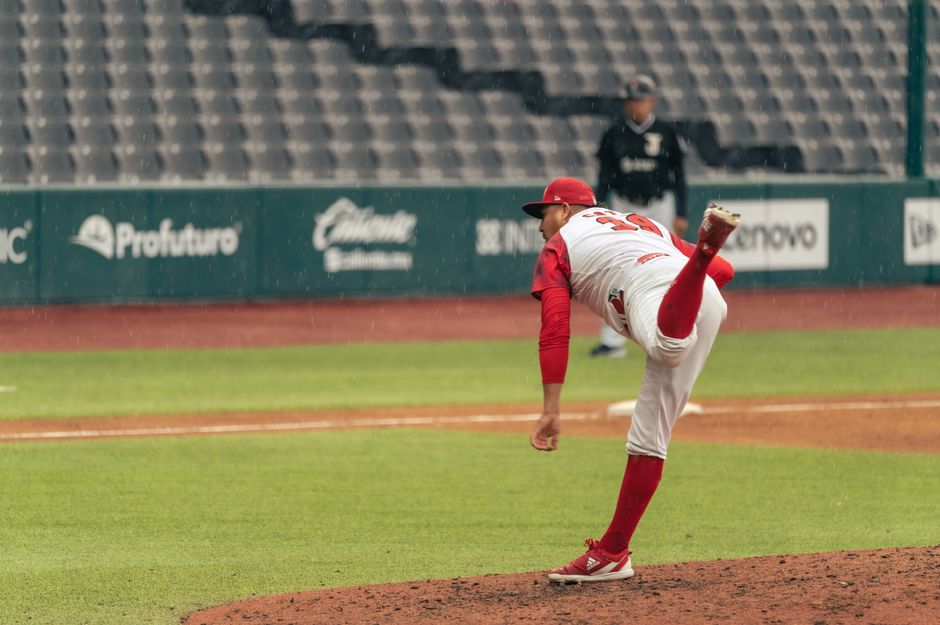
Throwing different pitches in baseball comes down to three things: how you grip the ball, how the ball spins as it leaves your hand, and how your arm slot affects its path. A fastball is thrown with backspin and maximum velocity. A curveball is thrown with topspin so it drops. A slider is thrown with sideways spin that makes it break late and sharp. Every pitch is a variation on those basic mechanics.
What separates a safe pitcher from an injured one is not the number of pitches in the arsenal. It is how the arm is used, how much a young pitcher throws, and whether the body can support the motion. That distinction matters more than any grip diagram.
How Does a Pitcher Make a Baseball Move?
The ball moves because of the spin you put on it. A pitched baseball is not just traveling forward. It is rotating, and that rotation changes how air flows around the seams.
When a ball spins, one side of it pushes through the air slightly differently than the other. That creates a pressure difference, and the ball drifts toward the low-pressure side. This is the Magnus effect, and it is the physics behind every breaking pitch. Throw a ball with backspin and it resists gravity a little longer, so it appears to rise. Throw it with topspin and the same effect pulls it down faster than gravity alone would.
Grip matters because it determines how your fingers leave the ball. The last finger to touch the ball is usually the one that imparts most of the spin. A curveball comes off the middle finger with the wrist snapping forward and down. A slider comes off the side of the index finger with the wrist staying more neutral. Those small differences in release are what separate one pitch from another.
Arm slot changes the angle the ball travels on. A pitcher who throws over the top releases the ball higher and gets more downward plane on every pitch. A sidearm pitcher releases lower and gets more horizontal movement. Neither is better. They just create different looks for the hitter.
What Are the Main Types of Pitches and How Do You Throw Them?
Most pitchers work with three to five pitches. The grips and release points below are the standard ones taught at every level of the game.
Four-Seam Fastball
This is the pitch every pitcher learns first. You grip the ball across the four seams with your index and middle fingers, keeping a small gap between them. The thumb rests underneath. You throw it straight over the top with full arm speed and backspin. It travels the fastest and moves the least, which is exactly why it works. Hitters have less time to react.
Two-Seam Fastball
You grip along the two seams instead of across them. The ball comes off the fingers with a slight sidespin, and it tends to sink and run toward the arm side. It is usually a couple of miles per hour slower than a four-seamer. Pitchers use it to get ground balls.
Changeup
A changeup looks like a fastball out of the hand but arrives slower. The grip is deeper in the palm, often with a circle formed by the thumb and index finger. The key is arm speed. You throw it with the same motion as your fastball. The deception comes from the speed difference, not from a different delivery. A changeup that is telegraphed by a slower arm is easy to hit.
Curveball
You grip the ball with the middle finger along a seam and the index finger beside it. The wrist snaps down and forward at release, putting topspin on the ball. It drops as it approaches the plate. The classic 12-to-6 curveball breaks straight down. A slower, bigger-breaking curve is often called a “yellow hammer” or a “bender” by players, though the mechanics are the same.
Slider
A slider is thrown harder than a curveball with a shorter, sharper break. The grip is off-center, with the index finger on the side of the ball. The wrist stays more neutral than on a curve, and the ball comes off the side of the hand. It breaks down and away from a same-handed hitter. The difference between a slider and a curve is mostly speed and the shape of the break.
Sinker, Cutter, and Splitter
A sinker is a two-seam fastball thrown with more arm-side run. A cutter is a fastball with a small, late break toward the glove side, created by slightly offsetting the grip. A splitter is gripped between the index and middle fingers and drops sharply as it reaches the plate. All three are variations on the fastball family rather than separate pitches.
How Do You Throw a Pitch With Control and Command?
Control is throwing strikes. Command is throwing the ball where you want it within the strike zone. They are different skills, and command is harder to teach.
Both start with repeatable mechanics. If your arm slot changes from pitch to pitch, your release point changes, and the ball goes somewhere you did not plan. Good pitchers keep their release point consistent and change only the grip and wrist action.
Balance over the rubber, a consistent stride, and a firm front side all support accuracy. So does throwing with intent. Pitchers who aim the ball instead of throwing it often lose both velocity and command. The body works best when the motion is aggressive and repeatable.
Practicing command means throwing to a target, not just throwing. A catcher’s mitt or a net with a target zone works. The goal is to repeat the same release point until it becomes automatic. This takes thousands of repetitions, which is why command usually improves slowly.
When Should a Young Pitcher Learn Breaking Balls?
This is one of the most debated questions in youth baseball, and the evidence is not as clear as many people assume. The concern is that curveballs and sliders put extra stress on a growing elbow. Some studies suggest breaking balls are not inherently more dangerous than fastballs when thrown with proper mechanics and reasonable volume. Other research points to overuse, not pitch type, as the main driver of youth arm injuries.
What the evidence does support strongly is limiting total throwing volume. Young pitchers who throw too many pitches in a game, play on multiple teams in the same season, or pitch year-round have higher injury rates. Those findings are consistent across multiple studies.
Organizations that govern youth baseball have published pitch count limits and rest requirements. Those rules vary by age and league. Parents and coaches should follow the specific rules of their league rather than a general guideline. There is no clinical guideline that sets a universal age for introducing breaking balls. The more reliable safeguard is managing workload and getting proper rest.
What Causes Arm Injuries in Pitchers?
Overuse is the leading cause of pitching injuries in young athletes. The ulnar collateral ligament, the structure repaired in Tommy John surgery, is stressed with every pitch. It needs time to recover between outings. When it does not get that time, damage accumulates.
Several factors raise risk:
- Pitching on consecutive days without required rest
- Playing for multiple teams at once, which hides total workload
- Pitching through pain instead of reporting it
- Year-round throwing with no off-season
- Poor mechanics that put extra load on the elbow and shoulder
Pain is a signal, not a hurdle. A pitcher who feels elbow or shoulder pain should stop throwing and be evaluated. Pushing through pain is the single most common story behind serious arm injuries.
One point that gets overlooked: the number of pitches in an arsenal is not a risk factor by itself. A pitcher who throws five pitches with controlled volume is not automatically at higher risk than one who throws two. What matters is total workload, recovery, and mechanics.
How Do Pitchers Keep Their Arms Healthy?
Recovery is part of training, not a break from it. Pitchers who stay healthy usually follow a routine that includes rest days, light throwing on recovery days, and strength work for the shoulder, back, and legs.
Proper warm-up before throwing is well established as protective. A structured throwing program that builds volume gradually helps the arm adapt. Sudden increases in workload are a common trigger for injury.
Sleep and nutrition support recovery, though the specific effects on pitching injury rates are not well studied. What is clear is that fatigue raises injury risk. A tired pitcher loses mechanics first, and lost mechanics put stress on the arm.
For younger pitchers, following league pitch count rules and taking a full off-season from overhead throwing are the most reliable protective steps supported by current evidence.
What Is the Difference Between a Curveball and a Slider?
Both are breaking balls, but they break differently and are thrown differently. A curveball is slower with a bigger, loopier break that drops vertically. A slider is faster with a tighter, later break that moves down and sideways.
The grip and wrist action differ. A curveball uses a forward wrist snap to create topspin. A slider uses a more neutral wrist with the ball coming off the side of the fingers. Because the slider is thrown closer to fastball speed, hitters have less time to recognize it.
Neither pitch is inherently safer or more effective. What matters is whether the pitcher can throw it with consistent mechanics and without pain.
Frequently Asked Questions
How many pitches should a pitcher have?
Most successful pitchers use three to five pitches, but there is no required number. Young pitchers usually start with a fastball and changeup before adding breaking balls.
Can anyone learn to throw a curveball?
Most pitchers can learn the grip and release with practice, though the amount of break varies by individual. Hand size, arm speed, and wrist flexibility all affect how much a curveball moves.
Is throwing a curveball bad for your arm?
The evidence is mixed on whether curveballs cause more arm stress than fastballs when thrown correctly. Overuse and high total workload are the factors most consistently linked to injury.
What is the hardest pitch to hit?
There is no single hardest pitch to hit, because difficulty depends on the pitcher’s command and how a pitch complements the rest of the arsenal. A well-located fastball and a deceptive changeup are both extremely difficult for hitters.
