
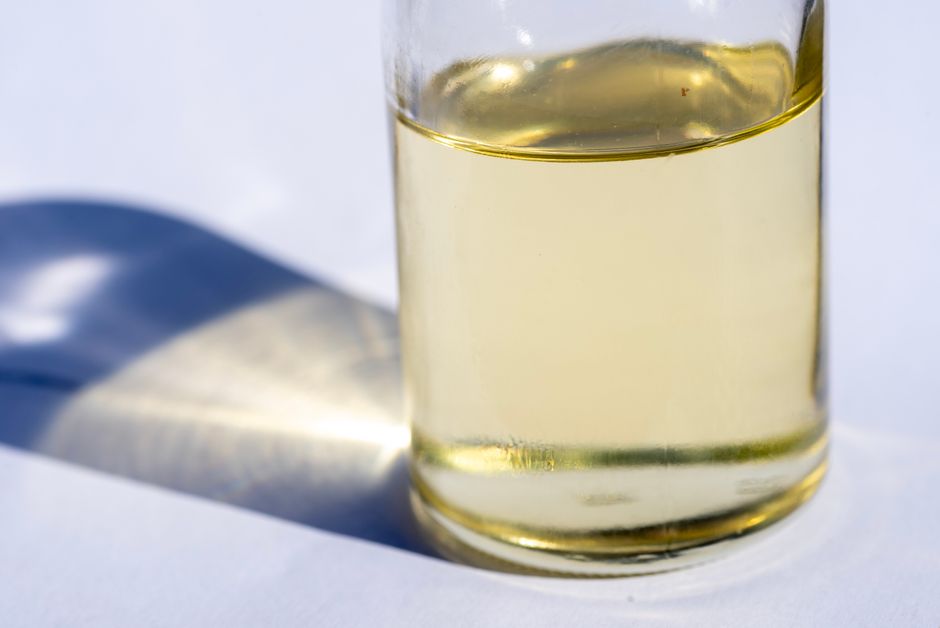
Thinning distillate safely comes down to one principle: heat it, or dilute it with another cannabis-derived oil. Nothing else belongs in the jar. The safest method is gentle warming, because heat lowers viscosity without adding anything at all. If you want a thinner oil for a cartridge or a dropper, the only additive worth considering is a terpene or a liquid cannabis oil, and both come with real trade-offs. Everything else sold as a “thinner” is either a solvent, a diluent, or a marketing product with no safety data behind it.
How To Thin Distillate Without Harmful Additives?
Warm the distillate until it flows. That is the whole method. Cannabinoid distillate is thick because it is a dense mixture of cannabinoids with almost no water and very little of the lighter compounds found in raw plant material. Raise the temperature and the viscosity drops.
The practical range most people work in is roughly 140°F to 160°F (60°C to 71°C). At that temperature the oil moves easily but the cannabinoids are not yet degrading quickly. Push much past that and you start losing terpenes and, over time, converting THC to CBN through oxidation.
Use indirect heat. A warm water bath, a mug warmer, a seedling mat, or a laboratory hot plate set low all work. Never a direct flame. Never a microwave, because it heats unevenly and creates hot spots that can scorch the oil.
Stir slowly with a glass or stainless steel tool. Distillate is viscous enough that heat takes several minutes to travel through it. Rushing this step is the most common reason people think warming “does not work.”
That is the entire no-additive approach. If the oil still feels too thick after warming, the answer is not more chemicals. It is a different delivery format.
Why Is Distillate So Thick In The First Place?
Distillate is thick because of what has been removed from it, not what has been added.
Raw cannabis resin contains cannabinoids, terpenes, waxes, lipids, chlorophyll, and plant matter. Distillation separates compounds by boiling point under vacuum. What comes out the other end is a narrow cut that is mostly a single cannabinoid — often THC or CBD — at very high concentration.
That purity is the problem. Terpenes and other volatile compounds act as natural solvents. They lower viscosity. When you strip them out to reach high cannabinoid purity, you get a product that behaves like cold honey.
Temperature matters as much as chemistry. Distillate that pours at 90°F will be nearly solid at 65°F. This is normal. It is not a sign of a bad product or a sign that something needs to be added.
One clarification worth making: “thick” and “potent” are not the same thing. A thin distillate is not weaker, and a thick one is not stronger. Viscosity tells you about the physical state of the oil, not its cannabinoid content.
What Additives Should You Avoid?
Several categories of products are sold as thinners. Most of them should not be inhaled or ingested.
- Propylene glycol (PG) and polyethylene glycol (PEG) — These are common in e-cigarette liquids. When heated to vaping temperatures, PEG can break down into formaldehyde and other carbonyl compounds. PG produces acrolein under some conditions. Neither belongs in a cannabis oil.
- Vegetable glycerin (VG) — Food-safe, but it does not blend well with cannabinoids and separates over time. It also produces acrolein when heated to high temperatures.
- Mineral oil and petroleum-based diluents — Not for inhalation. Lipid pneumonia is a documented risk when oils reach the lungs.
- MCT oil (fractionated coconut oil) — Fine for edibles and tinctures. Not appropriate for vaping. Inhaled oils can cause serious lung injury.
- Unlabeled “liquidizer” products — These are the biggest problem. Many contain PG, PEG, or undisclosed terpenes. Some have been found to contain vitamin E acetate, which was linked to the 2019 EVALI outbreak.
Vitamin E acetate deserves specific mention. It was identified by the CDC as a chemical of concern in the lung injury outbreak that affected thousands of people in 2019. It is sometimes added to thicken or stretch cannabis oil because it looks similar and is cheap. It should never be inhaled.
If a product does not list its ingredients, treat that as a reason to avoid it. “Proprietary blend” on a vape additive label is not a safety claim. It is an absence of information.





Are Terpenes A Safe Way To Thin Distillate?
Terpenes are the closest thing to a legitimate additive. They occur naturally in cannabis and other plants, they lower viscosity, and they add flavor and aroma. That is the honest case for them.
The honest case against them is more complicated.
Terpenes are volatile and can be irritating to the airways at high concentrations. Some, like limonene and pinene, are known respiratory irritants in occupational settings. When terpenes are added to distillate and then heated in a vape, they can degrade into other compounds. The research on what exactly forms and at what levels is still developing.
Dilution matters. A few drops of terpenes in a gram of distillate is very different from a 1:1 blend. The higher the terpene percentage, the more irritation and degradation risk.
Food-grade terpenes are not automatically safe for inhalation. “Food-grade” means they are safe to eat. It says nothing about what happens when they are heated and pulled into the lungs. That distinction gets lost in a lot of marketing.
If you use terpenes, use them sparingly, buy from a supplier that provides safety data, and understand that this is a harm-reduction choice, not a proven-safe one.
Can You Thin Distillate With Other Cannabis Oils?
Yes, and this is the cleanest option if you want to stay within cannabis-derived ingredients.
Mixing high-cannabinoid distillate with a full-spectrum or broad-spectrum oil will lower viscosity. The trade-off is that you also lower the overall potency of the final product, since the added oil has a lower cannabinoid concentration.
Live resin and other terpene-rich extracts can also be blended in. They bring back some of the volatiles that distillation removed, which naturally thins the mixture.
This approach works best for cartridges and dabbable products. For edibles and tinctures, you have more flexibility because you are not heating the oil to inhalation temperatures.
One practical note: cannabis oils do not always blend evenly. Warm both components before mixing, stir thoroughly, and expect some separation over time if the base oils differ significantly in composition.
Does Warming Distillate Damage It?
Gentle warming does not meaningfully degrade cannabinoids. Excessive heat does.
THC and CBD are relatively stable at the temperatures used for thinning. The bigger risk is terpenes, which volatilize at lower temperatures than cannabinoids. If your distillate has terpenes added back in, high heat will drive them off and leave you with a thinner but less flavorful product.
Prolonged exposure to heat and oxygen causes oxidation. This is why old distillate darkens and why THC slowly converts to CBN over time. CBN is not a contaminant, but it does change the effects profile.
Keep warming sessions short. Heat only as much as you need. Store the rest in a cool, dark place with minimal headspace in the container.
What About Vape Cartridges Specifically?
Cartridges are where most people run into the thinning question, because the hardware needs oil thin enough to wick properly.
The right answer is to match the oil to the hardware rather than thinning the oil to fit bad hardware. Cartridges with larger intake holes and ceramic coils handle thicker oil better than standard cotton-wick carts with small holes.
If you are filling your own carts, warming the distillate and using a cartridge designed for high-viscosity oil solves most problems without any additive at all.
If you still need to thin it, terpenes at low concentration are the most common choice. Just understand that you are making a trade-off, not eliminating risk.
Frequently Asked Questions
Can I thin distillate with just heat?
Yes, gentle warming is the safest way to thin distillate because it adds nothing to the oil. Keep the temperature around 140°F to 160°F and use indirect heat only.
Is it safe to add terpenes to distillate for vaping?
Terpenes are the most common additive, but they are not proven safe for inhalation. They can irritate the airways at high concentrations, and heating them may produce degradation products that are not well studied.
What is the safest thing to thin distillate with?
Heat alone is safest. If you need an additive, another cannabis-derived oil is the next best option, though it lowers overall potency.
Can I use MCT oil or vegetable glycerin to thin distillate?
MCT oil is fine for edibles but should never be inhaled. Vegetable glycerin does not blend well with cannabinoids and can produce irritating compounds when heated.
