
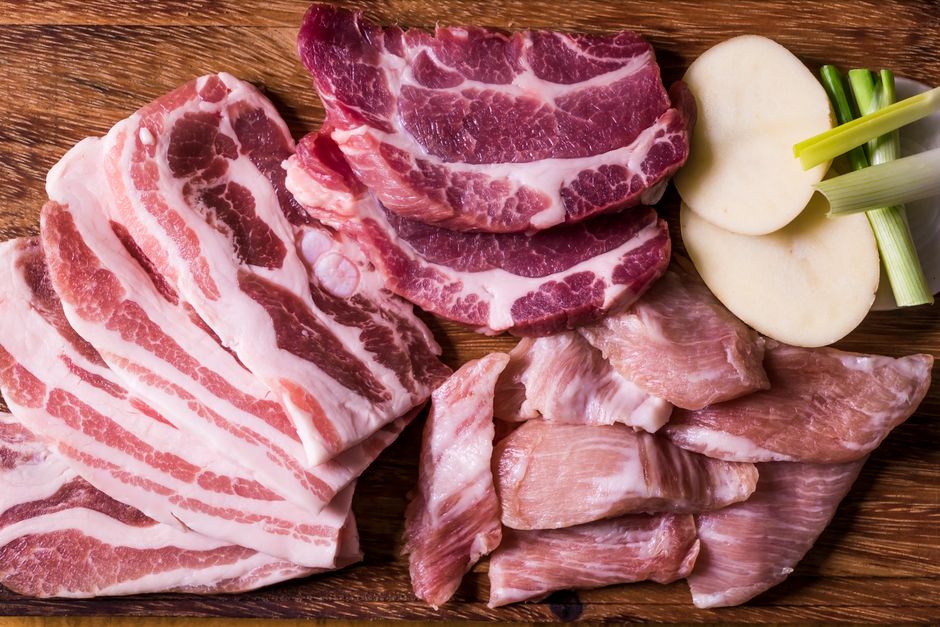
A frozen pork shoulder can be thawed safely in the refrigerator, in cold water, or in the microwave — and each method carries a different set of rules. The refrigerator is the only method considered safe by food safety authorities for slow thawing over days. Cold water is the fastest safe method that does not cook the meat. The microwave works, but only if you cook the pork immediately afterward. What you should never do is leave a pork shoulder on the counter to thaw.
Why You Cannot Thaw A Pork Shoulder On The Counter
Bacteria multiply rapidly at room temperature. The USDA calls the range between 40°F and 140°F the “Danger Zone,” and the rule is simple: perishable food should not sit in that range for more than two hours. A large pork shoulder can take many hours to thaw at room temperature, which means the outer layers sit in the Danger Zone the entire time while the center is still frozen.
This is not just a matter of surface bacteria. As the outer layers thaw, they become a warm, moist environment where bacteria can multiply. The inner portion may still be frozen solid. By the time the whole shoulder is soft, the outside has been in the Danger Zone for far too long.
The two-hour rule matters because it is a cumulative time limit, not a reset button. If a pork shoulder sat out for an hour while you organized your freezer, that hour counts toward the total. Food safety agencies are consistent on this point: thawing on the counter is not a safe method, regardless of how the meat looks or smells afterward.
How To Thaw A Pork Shoulder Safely And Quickly In Cold Water
Cold water thawing is the fastest safe method that does not involve a microwave. The principle is straightforward: water conducts heat far more efficiently than air, so a sealed pork shoulder submerged in cold water thaws much faster than one sitting in the refrigerator.
The rules are specific and worth following exactly:
- Keep the pork shoulder in its original packaging or place it in a leak-proof plastic bag. Water must not touch the meat directly.
- Use cold water — not warm, not hot. Warm water creates the same bacterial risk as leaving meat on the counter.
- Change the water every 30 minutes. As the water sits, it warms toward room temperature and loses its ability to thaw safely.
- Cook the pork immediately after thawing. Cold-water-thawed meat should not be refrozen without cooking first.
A general guideline from food safety authorities is that a 3- to 4-pound cut of meat thaws in cold water in roughly 2 to 3 hours with regular water changes. A whole pork shoulder, which often weighs 6 to 10 pounds, will take considerably longer. Plan for several hours and check the center with a fork or instant-read thermometer to confirm it is fully thawed.
One detail people miss: the bag matters. A thin produce bag or a bag with a tear lets water in, which not only affects texture but also introduces bacteria from the water directly onto the meat surface. Use a heavy-duty freezer bag or the vacuum-sealed packaging the shoulder came in, and check for holes before submerging.
Refrigerator Thawing: The Safest Method, But Plan Ahead
Refrigerator thawing is the method food safety agencies recommend as the safest option. The pork stays at or below 40°F the entire time, which keeps bacterial growth to a minimum. The trade-off is time.
A general rule from the USDA is that large cuts of meat need approximately 24 hours of refrigerator thawing for every 5 pounds. A 8-pound pork shoulder could therefore take close to two days to thaw completely in the fridge. A 10-pound shoulder may need even longer. These are guidelines, not guarantees — refrigerator temperature, the shape of the cut, and how it is positioned all affect thaw time.
Place the pork shoulder on a rimmed plate or tray on the bottom shelf of the refrigerator. This catches any drips and prevents raw juices from contaminating other food. Leave it in its original packaging or wrap it tightly.
Once thawed in the refrigerator, a pork shoulder can stay in the fridge for an additional 3 to 5 days before cooking, according to USDA storage guidelines. This is one advantage of refrigerator thawing: it gives you flexibility that cold water and microwave thawing do not.
There is one common misconception worth clearing up. Some people believe meat thawed in the refrigerator can be refrozen without any loss of quality or safety. Refreezing is generally safe if the meat was thawed in the refrigerator, but it does affect texture because ice crystals break down cell walls during freezing. For a pork shoulder destined for slow cooking, this is usually not a major concern.





Can You Thaw A Pork Shoulder In The Microwave?
Yes, but with an important condition: you must cook it immediately after thawing. The microwave can leave some areas of the meat warm enough to begin bacterial growth while other areas remain frozen. Because of this uneven thawing, the USDA advises cooking microwave-thawed meat right away rather than holding it in the refrigerator.
Microwave thawing works best for smaller cuts. A whole pork shoulder, which can weigh 6 to 10 pounds, may not fit in most microwaves or may thaw so unevenly that the edges begin to cook while the center is still frozen. If you are working with a whole shoulder, cold water or refrigerator thawing is more practical.
If you are thawing a smaller portion, use the defrost setting and check the meat every few minutes. Remove any portions that have thawed and continue defrosting the rest. Once thawed, cook the pork immediately.
How Long Does A Pork Shoulder Take To Thaw? A Quick Comparison
The table below summarizes the three safe thawing methods. Times are general guidelines from food safety authorities and will vary based on the size of the shoulder and your specific equipment.
| Method | Estimated Time | Key Requirement |
|---|---|---|
| Refrigerator | About 24 hours per 5 pounds | Keep at or below 40°F |
| Cold water | About 30 minutes per pound | Change water every 30 minutes; cook immediately after |
| Microwave | Varies by weight and wattage | Cook immediately after thawing |
These times assume the pork shoulder is thawing from a fully frozen state. If the shoulder was partially thawed before you started, adjust accordingly. The only reliable way to confirm a pork shoulder is fully thawed is to check the center — it should feel soft and pliable, with no hard frozen core.
What About Thawing A Pork Shoulder In A Cooler Or On A Trailer?
Cooler thawing is sometimes used for large cuts when refrigerator space is limited. The principle is the same as refrigerator thawing: keep the meat at or below 40°F. The challenge is that a cooler with ice packs does not maintain a consistent temperature the way a refrigerator does. If the ice melts and the interior warms above 40°F, the meat enters the Danger Zone.
If you use a cooler, monitor the temperature with a thermometer and replenish ice as needed. Do not rely on the cooler staying cold for a set number of hours. The safe window depends on the cooler’s insulation, the outside temperature, and how much ice you use.
For a whole pork shoulder, refrigerator thawing remains the most controlled and reliable method. Cooler thawing is a workable option only if you can verify the temperature stays at or below 40°F throughout.
Does Thawing Method Affect The Final Cooked Pork?
Thawing method can affect texture and moisture, though the differences are modest for a pork shoulder that will be slow-cooked. Refrigerator thawing is generally gentlest on muscle fibers because the meat thaws slowly and evenly. Cold water thawing is faster but can cause slightly more moisture loss if the packaging is not fully sealed. Microwave thawing is the most uneven and can begin to cook the edges of the meat.
For pulled pork or slow-roasted shoulder, these differences are usually minor. The bigger factors in the final result are cooking temperature, cooking time, and whether the meat reaches the right internal temperature. A pork shoulder cooked to an internal temperature of at least 145°F with a three-minute rest is considered safe by USDA standards, though many cooks prefer to take pork shoulder to a higher internal temperature — often around 195°F to 205°F — to break down connective tissue for pulled pork. That higher target is a texture preference, not a safety requirement.
Can You Cook A Pork Shoulder From Frozen?
Yes, you can cook a pork shoulder from frozen, but it takes significantly longer and requires careful temperature monitoring. The USDA states that frozen meat can be cooked without thawing first, but cooking time increases by roughly 50 percent compared to thawed meat. For a large pork shoulder, this could add several hours.
The risk with cooking from frozen is that the outer layers may reach a safe temperature while the center is still frozen or undercooked. Always use an instant-read thermometer to verify the internal temperature of the thickest part of the meat before serving.
For slow-cooker recipes, cooking from frozen is generally not recommended because the meat spends too long in the Danger Zone before reaching a safe temperature. Thawing first is the safer approach for slow cooking.
Frequently Asked Questions
How long can a pork shoulder sit out to thaw?
It should not sit out at all. Perishable meat should not remain in the Danger Zone between 40°F and 140°F for more than two hours total.
Can I thaw a pork shoulder in warm water to speed it up?
No. Warm water puts the outer layers of the meat into the bacterial Danger Zone, even if the center is still frozen. Use cold water only.
Can I refreeze a pork shoulder after thawing it in cold water?
Only if you cook it first. Meat thawed in cold water should be cooked before refreezing, according to USDA guidelines.
How do I know if a pork shoulder is fully thawed?
Press the center of the thickest part. It should feel soft and pliable with no hard frozen core, and an instant-read thermometer should show it is no longer frozen solid.
