
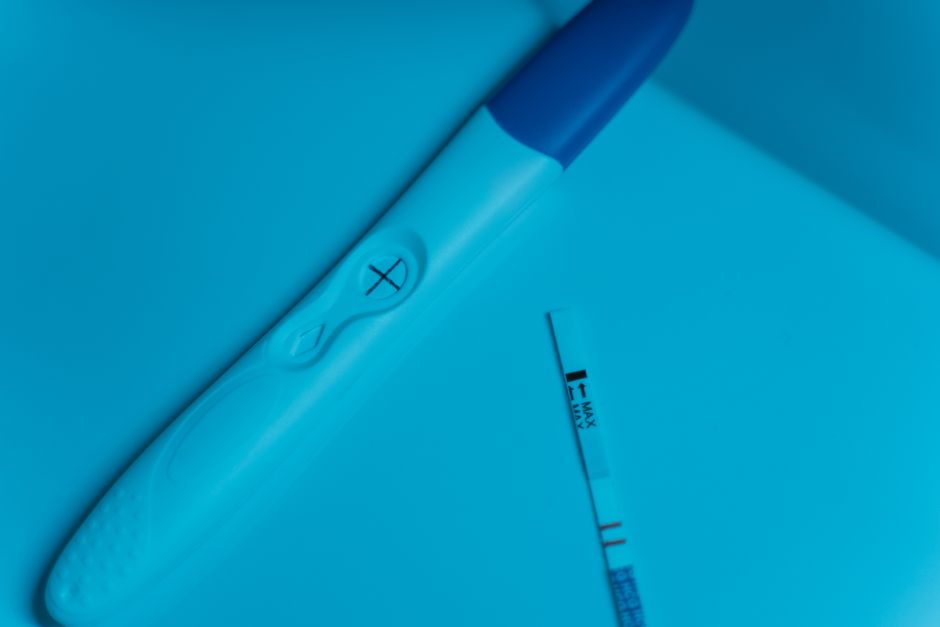
To test a pregnancy strip, you collect a small amount of urine in a clean cup, dip the absorbent end of the strip into it for the number of seconds the package states, lay the strip flat, and read the result within the time window printed on the instructions. The strip detects a hormone called human chorionic gonadotropin (hCG), which the body begins producing after a fertilized egg implants in the uterus. Timing matters as much as technique — testing too early is the most common reason a true pregnancy reads as negative.
How To Test Pregnancy Strip? Step By Step
The exact steps vary slightly by brand, so the instructions in your box always take priority over any general guide, including this one. That said, most dip-style strips follow the same basic process.
- Read the instructions first. Note the dip time (often a few seconds) and the read time (often about 5 minutes). These differ between brands.
- Collect urine in a clean, dry cup. A paper or plastic disposable cup works. Residue from soap or a previously used container can interfere with the test.
- Dip the strip to the marked line. Hold the absorbent end in the urine for the full time stated. Do not dip past the maximum line.
- Lay the strip flat. A clean, dry surface prevents the liquid from pooling unevenly.
- Wait, then read. Check the result at the time the package specifies. Reading too early can miss a faint line; reading too late can produce an evaporation line that looks like a positive.
Most strips show two zones: a control line that confirms the test worked, and a test line that appears if hCG is present. A visible control line means the strip functioned. No control line means the test is invalid and should be repeated with a new strip.
When Should You Take the Test for the Most Accurate Result?
Wait until your period is late. Testing on the first day of a missed period gives the most reliable result for most people. hCG rises quickly in early pregnancy, but in the first days after implantation the amount in urine may be too low for a strip to detect.
First morning urine is generally the most concentrated, especially if you are testing early. If your period is already several days late, the time of day matters less because hCG levels are higher.
Implantation — when the fertilized egg attaches to the uterine lining — usually happens about 6 to 12 days after ovulation, and hCG production starts around then. A test taken before implantation simply has no hormone to detect. This is why an early negative is not proof you are not pregnant.
How Do You Read the Lines on a Pregnancy Strip?
Two lines means positive. One line means negative. No lines, or a control line that fails to appear, means the test did not work.
A faint second line still counts as a positive if it appears within the read window and has color. Line intensity reflects how much hCG is in the urine, not how healthy or advanced a pregnancy is. A very faint line usually means you tested early.
Here is a distinction that trips up a lot of people: an evaporation line is not a positive result. If you check a strip hours after the read window has passed, a colorless or grayish line can appear as the urine dries. That line has no diagnostic meaning. Only read the strip within the time the package states.


What Can Cause a False Negative or False Positive?
False negatives are far more common than false positives, and early testing is the leading cause. Other factors include drinking a lot of fluid before testing (which dilutes urine) and using a strip that has expired or was stored improperly.
False positives are uncommon but possible. Certain medical conditions and some fertility medications that contain hCG can trigger a positive result when no pregnancy exists. A positive result after a very early miscarriage, sometimes called a chemical pregnancy, can also linger briefly as hCG clears from the body.
Home pregnancy tests are generally accurate when used correctly and after a missed period, but no test is perfect. A positive result should be confirmed by a healthcare provider, and a negative result with ongoing symptoms or a still-missed period is worth repeating in a few days or discussing with a clinician.
Does the Time of Day or Your Fluid Intake Affect the Result?
Yes. Diluted urine can lower hCG concentration enough to turn a borderline positive into a negative. If you are testing early, use first morning urine and avoid drinking large amounts of water in the hour or two before collecting your sample.
If you must test later in the day, try to hold your urine for a few hours beforehand so the sample is more concentrated. This is a practical tip, not a guarantee — concentration still varies from person to person.
What Should You Do After You Get Your Result?
A positive result should be confirmed with a healthcare provider, who can order a blood test that measures hCG directly and often more precisely than a urine strip. A negative result before a missed period is not final. If your period does not arrive, repeat the test in a few days.
Seek medical care promptly for severe abdominal pain, heavy bleeding, or dizziness, especially if you have a positive test. These symptoms can have several causes, and only a clinician can evaluate them.
Frequently Asked Questions
Can I use a pregnancy strip in the afternoon?
Yes, but first morning urine is more concentrated and generally more reliable, especially for early testing. If you test later, try to hold your urine for a few hours first.
How long should I wait to read the result?
Read the strip within the time window printed on the package, which is often about 5 minutes. Reading after that window can produce an evaporation line that looks positive but is not.
Does a faint line mean I am not very pregnant?
No. A faint line usually reflects low hCG levels, often because you tested early, not the health or stage of a pregnancy. Only a clinician can assess pregnancy progression.
Can a pregnancy strip be wrong?
Yes, though false negatives are much more common than false positives, usually because of early testing or diluted urine. Confirm any result with a healthcare provider if you have doubts.
