
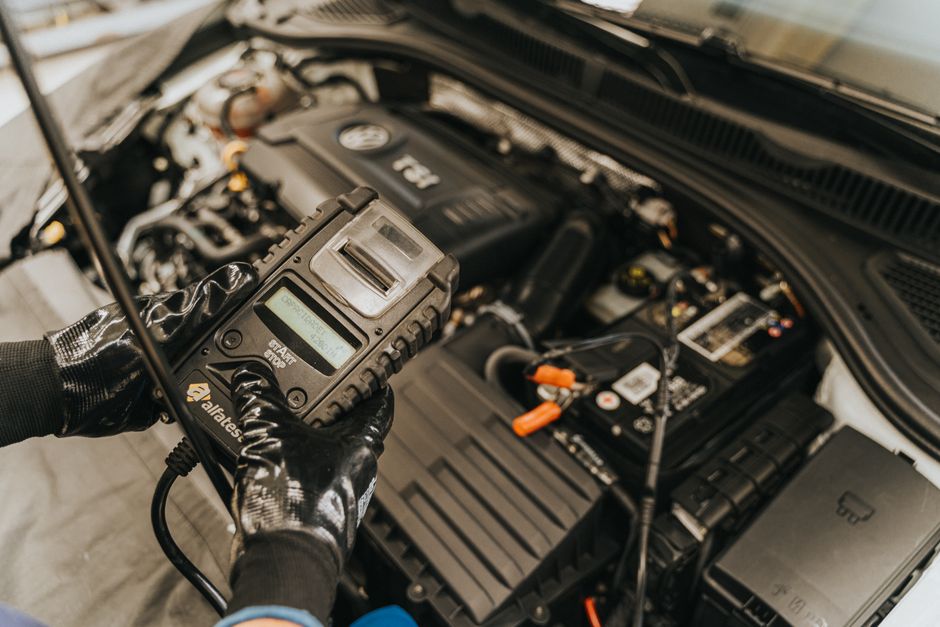
Engine mounts hold the engine and transmission in place while absorbing the vibration and movement they create. To test them, you do two things: look at each mount for visible damage like cracks, separation, or leaking fluid, then load the engine against the brakes to see whether a mount has failed internally in a way the eye cannot catch. The visual check finds obvious wear. The load test finds the hidden failures. Together they tell you whether a mount is still doing its job.
What Does an Engine Mount Actually Do?
An engine mount is a bracket-and-rubber assembly that connects the engine and transmission to the vehicle’s frame. It serves two jobs at once: it holds a heavy, torque-producing machine in position, and it isolates the cabin from the vibration that machine generates.
Most mounts use a rubber or synthetic elastomer block bonded between metal plates. Some vehicles use hydraulic mounts, which add a fluid-filled chamber to better cancel vibration at certain engine speeds. High-performance and some modern cars use active or electronically controlled mounts that change stiffness based on driving conditions.
Rubber does not last forever. Heat, oil exposure, ozone, and millions of load cycles cause it to harden, crack, and eventually separate from its metal backing. When that happens, the engine can move more than it should. That movement is what you are testing for.
Why Do Engine Mounts Fail?
Age and heat are the main drivers. The engine bay is one of the hottest environments in a car, and rubber degrades faster when it is cooked repeatedly. Oil leaks from the engine or transmission accelerate the process, because petroleum products break down many elastomers.
Hydraulic mounts fail differently. The fluid can leak out through a torn bladder, and once the fluid is gone the mount behaves like a worn solid mount — or worse, like a loose one. A leaking hydraulic mount often shows a dark, oily stain around its body.
Driving style matters too. Hard acceleration and aggressive shifting put more torque through the mounts, which speeds wear. So does a failed mount on one side, because it forces the remaining mounts to take more load than they were designed for.
What Are the Signs of a Bad Engine Mount?
The symptoms overlap with several other problems, so a single symptom is not proof. Look for a pattern.
- Excessive vibration felt through the steering wheel, seats, or floor, especially at idle
- A clunk or thud when you accelerate, shift, or let off the gas
- Engine movement you can see when someone revs the engine with the hood open
- A rough or shaky idle that does not improve with a tune-up
- Visible cracks, tears, or separation in the rubber
- Fluid leaking from a hydraulic mount
- Misalignment or unusual wear on belts, hoses, or exhaust components near the engine
Vibration at idle that smooths out as engine speed rises often points toward a mount. Vibration that gets worse with speed more often points toward tires, wheels, or driveline parts. That distinction is useful when you are trying to narrow things down.





How To Test Engine Mounts Visual And Load Tests
Start with the visual inspection, then confirm with a load test. Do the visual check first because it is free, safe, and sometimes finds the problem immediately.
The visual inspection
Park on a level surface, set the parking brake, and let the engine cool completely. Open the hood and locate the mounts. There is usually one on the passenger side, one on the driver side, and one or more holding the transmission — often called a torque strut or transmission mount. Some vehicles have additional mounts at the front or rear of the engine.
Look closely at each mount. You are checking for:
- Cracks, tears, or crumbling in the rubber
- Rubber separating from the metal plate it is bonded to
- Rubber that looks compressed, collapsed, or squished flat
- Dark fluid stains around a hydraulic mount
- Loose or missing mounting bolts
- Rust or corrosion on the bracket
A small surface crack is not automatically a failure. Rubber that has separated from its metal backing, or a mount that has visibly collapsed, is a clear problem. If you are unsure whether a crack is cosmetic or structural, that is exactly when the load test helps.
The load test
The load test puts the engine under torque so you can see whether a mount allows too much movement. This is the step that catches failures a visual check misses.
There are two safe ways to do this. The first is a brake-torque test. With the car in park or neutral and the parking brake firmly set, have a helper hold the brake pedal down hard while you briefly press the accelerator. The engine will try to twist against its mounts. Watch the engine for excessive movement — more than roughly an inch of travel in any direction is a warning sign. Keep this brief and never do it for more than a second or two at a time.
The second method is a helper-rev test. With the car in park, have someone rev the engine while you watch from a safe distance. A healthy mount lets the engine move a little and then stop. A failed mount lets it lurch noticeably, sometimes with a clunk.
Never put any part of your body under the hood or near the engine while it is running. Keep hands, tools, and clothing clear of belts, fans, and hot surfaces at all times.
What the results mean
If the visual check shows obvious separation or a collapsed mount, you have your answer. If the visual check looks clean but the engine moves excessively under load, suspect an internal failure or a hydraulic mount that has lost its fluid. If both checks are clean and you still have vibration, the mount may not be the problem — look at spark plugs, ignition components, or a vacuum leak.
Can You Test Engine Mounts Without a Helper?
Yes, but it is limited. You can do the visual inspection alone, since it needs no second person. For the load test, some people use a pry bar to gently move the engine by hand while watching the mount. This can reveal a mount that is completely separated, but it will not show you how the mount behaves under real torque.
A pry bar test is also easy to get wrong. Too much force can damage a mount that was fine, or bend a bracket. If you use this method, apply light pressure only and watch for movement at the mount, not at the engine as a whole.
If you cannot safely do a load test yourself, a mechanic can do it on a lift in a few minutes. It is a quick diagnostic, not a major job.
When Should You Stop Testing and Get Help?
Stop and get professional help if you see any of the following:
- The engine shifts so much that belts, hoses, or wiring look strained
- You hear metal-on-metal contact when the engine moves
- A mount is broken clean through or the engine is visibly tilted
- You are not comfortable working near a running engine
A badly failed mount is not just a comfort issue. Excessive engine movement can damage other components over time, including exhaust parts, hoses, and wiring. It also makes the car less predictable to drive. If a mount has clearly failed, replacing it is the fix — there is no repair for a separated or collapsed mount.
Replacing a mount is usually a straightforward job, though some mounts are buried and take more labor to reach. If you are unsure which mount is bad, a shop can confirm it quickly with the same visual and load tests described here.
Frequently Asked Questions
How do I know if my engine mount is bad?
Look for excessive vibration at idle, a clunk when you accelerate or shift, and visible cracks or separation in the rubber. A load test that shows more than about an inch of engine movement confirms a likely failure.
Can I test engine mounts without tools?
Yes, a visual inspection needs no tools at all. For the load test, you only need a helper to hold the brake or rev the engine while you watch for movement.
Is it safe to drive with a bad engine mount?
Short distances at low speed are usually manageable, but a badly failed mount lets the engine move enough to strain hoses, wiring, and exhaust parts. Get it checked soon rather than driving on it long-term.
How much engine movement is normal?
A healthy mount allows a small amount of movement, generally under about an inch, then stops it. Noticeable lurching or a clunk during a load test points to a failed mount.
