
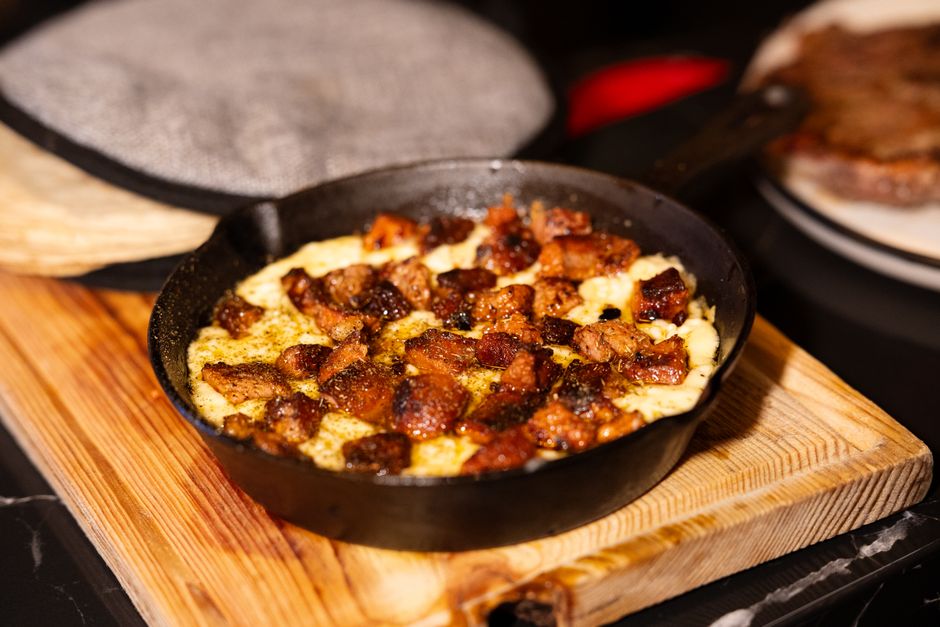
Chorizo is a raw ground pork sausage, and the only reliable way to know it is safely cooked is to check its internal temperature with a food thermometer. It needs to reach 160°F (71°C). Color, firmness, and cooking time are not reliable indicators on their own. The good news is that chorizo is forgiving — it is hard to overcook, and there are several visual and textural cues that back up what your thermometer tells you.
How To Tell When Chorizo Is Cooked: The Thermometer Test
A digital instant-read thermometer is the single most reliable tool for this job. Insert the probe into the thickest part of the meat, avoiding the pan bottom and any bone. The reading should hit 160°F (71°C) for raw pork chorizo.
That number comes from USDA food safety guidance for ground pork and pork products. Ground meat is treated more strictly than whole cuts because grinding mixes surface bacteria throughout the interior. A whole pork chop can be cooked to a lower internal temperature because bacteria mostly live on the outside. Ground chorizo has no “outside” — the risk is distributed through every bite.
Check in two or three spots, especially if you are cooking a large batch. Pans have hot and cool zones, and the meat closest to the center of a crowded skillet often lags behind the edges. If any reading comes in under 160°F, keep cooking and check again.
One practical note: some people test chorizo by poking it and looking at the juices. Clear juices are a decent clue, but they are not a guarantee. Pinkish or cloudy juices mean keep cooking. Clear juices do not automatically mean the meat is at 160°F throughout.
What Does Fully Cooked Chorizo Look Like?
Cooked chorizo turns from pinkish-red to a deep, brick-red or brownish-red color, and the raw, glossy sheen disappears. The meat crumbles into small, distinct pieces rather than holding together in a sticky mass.
Raw chorizo is dense and cohesive. As it cooks, the fat renders, the proteins contract, and the texture loosens. Fully cooked chorizo breaks apart easily when you press it with a spoon or spatula.
Here is the honest part: color is a weak indicator on its own. Chorizo is heavily seasoned with paprika, annatto, or achiote, all of which give it a red tint that can persist even after the meat is safely cooked. Some chorizo also contains curing salts or nitrates that keep the meat looking pink. A red or pinkish color in cooked chorizo does not automatically mean it is undercooked.
Use color as a supporting cue, not a verdict. The thermometer is the verdict.
Does Chorizo Need to Be Cooked to 160°F If It Is Cured?
Cured chorizo is a different category from raw Mexican-style chorizo, and the rules are not the same.
Spanish chorizo and other dry-cured chorizos are fermented and dried. They are sold ready to eat — you can slice them and eat them without cooking. These products are shelf-stable and safe to consume as-is, though many people still choose to cook them for flavor and texture.
Mexican-style chorizo is fresh, raw ground pork. It is not cured in the same sense and must be cooked to 160°F. This is the chorizo most US shoppers find in the refrigerated section next to the bacon.
Read the label. If it says “ready to eat,” “dry cured,” or “fully cooked,” you are dealing with a different product than raw fresh chorizo. If it says “keep refrigerated” and lists raw pork as the first ingredient, treat it as raw meat.



How Long Does Chorizo Take to Cook?
Fresh chorizo in a skillet over medium heat typically takes about 8 to 12 minutes to cook through, breaking it up as it goes. Thicker links or larger chunks take longer. Thin crumbles cook faster.
Time is a rough guide, not a rule. Pan material, heat level, how crowded the pan is, and how cold the meat started all change the timing. A cast-iron skillet retains more heat than a nonstick pan. A crowded pan steams the meat instead of browning it, which slows the cook.
Do not rely on time alone. Use it to plan, then confirm with the thermometer.
A few things that help:
- Break the chorizo into small pieces as it cooks so heat reaches the center faster.
- Do not crowd the pan. Cook in batches if needed.
- Stir occasionally but not constantly — letting the meat sit against the hot pan helps it brown.
- If the chorizo releases a lot of fat, spoon some off. Excess fat can make the meat seem done when it is not.
Can You Tell If Chorizo Is Cooked by How It Feels?
Fully cooked chorizo feels firm and crumbly. Raw chorizo feels soft, dense, and slightly springy. Pressing it with a spatula gives you a rough sense of where it is in the cooking process.
But feel is not a safety check. Meat can feel firm at the surface while the center is still under the target temperature. This is especially true with thicker links or chorizo packed tightly in a casing.
Texture is useful for knowing when to stop stirring and start checking. It is not useful for deciding the meat is safe to eat.
Why Undercooked Chorizo Is a Real Risk
Pork can carry parasites and bacteria, including Trichinella and Salmonella. Cooking to 160°F kills these organisms. Undercooked pork is a documented cause of foodborne illness.
The risk is not theoretical. Trichinosis, once common in the US, declined sharply after commercial pork producers changed feeding practices and after cooking guidelines were widely adopted. But it has not disappeared entirely, and pork from small farms or wild game carries higher risk.
Symptoms of foodborne illness from undercooked pork can include nausea, stomach cramps, diarrhea, and fever. They usually appear within hours to a few days, depending on the organism. If you suspect food poisoning and symptoms are severe or persistent, contact a healthcare provider.
This is why the 160°F target matters. It is not a suggestion — it is the temperature at which the risk from these organisms is considered adequately controlled.
Does Chorizo Need to Rest After Cooking?
No. Ground meat does not benefit from resting the way a whole steak or roast does.
Whole cuts rest so juices redistribute and the meat finishes cooking from residual heat. Ground chorizo is already broken into small pieces, and the juices have largely rendered out during cooking. There is nothing to redistribute.
Serve it hot. If you are adding it to a dish, fold it in right away.
Common Mistakes That Lead to Undercooked Chorizo
Most problems come from a few predictable habits.
- Cooking by color alone. Seasonings and curing agents keep chorizo looking red even when it is done.
- Using high heat to speed things up. The outside browns before the inside reaches 160°F.
- Crowding the pan. The meat steams instead of cooking evenly, and the center lags.
- Not checking multiple spots. One reading does not represent the whole batch.
- Assuming cured chorizo needs the same treatment. Dry-cured chorizo is ready to eat; fresh chorizo is not.
None of these are hard to fix. A thermometer, a little patience, and a pan that is not overcrowded solve most of them.
What About Chorizo in Other Dishes?
When chorizo is mixed into eggs, potatoes, soups, or casseroles, the same rule applies: the chorizo itself must reach 160°F. If you are adding raw chorizo to a dish, cook it fully first or make sure the entire dish reaches the target temperature.
This matters most in dishes where the chorizo is folded in at the end or layered into a casserole. The surrounding ingredients may be hot while the chorizo center is not. Cook the chorizo separately, or verify the temperature of the dish in the thickest part where chorizo is concentrated.
If you are reheating leftovers that contain chorizo, bring them to 165°F. That is the standard reheating temperature for previously cooked food.
Frequently Asked Questions
What temperature does chorizo need to reach to be safe?
Fresh raw chorizo needs to reach an internal temperature of 160°F (71°C). This is the USDA guideline for ground pork products.
Can you eat chorizo if it is still pink?
Yes, if it has reached 160°F. Chorizo often stays red or pink because of paprika, annatto, and curing salts, so color alone does not tell you whether it is safe.
Is Spanish chorizo already cooked?
Dry-cured Spanish chorizo is ready to eat without cooking. Fresh Mexican-style chorizo is raw and must be cooked to 160°F.
How long should you cook chorizo on the stove?
About 8 to 12 minutes over medium heat for crumbled fresh chorizo, though time varies with pan, heat, and batch size. Always confirm with a thermometer rather than timing alone.
