
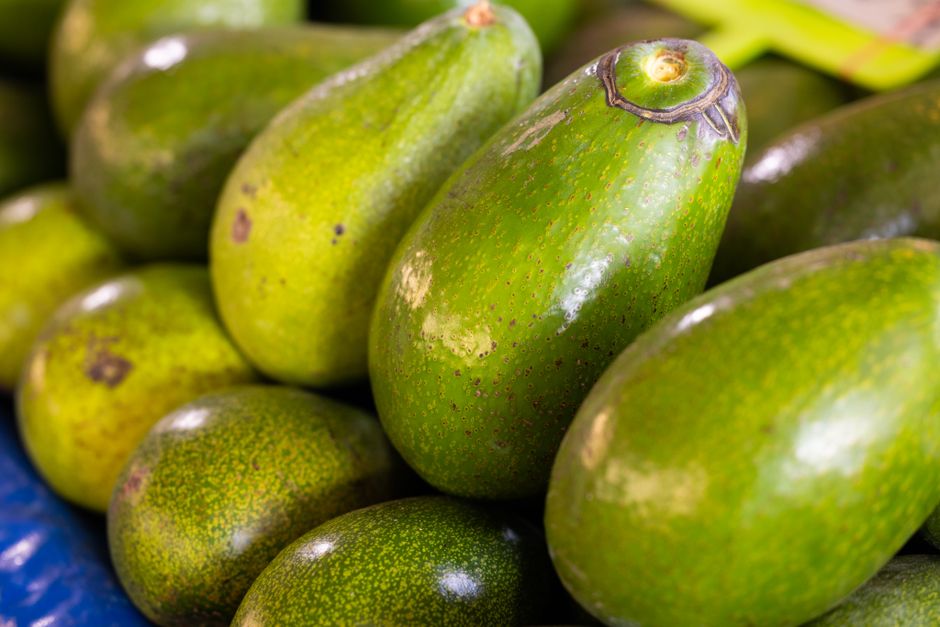
Avocados are one of the few fruits that do not ripen on the tree. They only soften and mature after they are picked. This means the avocado you buy at the store today may be ready to eat tonight, tomorrow, or in four days. The best way to tell if an avocado is ready is to check its firmness with gentle pressure and look for a few visual clues. A ripe avocado yields slightly to firm pressure, like pressing your thumb into the palm of your hand, without feeling mushy or leaving a permanent dent.
What Does a Ripe Avocado Feel Like?
Firmness is the most reliable test. Hold the avocado in the palm of your hand and press gently with your thumb or fingers. Do not use your fingertips, which can bruise the flesh beneath the skin.
A ripe avocado gives slightly under gentle pressure. It feels soft but still holds its shape. An underripe avocado feels hard and does not yield at all. An overripe avocado feels mushy, and the skin may feel like there is air or liquid beneath it.
Press the avocado near the stem end rather than the middle. The stem end ripens first, so it gives you the earliest sign of readiness. If the stem end yields slightly but the middle feels firm, the avocado is close but likely needs another day.
How to Check the Stem
The small stem nub at the top of the avocado offers useful information. Flick it off with your thumb. If it comes off easily and the flesh underneath is green, the avocado is ripe. If the flesh underneath is brown, the avocado is overripe. If the stem does not come off easily, the avocado is not ready.
This method only works when the stem is still attached. Many store-bought avocados arrive with the stem missing. In that case, rely on the pressure test and the color of the skin.
What Color Should a Ripe Avocado Be?
Color is a helpful clue but not a guarantee. Most common varieties, like Hass avocados, turn from bright green to dark green or nearly black as they ripen. A dark-skinned avocado is usually close to ready or already ripe.
However, color alone does not tell the full story. A dark avocado can still be firm inside, and a lighter avocado can occasionally be ripe. Use color as a starting point and always confirm with the pressure test.
Some varieties do not follow this rule. Florida avocados, for example, stay green even when fully ripe. If you are buying a less common variety, ask the produce manager or rely on firmness rather than color.





How to Ripen Avocados Faster at Home
Avocados ripen at room temperature. Place them on the counter, away from direct sunlight, and check them daily. Most avocados need one to four days to ripen at room temperature, depending on how firm they were when purchased.
To speed up the process, place the avocado in a brown paper bag with a banana or an apple. These fruits release ethylene gas, a natural plant hormone that triggers ripening. The bag traps the gas around the avocado, which accelerates softening. This method typically shortens ripening time by a day or two.
Do not put avocados in the refrigerator until they are ripe. Cold temperatures stop the ripening process. Once an avocado is ripe, you can store it in the fridge for two to three days to slow further softening.
Can You Eat an Avocado That Is Not Fully Ripe?
Yes, you can eat an underripe avocado, but it will not taste good. The flesh is hard, pale, and has a bitter, grassy flavor. It is also more difficult to mash or slice cleanly.
Some people grate firm avocados into salads or slaws, where the texture works better. But for guacamole, toast, or slicing, an underripe avocado is disappointing.
There is no reliable way to ripen a cut avocado. Once you slice it open, the ripening process stops. If you cut into an avocado and find it underripe, you can try squeezing lime or lemon juice over the cut surfaces and refrigerating it, but this only preserves it — it does not make it ripen further.
How to Store Cut Avocados
Once an avocado is cut, exposure to air causes the flesh to turn brown. This is oxidation, the same process that turns apples and potatoes brown. The browning is not harmful, but it looks unappetizing.
To slow browning, leave the pit in the unused half and brush the cut surface with lemon or lime juice. The acid slows oxidation. Then wrap the avocado tightly in plastic wrap, pressing the wrap directly against the flesh to remove as much air as possible. Store it in the refrigerator and use it within one to two days.
Some people store cut avocado halves in a container of water to prevent browning. Research on this method is limited, and food safety experts advise caution. Storing cut produce in water can encourage bacterial growth. The safer approach is acidulated water or simply plastic wrap and refrigeration.
How To Tell When Avocados Are Ready To Eat: The Full Checklist
Here is the complete process for checking any avocado before you cut it:
- Hold it in your palm and press gently with your thumb.
- It should yield slightly without feeling mushy.
- Check the stem nub — it should flick off easily and reveal green flesh.
- Look for dark skin on Hass varieties.
- If it is hard, leave it on the counter for another day.
- If it is mushy, it is overripe and may have brown spots inside.
When in doubt, buy avocados at different stages of ripeness. Pick one firm avocado for later in the week and one that yields slightly for immediate use. This way you always have one ready when you need it.
What If the Avocado Is Overripe?
An overripe avocado is not ruined, but it needs attention. If the flesh is only slightly soft with a few brown spots, you can cut away the brown areas and use the rest. The flavor of the remaining flesh is usually fine.
If the avocado smells sour or fermented, or if the flesh is stringy and discolored throughout, discard it. Rancid avocado has an unpleasant odor and a bitter taste. Eating it will not make you sick in most cases, but it is not worth the poor experience.
Overripe avocados work well in smoothies, baked goods, or as a face mask ingredient. The texture is already soft, so it blends easily. Just be sure the flavor is still acceptable before using it in food.
Frequently Asked Questions
How long does it take for an avocado to ripen on the counter?
Most avocados ripen in one to four days at room temperature. The exact time depends on how firm the avocado was when you bought it.
Can you ripen an avocado in the microwave?
No. Microwaving an avocado softens it unevenly and can cook the flesh, which ruins the flavor and texture. It does not actually ripen the fruit.
Is a dark avocado always ripe?
No. Dark skin is a good clue for Hass avocados, but firmness is the real test. A dark avocado can still be hard inside, so always press it gently before cutting.
What is the best way to store a ripe avocado?
Put it in the refrigerator to slow further ripening. A ripe avocado will keep for two to three days in the fridge before it starts to spoil.
