
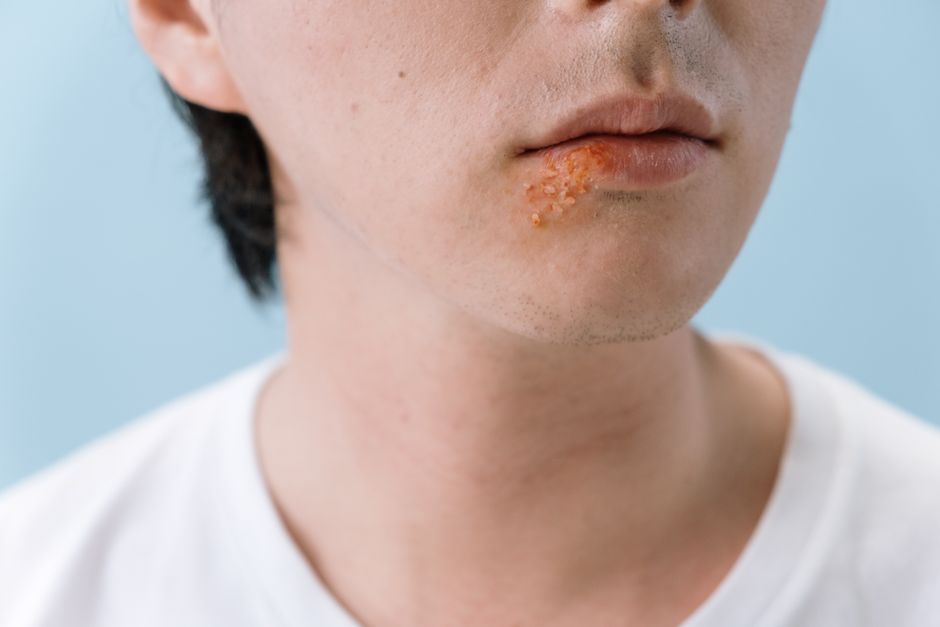
Canker sores are small, shallow ulcers that form inside the lips, cheeks, or under the tongue. They are not cold sores, which are caused by the herpes virus and appear on the outside of the mouth. A normal canker sore typically heals on its own within 7 to 14 days. You will know it is healing when the sharp pain fades, the white or yellow center shrinks, and the surrounding red inflammation begins to disappear. The sore will gradually fill in with new pink tissue until the surface looks smooth again.
What Does a Healing Canker Sore Look Like?
A canker sore goes through distinct visual stages. In the beginning, it appears as a small round or oval ulcer with a white, yellow, or gray center. The edge of the sore is usually bright red and inflamed. This is the most painful phase.
As healing begins, the color of the center often changes. The white or yellow coating may start to thin out. The red halo around the sore becomes less intense and less swollen. The ulcer itself looks smaller and shallower. New pink tissue forms at the edges first, slowly moving toward the center.
In the final days, the sore shrinks to a tiny pink spot. Eventually, the tissue returns to its normal color and texture. You may not even remember exactly where the sore was once it fully heals. Scarring is rare with minor canker sores.
How Long Does It Take for a Canker Sore to Heal?
Most minor canker sores heal in 7 to 14 days. Minor sores are the most common type and are usually smaller than 1 centimeter across. They heal without leaving a scar.
Major canker sores are less common. They are larger, deeper, and can take several weeks to heal, sometimes up to six weeks. These sores are more painful and may leave scar tissue. If a sore lasts longer than two weeks without any improvement, you should see a doctor or dentist.
Herpetiform canker sores are the rarest type. Despite the name, they are not caused by the herpes virus. They appear as clusters of tiny pinhead-sized sores that may merge into one larger ulcer. These typically heal within 7 to 14 days as well.
How To Tell When A Canker Sore Is Healing Normally: Key Signs
Pain relief is the first reliable sign of healing. The first few days are usually the most painful. Once the pain starts to ease, even if the sore is still visible, healing is underway.
Look for these specific changes:
- Pain decreases, especially when eating or talking
- The white or yellow center becomes smaller and thinner
- The red ring around the sore fades
- The sore becomes less deep and less raised
- New pink tissue appears at the edges
- The sore stops growing and stays the same size before shrinking
Healing is not always a straight line. The sore may look better one day and worse the next. This is normal. As long as the overall trend is toward smaller and less painful, healing is progressing normally.





What Makes Canker Sores Worse?
Certain foods can irritate an active canker sore and slow healing. Spicy foods, acidic foods like tomatoes and citrus, and rough or crunchy foods like chips can cause pain and delay recovery. Avoiding these foods for a week or two can help.
Stress is a known trigger for canker sores. Some research suggests that emotional stress can increase the frequency of outbreaks. Managing stress may not speed up healing of a current sore, but it may help prevent future ones.
Trauma to the mouth can also cause canker sores. Accidentally biting your cheek, brushing too hard, or dental work can trigger a sore. In these cases, the healing timeline is the same as any other minor canker sore.
When Should You See a Doctor?
Most canker sores do not require medical treatment. But some situations warrant a professional evaluation. See a doctor or dentist if the sore lasts longer than two weeks without improvement, or if it grows larger rather than smaller.
Seek medical attention if you have:
- Sores that keep coming back frequently
- Sores that spread to other parts of the mouth or lips
- Pain that is severe enough to prevent eating or drinking
- A sore that appears after starting a new medication
- Fever, rash, or swollen lymph nodes alongside the sore
Recurrent canker sores can sometimes be a sign of an underlying condition. Nutritional deficiencies, such as low vitamin B12, folate, or iron, have been linked to frequent canker sores in some studies. Inflammatory bowel diseases and certain autoimmune conditions can also cause recurring mouth ulcers. A doctor can determine if testing is needed.
Do Over-the-Counter Treatments Actually Work?
Several over-the-counter products claim to relieve canker sore pain and speed healing. Some contain ingredients like benzocaine, which numbs the area, or hydrogen peroxide, which cleans the sore. These products can provide temporary pain relief, but the evidence that they shorten healing time is limited.
Oral rinses containing chlorhexidine, available by prescription, may reduce pain and promote healing in some people. However, these are typically prescribed for more severe cases.
Some research suggests that vitamin B12 supplements may reduce the duration of canker sores in people who have low levels. But this does not apply to everyone. If you get frequent canker sores, it is reasonable to ask your doctor about checking your vitamin levels.
No over-the-counter product has been proven to cure canker sores or prevent them entirely. The body heals these sores on its own. Treatments mainly manage pain and discomfort while the natural healing process runs its course.
What Is the Difference Between a Canker Sore and a Cold Sore?
Canker sores and cold sores are often confused, but they are completely different conditions. Canker sores appear only inside the mouth. They are not contagious and are not caused by a virus.
Cold sores, also called fever blisters, appear on the outside of the mouth, usually on the lips. They are caused by the herpes simplex virus and are highly contagious. Cold sores often start with a tingling or burning sensation before blisters form. They crust over and heal within 7 to 10 days.
If you have a sore on the outside of your lip, it is a cold sore, not a canker sore. Treatment for cold sores involves antiviral medications, which do not work on canker sores.
Can You Prevent Canker Sores?
If you know your triggers, you may be able to reduce how often canker sores appear. Common triggers include certain foods, stress, and minor mouth injuries. Keeping a diary of when sores appear may help you identify your personal triggers.
Good oral hygiene may help. Brushing gently with a soft-bristled toothbrush can reduce trauma to the mouth lining. Avoiding toothpaste containing sodium lauryl sulfate is sometimes recommended, though the evidence for this is mixed. Some people report fewer canker sores when they switch to a toothpaste without this ingredient.
If a specific food consistently triggers your sores, avoiding it makes sense. If stress is a trigger, stress reduction techniques may help, though they have not been rigorously studied for this purpose.
Frequently Asked Questions
Is it normal for a canker sore to hurt less before it looks healed?
Yes, pain relief is usually the first sign of healing. The sore may still be visible for several more days, but decreasing pain means the tissue is repairing.
Can a canker sore last more than two weeks?
Minor canker sores usually heal within two weeks. Major canker sores can take up to six weeks. If a sore lasts longer than two weeks without improving, see a doctor.
Should I pop or drain a canker sore?
No. A canker sore is not a blister or a pimple. There is nothing to drain, and picking at it will only increase pain and delay healing.
What does a healing canker sore look like day by day?
In the first days, the sore is at its largest and most painful. Around day 4 to 6, the center shrinks and the redness fades. By day 7 to 14, the sore fills in with pink tissue and becomes smooth.
