
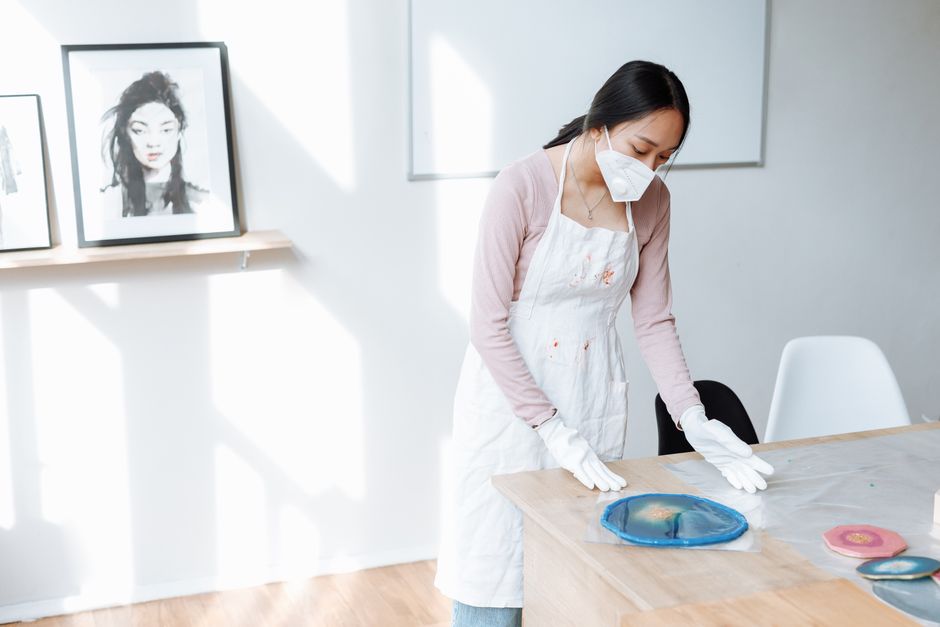
A resin print is fully cured when its surface is no longer tacky, it has lost most of its original resin smell, and it looks uniformly matte rather than glossy or wet in patches. Curing is a chemical reaction, not a drying process, so the print does not need air to finish. The most reliable sign is a combination of those surface cues plus the knowledge that you exposed every side to enough UV light for enough time.
Resin printing has a quiet failure mode. A part can look finished, feel dry to a quick touch, and still be undercured on the inside or on a hidden face. That matters because uncured resin is a skin irritant and a sensitizer, and the reaction that hardens it continues slowly in daylight long after you take it off the plate. Knowing what full cure actually looks like saves prints, skin, and patience.
What Does “Fully Cured” Actually Mean For Resin?
Full cure means the polymer chains in the resin have cross-linked as far as that formulation will allow under normal conditions. Photopolymer resin hardens when UV light triggers molecules called photoinitiators, which start a chain reaction that links liquid monomers into a solid network. The reaction does not switch off the instant the light does. It keeps creeping forward for a while afterward.
This is why a print can feel hard straight off the printer and still not be done. The outer skin cures first because it sees the light first. Deeper layers and shadowed faces lag behind. A part that is rigid on the outside can still have a soft, under-reacted interior.
There is also a limit worth knowing. Most desktop resins are not formulated to reach a 100 percent complete reaction. Manufacturers design them to reach a practical working cure — hard enough, stable enough, safe enough to handle. Chasing a theoretical perfect cure with hours of extra UV usually just makes the part brittle and yellowed. The goal is a proper working cure, not an absolute one.
How To Tell If Your Resin Print Is Fully Cured
You confirm full cure by checking the surface, the smell, and the appearance together — no single test is enough on its own. Run through these checks after washing and before you call a print done.
- Touch test. Press a clean, gloved finger firmly on several faces, including the underside and any recessed areas. A fully cured surface feels hard and dry. A tacky or slightly sticky feel means more UV time is needed.
- Smell test. Cured resin has a much fainter odor than liquid resin. Hold the print a few inches from your nose. A strong, sharp resin smell suggests uncured material is still present, often in crevices or on thin features.
- Visual check. Tilt the print under good light. Fully cured resin looks evenly matte or satin. Wet-looking patches, glossy spots, or a sheen that catches light differently from the rest of the part point to undercured areas.
- Detail check. Fine features like supports marks, tiny holes, and thin walls are the last places to cure. If they still look soft or shiny, the whole part likely needs more time.
- Feel for warmth. The curing reaction releases a little heat. A print that feels slightly warm right after UV exposure is normal. This is a weak signal on its own, so treat it as a supporting clue, not proof.
None of these checks can see inside a thick section. For a chunky part, the surface tells you the outside is done, but the core may still be catching up. That is where time and turning the part matter more than any single test.
Why Does My Resin Print Still Feel Sticky After Curing?
Stickiness after curing almost always means one of three things: the print was not washed clean, it did not get even UV exposure, or it was cured in a way that left oxygen or moisture on the surface.
Leftover liquid resin is the most common culprit. Uncured resin trapped in crevices, support marks, or hollow interiors keeps the surface tacky no matter how long you cure. Wash the part thoroughly in the recommended solvent — isopropyl alcohol is common — and let it dry completely before curing. Curing a wet or resin-coated print effectively seals the problem in.
Uneven exposure is the second cause. A part sitting flat on one face in a curing station gets plenty of light on top and little on the bottom. Rotate the print and flip it partway through so every side sees the light.
Oxygen is the third. Oxygen in the air inhibits the curing reaction at the surface, which is why some resins stay slightly tacky on the outermost skin even when the rest is hard. Many people find that a final cure with the part submerged in water, or a short wait after curing, resolves the surface tack. The evidence on water curing is mostly practical experience rather than controlled study, so treat it as a widely used technique rather than a guaranteed fix.



How Long Should You Cure A Resin Print?
There is no single correct cure time, because it depends on the resin, the part’s thickness, and the power of your UV source. This is one of the most common questions and one of the least standardized answers in resin printing.
Resin manufacturers publish cure guidance for their specific products, and that guidance is the best starting point. It typically varies with wall thickness and part size. Thin, small parts cure faster than thick, solid ones. A curing station’s own instructions usually give a range as well.
Because these numbers vary so much between products and equipment, no universal time applies across all resins. Follow the resin maker’s recommendation first, then adjust based on the checks above. If a part is still tacky or smelly at the recommended time, add more in short increments rather than doubling it at once. Overcuring has its own costs: extra UV exposure can make parts brittle and cause yellowing, especially in clear and light-colored resins.
Does Resin Keep Curing After You Take It Out Of The UV Light?
Yes. The curing reaction continues for a period after the UV source is removed, because reactive molecules remain and the chain reaction does not stop instantly. This is sometimes called dark cure.
The practical takeaway is that a print can keep hardening in the hours after you finish. This is usually helpful — it can finish off areas that were slightly undercured. It also means a part that felt acceptable right after curing may feel different later. If you want to be sure, check the print again after it has sat for a while.
Ambient light matters here too. Sunlight and bright indoor light contain UV, so a print left on a windowsill keeps curing slowly whether you intend it to or not. Store finished prints away from strong light if you want to control the process.
What Happens If You Handle An Undercured Print?
Uncured resin is a skin irritant and a known sensitizer, meaning repeated contact can make you more reactive to it over time. Handling an undercured print with bare hands exposes you to liquid resin on the surface and in crevices.
The safe approach is to wear nitrile gloves whenever you handle a print that may not be fully cured, and to wash your hands with soap and water after any contact. If resin gets on your skin, wash it off promptly rather than letting it sit. Uncured resin should never be allowed near your eyes or mouth.
This is also why “it looks fine” is not a good enough standard. A print that is hard to the touch but still tacky in a hidden recess is still a source of exposure. The surface and smell checks exist to catch exactly that.
The Short Version
A fully cured resin print is hard, dry, evenly matte, and faint in smell. Check several faces, not just the top. Wash thoroughly before curing, rotate the part for even light, and follow the resin maker’s cure guidance as your starting point. When in doubt, a little more UV in short steps is safer than handling a tacky part with bare hands.
Frequently Asked Questions
How can you tell if a resin print is fully cured?
A fully cured print feels hard and dry on all faces, has only a faint resin smell, and looks evenly matte under good light. Sticky spots, glossy patches, or a strong smell mean it needs more UV exposure.
Is it OK to touch a resin print before it is fully cured?
No, you should wear nitrile gloves when handling any print that may still be undercured. Uncured resin is a skin irritant and a sensitizer, and repeated bare-skin contact can increase your sensitivity over time.
Why is my resin print still sticky after curing?
Stickiness usually means leftover liquid resin was not fully washed off, the part did not get even UV exposure on every side, or oxygen inhibited the surface layer. Wash and dry the print completely, then cure it again while rotating it.
Does a resin print keep curing after UV light is removed?
Yes, the curing reaction continues for a while after the light is gone, and ambient sunlight or bright indoor light keeps it going slowly. Check the print again after it has sat to confirm it is fully hard.
