
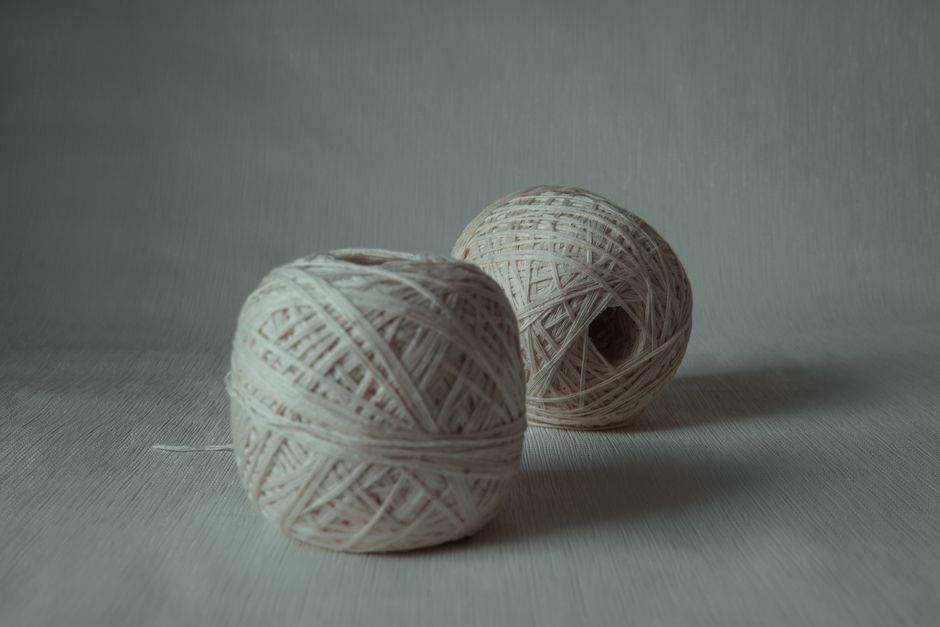
Cotton yarn is a plant fiber, and that single fact drives every reliable test you can do at home. It burns like paper, smells like burnt paper, turns to soft gray ash, and does not melt or shrink away from a flame the way synthetic fibers do. If you want a fast answer, the burn test is the most dependable method — and the label on the yarn is the only method that is truly certain.
Everything else — the feel, the look, the water test — gives you clues, not proof. Blends make it harder, because a yarn can be mostly cotton with a little polyester and still feel soft and plant-like. Here is how to sort out what you actually have.
How To Tell If Yarn Is Cotton By Burning It
The burn test works because plant fibers and synthetic fibers behave in completely different ways when they meet fire. Cotton is cellulose, the same material as paper and wood. Polyester, acrylic, and nylon are plastics. They do not burn the same, and they do not smell the same.
Cut a piece about 4 to 6 inches long. Hold one end with tweezers or a metal clip over a fireproof surface, away from anything flammable. Light the free end and watch what happens.
- Cotton: catches quickly, burns with a steady yellow-orange flame, smells like burning paper or leaves, leaves soft gray or white ash that crumbles when you touch it.
- Polyester or nylon: melts and shrinks away from the flame before it burns, smells sweet or chemical, leaves a hard dark bead at the end that will not crush.
- Acrylic: melts and burns, smells sharp and plastic-like, leaves a hard black bead.
- Wool or silk: burns slowly, smells like burnt hair, leaves a crushable black ash.
- A blend: you will see both behaviors — some melting, some ash, a mixed smell.
Do this outdoors or near an open window. The fumes from melting synthetics are not something you want to breathe in a closed room.
One clarification worth knowing: a yarn that burns cleanly with paper smell and soft ash is almost certainly a plant fiber, but it could be linen, hemp, or bamboo rather than cotton. Those fibers burn very similarly. The burn test tells you “plant” with high confidence. It does not always tell you “cotton” specifically.
What Does Cotton Yarn Feel Like Compared To Acrylic?
Cotton feels cool and slightly heavy in the hand. It has very little stretch — pull it and it barely gives. Acrylic feels warmer, lighter, and springier, and it bounces back when you stretch it.
Rub a strand between your fingers. Cotton has a dry, matte texture with a faint grip to it. Acrylic tends to feel smoother and slightly slick, and it often has a subtle sheen under light. Cotton does not shine unless it has been mercerized, a treatment that smooths the fiber and adds a soft luster.
There is a catch. Soft acrylic and cotton-blend yarns can imitate cotton’s feel closely, especially after washing. Feel alone is a weak test. Use it to form an impression, not a verdict.
Does Cotton Yarn Sink Or Float In Water?
Cotton sinks. This is one of the more reliable quick checks, because it comes down to density.
Drop a short length into a glass of water. Cotton absorbs water, gets heavier, and sinks within a minute or so. Most acrylic and polyester yarns float, at least at first, because the plastic fibers do not absorb water the way cellulose does. Wool also tends to float initially because it repels water, though it can eventually become waterlogged.
The limits of this test matter. A cotton-synthetic blend may float or sink slowly depending on how much synthetic fiber is in it. Yarn that has been treated with a water-repellent finish can float even if it is cotton. And a synthetic yarn with a very loose, open structure may take on water and sink. Treat floating or sinking as supporting evidence, not proof.




How Can You Tell Cotton Yarn By Looking At It?
Cotton has a matte, flat appearance with no natural shine and no fuzzy halo. Hold a strand against a dark surface and look closely.
Under slight magnification, cotton fibers look like flat, twisted ribbons with a natural spiral. Wool has overlapping scales that give it a fuzzy, crimped look. Synthetics look smooth and uniform, almost like plastic thread. Cotton also tends to show small imperfections and slight unevenness, because it is a natural fiber.
Visual inspection is the least reliable method on its own. Dyed yarns, mercerized cotton, and tight spinning can all change how a fiber looks. Use your eyes to narrow the options, then confirm with the burn test.
Why Is The Yarn Label The Only Certain Answer?
The label is the only method that gives you a definite answer, because it is required to list fiber content by law in the United States. If a ball band says 100% cotton, it is cotton. If it says 60% cotton and 40% acrylic, that is exactly what is in it.
Manufacturers must disclose fiber content on yarn sold for consumer use, and the percentages must add up. This is why the label beats every home test. No burn test, water test, or feel test can tell you whether a yarn is 85% cotton or 100% cotton.
If the label is missing, check the inside of the ball band, the store listing, or the manufacturer’s website. Many brands list full fiber content online. When you truly cannot find it, the burn test is your best remaining option.
What About The Bleach Test And Other Home Methods?
Some crafters use a bleach test. Cotton is cellulose, and cellulose dissolves in household bleach over time, while polyester and acrylic resist it. In practice this test is slow, inconsistent, and involves a caustic chemical, so it is not worth the risk for a home check.
Other methods you may see online — rubbing the yarn, checking static, or holding it to a light — are unreliable. Cotton does not build up static the way acrylic does, but dry air and friction can create static on almost any fiber, so this proves little.
If you need certainty and the label is gone, the burn test is the method to use. It is fast, it uses materials you already have, and it separates plant fibers from synthetics with high reliability.
Why Does It Matter Which Fiber You Have?
Cotton and synthetic yarns behave differently in finished projects, and knowing which you have prevents unpleasant surprises.
Cotton does not stretch, so it holds its shape and is a common choice for washcloths, dish towels, summer garments, and bags. It absorbs water well. It also tends to shrink the first time it is washed in hot water, so most cotton projects are washed in cool water and laid flat to dry.
Acrylic stretches and springs back, holds warmth, and is often machine washable and dryable. It is a common substitute for wool. Blends combine properties of both fibers, which is why they can be confusing to identify by touch.
If you are substituting one yarn for another in a pattern, matching the fiber matters more than matching the color. A cotton pattern worked in acrylic will drape and stretch differently, and the finished item may not hold its intended shape.
Frequently Asked Questions
Does cotton yarn burn or melt?
Cotton burns; it does not melt. It catches fire like paper, smells like burnt paper, and leaves soft gray ash that crumbles, while synthetic fibers melt and leave a hard bead.
How can I tell if yarn is cotton without burning it?
Check the label first, since fiber content must be disclosed on consumer yarn. If the label is gone, cotton sinks in water and feels cool, matte, and has almost no stretch, but none of these confirm it the way a burn test does.
Is cotton yarn heavier than acrylic?
Cotton generally feels heavier and denser than acrylic of the same thickness. Acrylic traps more air and feels lighter and springier in the hand.
Can a cotton blend pass the burn test?
A blend usually shows mixed signs, such as some soft ash along with a melted bead. The burn test can confirm a plant fiber is present but cannot tell you the exact percentage of cotton.
