
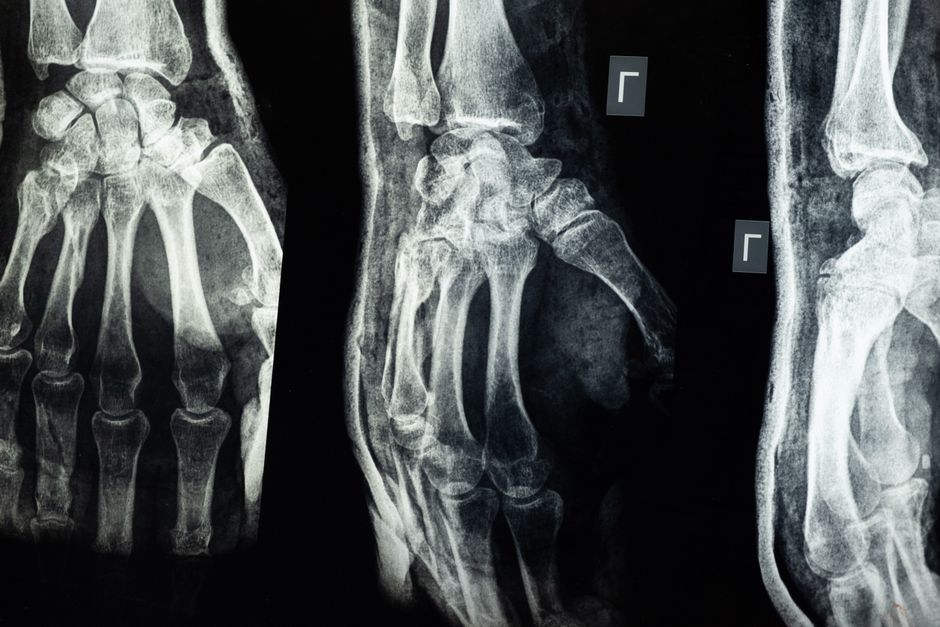
A fractured wrist hurts, swells, and usually makes moving your hand painful or impossible. The most reliable sign is tenderness in a specific spot at the base of the thumb or the back of the wrist, along with swelling and trouble gripping. But no symptom list can confirm a fracture on its own. Only an X-ray can tell a broken wrist from a bad sprain.
That gap matters because the two problems can look almost identical in the first hour. Both cause pain and swelling. Both can follow a fall onto an outstretched hand. The difference often comes down to where it hurts and how badly movement is limited.
What Are the Most Common Signs of a Fractured Wrist?
Pain, swelling, and loss of function are the three classic signs. They show up together in most wrist fractures and are the reason clinicians take this injury seriously.
The pain is usually sharp and focused in one area rather than spread evenly across the joint. It tends to get worse when you try to move the wrist or grip something. Swelling often builds over the first few hours. Bruising may appear later, sometimes a day or two after the injury.
Loss of function is the sign people underestimate. If you cannot turn a doorknob, hold a glass, or make a fist without significant pain, that is a meaningful signal. It does not prove a fracture, but it points to an injury that needs a proper look.
Some fractures also cause a visible deformity. The wrist may look bent, crooked, or swollen in an unusual shape. A deformity like that is a reason to seek care right away, not to wait and see.
How To Tell If Wrist Is Fractured vs. Sprained
Location of tenderness is the single most useful clue. Wrist fractures tend to hurt right at the bone, while sprains hurt more in the ligaments between the bones.
The most commonly broken wrist bone is the radius, the larger bone on the thumb side of your forearm. A fracture there usually produces tenderness right at the base of the thumb where the bone meets the wrist. Pressing gently in that spot causes a sharp, localized pain.
Sprains, by contrast, involve stretched or torn ligaments. They often hurt more on the pinky side or in the middle of the wrist, and the pain may feel less pinpoint. But this is a general pattern, not a rule. Some sprains hurt exactly where a fracture would, and some fractures cause pain that spreads.
Here is the non-obvious part: the severity of your pain does not settle the question. Some wrist fractures cause moderate pain that people push through. Some sprains hurt intensely. Clinicians do not rely on pain level alone to decide who needs an X-ray.
Instead, they use decision rules that combine several findings. One widely used tool, the Ottawa ankle and knee rules, has a wrist counterpart used in many emergency departments. It looks at factors like tenderness in specific spots, age, and the mechanism of injury to decide who needs imaging. These rules exist precisely because symptoms alone are unreliable.
When Should You Get a Wrist X-Ray?
You should get an X-ray if you have significant pain, swelling, or tenderness after a fall or impact, especially if you cannot use the wrist normally. Imaging is the only way to confirm or rule out a fracture.
Seek care promptly if any of these apply:
- Visible deformity or an odd angle to the wrist
- Numbness, tingling, or cold fingers
- Inability to move the fingers
- Severe pain that does not ease
- Swelling that keeps getting worse
- An open wound near the injury
Numbness or tingling deserves special attention. It can mean a nerve is being compressed or a bone has shifted in a way that affects nearby structures. That is a reason to be seen quickly rather than to wait for a scheduled appointment.
If your symptoms are mild and you can use the wrist reasonably well, some clinicians suggest watching for a day or two. But if pain or swelling is not improving, or if the wrist feels unstable, imaging is still the right step. A missed fracture can heal in a poor position, and that can affect how well your wrist works long term.
What Happens During a Wrist Examination?
A clinician examines the wrist by pressing on specific landmarks, checking range of motion, and testing grip and finger function. The exam is quick but targeted.
They will typically feel along the radius and the smaller ulna bone, press on the base of the thumb, and check the small bones in the wrist itself. They compare the injured side to the healthy one. Tenderness in one exact spot is more concerning than general soreness.
They may also check blood flow and nerve function by looking at color, temperature, and feeling in your fingers. This is not busywork. It confirms that the injury is not affecting circulation or sensation, which changes how urgent the problem is.
If a fracture is suspected, an X-ray usually follows. Standard wrist X-rays are taken from more than one angle, because a fracture can be invisible from a single view. Some fractures, particularly small ones in the wrist bones, may not show up on the first X-ray and can require repeat imaging or other scans later if symptoms persist.
Which Wrist Injuries Can Look Like a Fracture?
Several injuries mimic a wrist fracture closely enough that even clinicians cannot tell them apart by looking. This is why imaging matters.
A wrist sprain is the most common look-alike. The ligaments are stretched or partly torn, and the pain and swelling can match a fracture. A strain of the muscles or tendons around the wrist can do the same.
In children, a different pattern appears. The growth plates near the ends of the bones are softer than mature bone, and injuries there can be hard to see. Some are growth plate injuries rather than true fractures, and they may need specialized imaging or a clinician experienced with children to sort out.
Other possibilities include a scaphoid fracture, which is a break in one of the small wrist bones. These are easy to miss because they often cause only mild pain and may not show on early X-rays. They also carry a real risk of healing problems if ignored, because blood supply to that bone is limited. Any persistent pain at the base of the thumb after a fall is worth having checked.
What Should You Do Before You Get Medical Care?
Rest the wrist, keep it supported, and avoid using it for lifting or gripping until you have been assessed. Early first aid can reduce pain and swelling while you arrange care.
Applying a cold pack wrapped in a cloth for short periods can ease pain and limit swelling. Do not put ice directly on the skin. Elevating the wrist above heart level when possible may also help reduce swelling.
Do not try to push the bones back into place or force the wrist to move. Do not wrap it so tightly that your fingers go numb or change color. If you take over-the-counter pain relievers, follow the package directions, and check with a pharmacist or clinician if you have other health conditions or take other medications.
If you are unsure whether to go to an emergency department or an urgent care clinic, the deciding factors are usually deformity, numbness, severe pain, or an open wound. Those point toward emergency care. Milder symptoms can often be handled at an urgent care or same-day appointment.
How Is a Wrist Fracture Treated?
Treatment depends on which bone is broken, how the pieces line up, and whether the joint is affected. Many wrist fractures are treated without surgery, but some need it.
Fractures that are stable and well aligned are often managed with a cast or splint while the bone heals. Fractures that are displaced, unstable, or involve the joint surface may need surgery to realign and hold the bone in place. The specific choice is a clinical decision based on the X-ray findings and the person’s age, activity level, and overall health.
Healing timelines vary by fracture type, age, and general health. A clinician can give a realistic estimate once the injury is assessed. General statements about how long a wrist takes to heal are not reliable substitutes for that individual guidance.
Frequently Asked Questions
Can you move your wrist if it is fractured?
Yes, some people can move a fractured wrist, especially with a minor or stable break. Being able to move it does not rule out a fracture, which is why imaging is needed.
How can you tell if a wrist is broken or just bruised?
A bruise usually causes surface discoloration and tenderness that improves over a few days. A fracture typically causes deeper, pinpoint tenderness, swelling, and trouble gripping that does not settle quickly.
Does a fractured wrist always swell?
Most wrist fractures cause swelling, but it may take hours to develop and can be subtle with minor breaks. The absence of obvious swelling does not rule out a fracture.
Should I go to the ER for a possible wrist fracture?
Go to the emergency department if there is a visible deformity, numbness or tingling in the fingers, severe pain, or an open wound. Milder symptoms can often be assessed at urgent care or a same-day appointment.
