
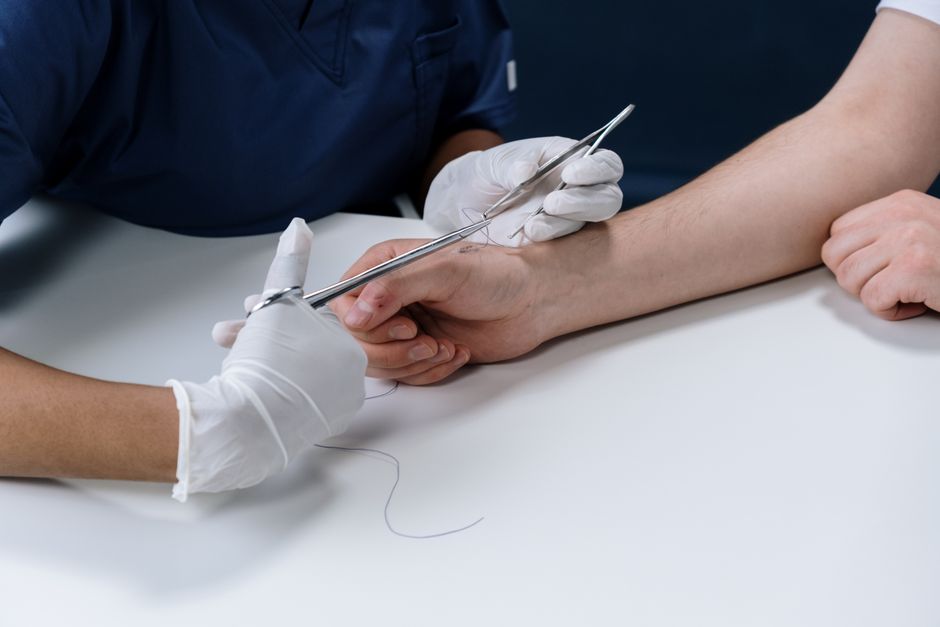
Most people who have stitches eventually start wondering when they can come out. The honest answer is that you usually cannot tell on your own, and the decision belongs to the clinician who placed them. Stitches are typically removed when the wound has regained enough tensile strength to hold itself together, and that timing depends on where the wound is, how deep it goes, and how well it is healing. A doctor or nurse assesses the wound directly and decides. Trying to remove them yourself risks reopening the wound and introducing infection.
How To Tell If Stitches Are Ready To Come Out
You generally cannot tell by looking. What you can do is recognize the signs that healing is on track, and the signs that something is wrong and needs prompt attention.
When a wound is healing normally, the edges stay closed and line up. The skin around it may be pink or slightly red, and some mild swelling and tenderness in the first few days is expected. Over time, that redness and swelling settle down. A small amount of clear or slightly blood-tinged fluid early on is common.
Signs that healing is progressing well include:
- The wound edges remain closed and together
- Redness and swelling are gradually decreasing
- Pain is easing rather than worsening
- No new drainage, or drainage that is decreasing
- Skin around the wound feels less warm over time
None of these confirm the stitches are ready to come out. They simply suggest the wound is moving in the right direction. The actual strength of the healed tissue underneath is what matters, and that cannot be judged by eye.
Why the Location of the Stitches Changes Everything
Different parts of the body heal at different speeds, and that is the main reason removal timing varies so much. Skin heals by laying down collagen, the protein that gives tissue its strength. Early on, that new tissue is weak. It gains strength over days and weeks.
Areas with good blood supply and less tension tend to heal faster. Areas that move a lot, or that are under constant pulling, need more time. The face and scalp generally heal quickly. The chest, back, and legs take longer. Wounds over joints may need the longest, because every movement pulls at the edges.
This is why two people with the same size cut can be told very different things about when stitches come out. It is not arbitrary. It reflects how much mechanical stress that part of the body experiences and how quickly tissue there regains strength.
What a Doctor Actually Looks For
When a clinician examines a wound to decide on removal, they are checking several things at once. They look at whether the edges have sealed together without gaps. They press gently to feel for any separation underneath. They check the color and condition of the surrounding skin.
They also ask about pain, discharge, and how the wound has behaved since it was closed. If the wound looks well sealed and the expected healing time has passed, they remove the stitches. If there is any doubt, they may leave them a little longer or use another method such as adhesive strips to support the wound after removal.
This assessment is quick and usually painless. It is also something you cannot replicate at home, because it relies on training and on feeling the tissue directly.
Signs You Should Not Wait to Get Checked
Some symptoms mean you should contact a healthcare provider right away rather than waiting for a scheduled removal. These suggest the wound is not healing as it should, or that an infection has developed.
- Increasing redness, swelling, or warmth around the wound
- Pain that is getting worse instead of better
- Thick, yellow, or green discharge
- Fever or chills
- A bad smell from the wound
- The wound edges pulling apart
- Red streaks spreading from the wound
These are not signs that stitches are ready to come out. They are signs that something needs medical attention. In some cases an infection can be treated effectively, but it needs to be caught early. Delaying care can allow a minor problem to become a serious one.
If you are unsure whether what you are seeing is normal, it is reasonable to call and ask. Clinicians would rather answer a question than treat a wound that was left too long.
Why You Should Not Remove Stitches Yourself
Removing stitches at home is risky even when the wound looks fine. The tissue underneath may still be weaker than it appears on the surface. Pulling a stitch out can tear the healing edge and reopen the wound.
There is also the risk of infection. Stitch removal requires clean technique, sterile instruments, and an understanding of how the stitch is anchored. A stitch that is cut or pulled incorrectly can leave a fragment behind in the skin, which can cause irritation or infection.
There is a cosmetic concern as well. A wound that reopens and heals a second time tends to scar more. The goal of proper timing is not just closing the wound but closing it with the least scarring possible.
What Happens If Stitches Stay In Too Long
Leaving stitches in longer than needed is not harmless. Sutures are foreign material, and the skin can react to them over time. This can cause irritation, small areas of inflammation, and in some cases what are called stitch marks or railroad tracks, where the suture leaves a permanent indentation or dot pattern in the scar.
This is one reason removal timing is a balance. Too early and the wound may split open. Too late and the scar may be worse. The window is different for every wound, which is why the decision is made by a clinician who can see and feel the healing tissue.
If a removal appointment is missed, it is worth rescheduling promptly rather than assuming it no longer matters.
How Healing Time Differs by Wound Type
Not all closures are the same. Some wounds are closed with sutures, some with staples, and some with skin glue or adhesive strips. Each has its own removal or wear timeline, and the guidance differs.
Staples are often used on the scalp or on thicker skin and are typically removed on a schedule similar to sutures for that area. Skin glue usually falls off on its own and does not need removal. Adhesive strips are often left to peel away naturally.
The type of closure used does not change the underlying rule. The wound needs enough time to regain strength before support is removed. What changes is how that support is provided and how it comes off.
What You Can Do to Support Healing
You cannot speed up the biology of healing, but you can avoid slowing it down. Keeping the wound clean and dry as directed, following any instructions about dressing changes, and protecting it from pulling or trauma all help.
Smoking is well established to impair wound healing, because it reduces blood flow and oxygen delivery to tissue. Poorly controlled diabetes can also slow healing and raise the risk of complications. If either applies to you, it is worth discussing with your care team.
Good nutrition matters too. Protein, vitamin C, and zinc all play roles in tissue repair, though this does not mean supplements are needed for most people eating a normal diet. The evidence for routine supplementation in otherwise healthy people is limited.
Frequently Asked Questions
Can I tell if my stitches are ready to come out by looking at them?
No, you cannot reliably tell by looking. The strength of the healed tissue underneath is what matters, and only a clinician can assess that directly.
What happens if I leave stitches in too long?
Leaving them in longer than needed can cause skin irritation and may worsen scarring, sometimes leaving a permanent stitch-mark pattern. Removal timing is a balance between healing strength and avoiding these effects.
Should I take my own stitches out if they look healed?
No. Removing them yourself risks reopening the wound, infection, and worse scarring. Removal should be done by a clinician using clean technique.
When should I worry about a wound with stitches?
Contact a provider promptly if you notice increasing redness, swelling, warmth, worsening pain, thick or colored discharge, fever, or the wound edges pulling apart. These suggest a problem that needs medical attention.
