
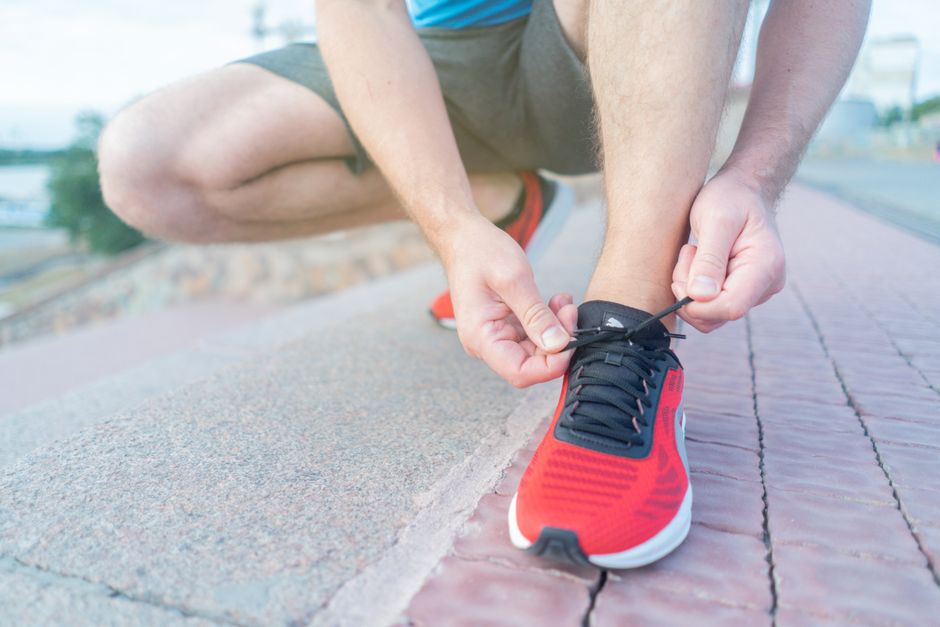
Wearing shoes that are too big can cause blisters, foot pain, and even long-term foot problems. The clearest sign is your heel slipping when you walk, but there are several other reliable ways to check the fit. You should have about a thumb’s width of space between your longest toe and the end of the shoe, and your foot should not slide forward when you walk.
How To Tell If Shoes Are Too Big: The Heel Test
The heel test is the most reliable way to check shoe size. Put the shoes on and lace them snugly. Walk across a hard floor and pay attention to your heel.
If your heel lifts out of the shoe with each step, the shoe is too big. A properly fitted shoe should hold your heel in place without pinching. You should not need to grip with your toes to keep the shoe on your foot.
Another way to check: press your finger behind your heel while the shoe is on. If you can easily slide a finger between your heel and the back of the shoe, the fit is too loose.
The Thumb Width Rule for Toe Space
Stand up and check the space between your longest toe and the end of the shoe. You should have about one thumb’s width of space. This is roughly half an inch for most adults.
This space matters because your foot moves forward when you walk. Your toes need room to spread and flex with each step. If your toes touch the end of the shoe while you stand, they will hit the front of the shoe repeatedly when you walk.
For running shoes, a slightly larger toe box is normal. Feet swell during exercise, and running shoes should allow for that expansion. But the same rule applies: your toes should not jam against the front of the shoe.
Signs of a Loose Fit While Walking
Pay attention to how your foot behaves inside the shoe. A shoe that is too big will show clear signs during movement.
- Your foot slides forward when you walk downhill or on stairs
- You feel friction on your heel with every step
- Your toes cramp as you grip them to hold the shoe on
- The shoe’s flex point does not match your foot’s natural bend
- You develop blisters on your heels or the balls of your feet
The flex point test is one you may not have tried. The shoe should bend where your foot bends — at the ball of your foot. If the shoe bends further back toward the arch, it is too long for your foot.





Why Wearing Shoes That Are Too Big Causes Problems
Oversized shoes are not just uncomfortable. They change how you walk. Your foot slides inside the shoe, which forces your muscles to work harder to keep the shoe on. This can lead to pain in your feet, knees, and lower back.
Blisters are the most common short-term problem. Friction from a loose shoe rubs against your skin with every step. Over time, this repeated friction can cause calluses and corns.
Long-term use of ill-fitting shoes can contribute to foot conditions like plantar fasciitis and Achilles tendonitis. The extra movement inside the shoe puts strain on tendons and ligaments that are not designed to handle that kind of instability.
How Fit Changes Throughout the Day
Your feet change size during the day. They are smallest in the morning and largest in the evening. Blood pools in your feet as the day goes on, causing them to swell slightly.
Shop for shoes in the afternoon or evening. This gives you a more accurate sense of how the shoes will fit during the times you are most active. A shoe that fits perfectly in the morning may feel tight by evening.
Your feet also swell during exercise. If you buy athletic shoes, consider how they will fit after a workout. Some runners buy a half size larger for this reason, but this is not necessary for everyone.
Check Both Feet — They Are Different Sizes
Most people have one foot that is slightly larger than the other. This is normal. Studies consistently show that the difference is usually small, but it can be as much as a full size in some people.
Always try on both shoes and buy for the larger foot. If one shoe feels slightly loose on the smaller foot, that is acceptable. You can add an insole or wear a thicker sock to improve the fit on the smaller side.
Never buy shoes that fit your smaller foot perfectly and hope the larger foot will stretch the shoe. Shoes do stretch with wear, but not enough to fix a size difference.
When to Size Up vs. When to Look for a Different Brand
Sometimes a shoe feels too big because the brand runs large. Different manufacturers use different lasts — the mold that determines the shoe’s shape. A size 9 in one brand may fit like a size 10 in another.
If a shoe is too long, try a half size down before giving up on the brand. If the shoe is too wide, look for a narrow width option or a different brand altogether.
Do not rely on the number printed on the shoe. Sizes are not standardized across brands. The only reliable measure is how the shoe actually fits your foot.
How to Test Shoe Fit at Home
You can check shoe fit at home with a simple test. Remove the insole from the shoe and stand on it. Your foot should fit within the outline of the insole without spilling over the edges.
Another method: trace your foot on a piece of paper while standing. Then place the shoe over the tracing. The shoe should be slightly longer than your foot — about a thumb’s width — but not much more.
For children, check fit more often. Kids’ feet grow quickly, and a shoe that fits in September may be too small by December. Check children’s shoes every 6 to 8 weeks for signs of tightness.
What to Do If Your Shoes Are Too Big
If you already own shoes that are too big, you have options. Heel grips are small pads that stick to the back of the shoe and reduce heel slippage. They cost a few dollars and work well for shoes that are only slightly too big.
Insoles can take up extra space and improve the fit. A thicker insole lifts your foot slightly, which reduces the volume inside the shoe. This works best when the shoe is too big in the width rather than the length.
Tongue pads stick under the laces and help hold your foot back in the shoe. These are useful for shoes that are too long but otherwise fit well.
These fixes work for shoes that are a half size too big. If a shoe is a full size or more too big, no insert will fix the fit properly. In that case, the honest advice is to replace the shoes.
Signs That Shoes Are Too Small (To Avoid Confusion)
Sometimes people confuse a shoe that is too small with one that is too big. If your toes are cramped, you may think the shoe is too small. But if your heel is slipping at the same time, the shoe may actually be too long — not too short.
A shoe that is too small will show different signs: your toes press against the end, the sides of your foot spill over the edge of the sole, and you feel pressure across the widest part of your foot.
Pay attention to where you feel discomfort. Pain at the toes means the shoe is too short. Pain at the sides means the shoe is too narrow. Heel slipping means the shoe is too long.
Frequently Asked Questions
How much space should be at the end of a shoe?
You should have about one thumb’s width of space between your longest toe and the end of the shoe. This gives your foot room to move forward when you walk without jamming your toes.
Can I wear shoes that are half a size too big?
A half size too big can often be fixed with heel grips, insoles, or thicker socks. If the shoe is a full size or more too big, inserts will not provide a proper fit.
Why does my heel slip out of my shoes?
Heel slipping usually means the shoe is too long for your foot. It can also happen if the shoe has a wide heel that does not match the shape of your foot.
Should I buy shoes bigger for swelling?
Buy shoes that fit comfortably at the time you try them on, preferably in the afternoon or evening when your feet are slightly swollen. Do not buy shoes larger than your foot needs, as this causes friction and foot problems.
