
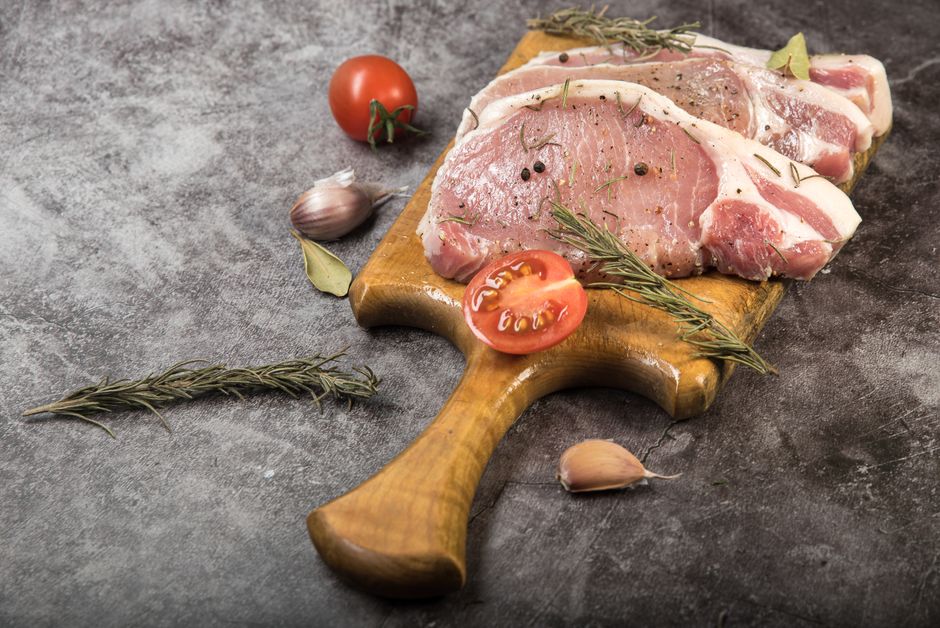
You open the package of pork chops and pause. The sell-by date passed two days ago. The meat looks okay but you are not sure. Should you cook them or toss them? This is a common question and the answer matters for both safety and waste. Pork chops go bad for specific reasons and your senses can usually tell you everything you need to know. Trust your nose first then your eyes and finally your fingers. If any one of those tests fails do not eat the pork.
What Does a Bad Pork Chop Smell Like?
Smell is the most reliable test. Fresh pork has almost no smell. Maybe a very faint metallic scent from the blood. But if you open the package and get a whiff of something sulfur-like or ammonia-like the meat has started to spoil.
Some people describe the odor as similar to rotten eggs or bleach. That is the smell of bacteria breaking down the proteins in the meat. The USDA states clearly that any off odor means you should throw the pork away. Cooking will not kill all the toxins bacteria produce. The smell only gets worse with heat. If you need to bring the meat close to your nose to smell it then it is probably still fine. If it hits you from six inches away do not risk it.
How Can You Tell If Pork Chops Are Bad by Looking at Them?
Color changes are normal with pork but some changes mean spoilage. Fresh pork chops are pinkish-red with white or creamy fat. As they age the meat may turn a bit gray or brown. That is oxidation from exposure to air. It is not dangerous by itself.
What you should watch for is green or iridescent patches. Green spots mean bacteria have colonized the surface. Iridescence a rainbow sheen on the meat is also a sign of bacterial growth. Both mean the pork is unsafe. Also check for slime. A sticky or slippery film on the surface is a clear warning. That slime is a biofilm created by multiplying bacteria. The USDA confirms that slimy pork should be discarded immediately.
Does the Sell-By Date Tell You When Pork Is Bad?
Sell-by dates are not expiration dates. They are quality markers for the store. The USDA explains that sell-by dates tell the store how long to display the product. You can safely eat pork chops three to five days past the sell-by date if they have been stored properly in the refrigerator at 40°F or below.
Freezing changes the timeline completely. Pork chops frozen at 0°F stay safe indefinitely but quality declines after four to six months. The sell-by date becomes irrelevant once the meat is frozen. Thawed pork should be cooked within three to four days. If you thaw it in the microwave cook it immediately. Never rely on the date alone. Your senses are more reliable than any printed number.





How Should You Store Pork Chops to Keep Them Fresh?
Proper storage prevents most spoilage. Keep pork chops in the coldest part of your refrigerator usually the back of the bottom shelf. The temperature should be at or below 40°F. A refrigerator thermometer is cheap and worth buying. Many home refrigerators run warmer than the dial suggests.
Store pork in its original packaging if you will cook it within two days. For longer storage rewrap it tightly in plastic wrap then aluminum foil or place it in a freezer bag. Squeeze out as much air as possible before sealing. Oxygen accelerates spoilage and freezer burn. If you buy family packs separate the chops before freezing. Stack them flat in a single layer so they freeze quickly and thaw evenly. Research from the USDA Food Safety and Inspection Service shows that rapid freezing produces smaller ice crystals which damage the meat less.
| Storage Method | Refrigerator (40°F) | Freezer (0°F) |
|---|---|---|
| Raw pork chops in original packaging | 3 to 5 days | 4 to 6 months |
| Raw pork chops in airtight wrap | 3 to 5 days | 6 to 8 months |
| Cooked pork chops | 3 to 4 days | 2 to 3 months |
What Happens If You Eat Bad Pork Chops?
Eating spoiled pork can cause food poisoning. The most common symptoms are nausea vomiting stomach cramps diarrhea and fever. These usually appear within one to six hours after eating. The bacteria that cause spoilage are not always the same ones that make you sick. But the conditions that spoil meat also allow dangerous pathogens like Salmonella and Yersinia to grow.
Research published in the journal Foodborne Pathogens and Disease has found that pork is a common source of Yersinia enterocolitica infections. Symptoms can last four to seven days. Most healthy adults recover without medical treatment but dehydration is a real risk. Children older adults and pregnant women should see a doctor if symptoms are severe or last more than 24 hours. The CDC estimates that 1 in 6 Americans get food poisoning each year and pork is one of the more common sources. Do not test your luck with questionable meat.
Common Misconceptions About Pork Chop Spoilage
One widespread myth is that washing pork removes bacteria. The USDA warns against washing raw meat. Water splashes bacteria around your sink counter and nearby dishes. Cooking to the right temperature is the only way to kill pathogens. The safe internal temperature for pork chops is 145°F followed by a three-minute rest. This was updated by the USDA in 2011. Older guidelines said 160°F but that was based on outdated assumptions about trichinosis.
Another myth is that freezing kills bacteria. Freezing stops bacterial growth but does not kill most bacteria. When you thaw the meat bacteria resume multiplying. This is why thawed pork should be cooked within a few days. Some people also believe that cooking spoiled meat makes it safe. This is false. Bacteria produce heat-stable toxins that survive cooking temperatures. If the meat was bad before cooking it will still make you sick after cooking. Your nose and eyes are the best tools you have. Use them every time.
A third misconception is that brown or gray pork is always spoiled. As mentioned earlier oxidation causes color changes. Vacuum-sealed pork can look purplish-red because it has not been exposed to oxygen. Once opened it turns pinkish-red then brownish over time. Color alone is not a reliable spoilage indicator. Always combine color with smell and texture before deciding.
How To Tell If Pork Chops Are Bad After Cooking
Sometimes you only notice a problem after the pork is cooked. Cooked pork that has been left at room temperature for more than two hours should be discarded. Bacteria multiply rapidly between 40°F and 140°F. This is called the danger zone. If you are not sure how long the cooked pork sat out throw it away.
Leftover cooked pork should be refrigerated within two hours of cooking. Reheat it to 165°F before eating. If the reheated pork smells sour or has an unusual texture do not eat it. Trust your senses even after cooking. Food poisoning from reheated leftovers is common because people assume heat fixes everything. It does not. The same toxin rule applies. If bacteria produced toxins before cooking those toxins remain after reheating.
Frequently Asked Questions
Can you eat pork chops one day after the sell-by date?
Yes if they were stored properly at 40°F or below. Check the smell color and texture first. If any seem off do not eat them.
How long do pork chops last in the fridge after thawing?
Thawed pork chops should be cooked within three to four days. If you thawed them in the microwave cook them immediately.
What does pork smell like when it goes bad?
Bad pork smells sour like ammonia or sulfur. Some people compare it to rotten eggs or bleach. Fresh pork has almost no smell.
Is it safe to eat pork chops that turned brown?
Brown color alone does not mean spoilage. It is often just oxidation from air exposure. Check for smell slime or sticky texture before deciding.
