
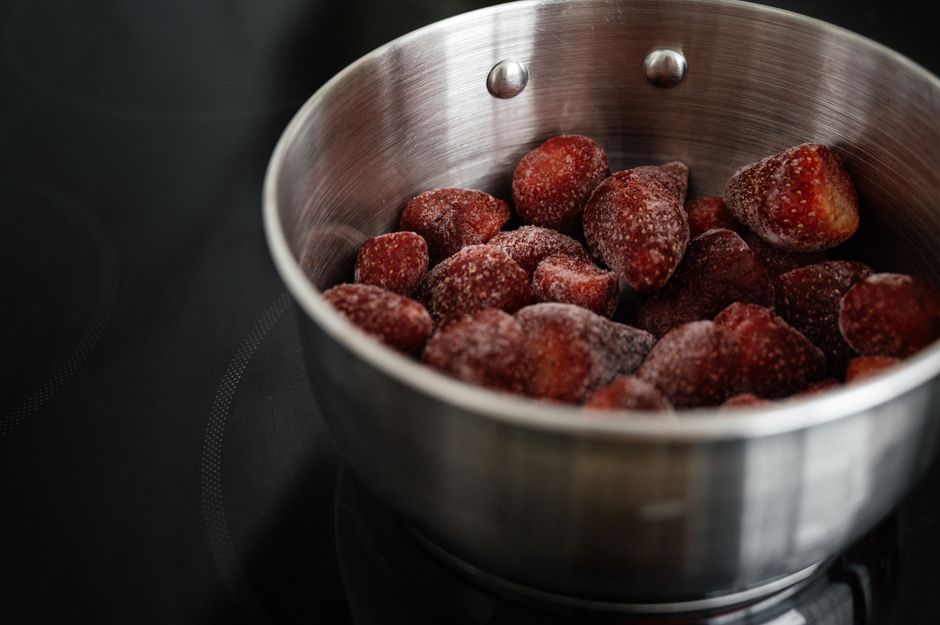
You reach into the freezer for a handful of strawberries and notice they look a little off. Maybe there is a layer of frost on them. Maybe they have clumped into a solid block. Maybe the color looks duller than you remember.
Frozen strawberries are bad when they show signs of freezer burn, ice crystal buildup, or an off smell. Freezer burn looks like dry, white, or grayish patches on the surface. A sour or fermented smell means spoilage bacteria or yeast have been at work. If the berries are mushy after thawing and smell wrong, throw them out. If they just look frosty but smell fine, they are likely safe to eat, though the texture may suffer.
How Long Do Frozen Strawberries Actually Last?
Frozen strawberries kept at 0°F (-18°C) or below stay safe to eat indefinitely. That is the position of the U.S. Department of Agriculture. Safety does not expire in the freezer. Quality does.
For best taste and texture, the USDA suggests using frozen fruit within 8 to 12 months. After that window, the berries are still safe but may develop freezer burn, lose sweetness, and turn mushy when thawed. The texture damage comes from ice crystals that form over time and rupture the cell walls inside the fruit.
Commercially frozen strawberries often hold up longer than home-frozen ones because they are flash-frozen quickly at very low temperatures. That fast freezing creates smaller ice crystals, which do less damage to the fruit’s structure. Home freezing is slower, so crystals grow larger and the berries break down faster.
One thing people often miss: the “best by” date on a bag of frozen strawberries is about quality, not safety. A bag past that date is not automatically bad. Check it. Smell it. Look at it.
What Does Freezer Burn on Strawberries Look Like?
Freezer burn shows up as dry, whitish, or grayish patches on the surface of the berries. The affected areas look shriveled or leathery. Sometimes the whole berry takes on a dull, faded color instead of the bright red you expect.
Freezer burn happens when air reaches the fruit and pulls moisture out of it through a process called sublimation. Ice goes straight from solid to vapor without melting. The fruit dries out in those spots. It is not spoilage. It is dehydration.
Berries with freezer burn are safe to eat. The taste and texture in the affected areas will be off. They may be tough, dry, or flavorless. If the burn is mild, you can cut away the damaged parts and use the rest in smoothies, baked goods, or cooked sauces where texture matters less.
If the freezer burn covers most of the bag, the berries will not taste good no matter what you do with them. At that point, replacing them makes more sense than trying to salvage them.
Prevention is straightforward. Squeeze air out of the bag before sealing. Use airtight containers or vacuum-sealed bags. Keep the freezer at 0°F or below. Use berries within the recommended window rather than leaving them for years.
Can Frozen Strawberries Grow Mold or Bacteria?
Freezing does not kill bacteria, mold, or yeast. It pauses their growth. Once the berries thaw, those microorganisms can become active again if they were present before freezing.
Mold on frozen strawberries usually appears as fuzzy patches, often white, green, or blue-gray. If you see mold on frozen berries, discard the entire bag. Mold can produce mycotoxins that spread beyond the visible fuzzy spots. Cutting off the moldy part is not a reliable way to make the rest safe.
Bacteria like Listeria and Salmonella can survive freezing. They do not multiply at freezer temperatures, but they remain viable. If the strawberries were contaminated before freezing, they can still cause illness after thawing. This is why frozen strawberries have been linked to recalls for hepatitis A and norovirus outbreaks in recent years. Freezing preserves viruses rather than killing them.
An off smell is the clearest sign of bacterial or yeast activity. Fresh strawberries smell sweet and fruity. Berries that smell sour, fermented, or like alcohol have gone bad. That smell comes from microbial metabolism. Do not taste them to check. If they smell wrong, they are wrong.





What About Color Changes and Ice Crystals?
Some color change is normal. Frozen strawberries often look darker or duller than fresh ones because freezing changes how light reflects off the fruit’s surface. This alone does not mean they are bad.
A significant color shift is worth noting. If bright red berries have turned brown, gray, or black, that suggests oxidation or breakdown. Brown patches that were not there before freezing indicate the fruit is deteriorating.
Ice crystals are a different story. A light dusting of frost inside the bag is common and harmless. Thick ice crystals or a solid block of ice around the berries tell you moisture has been migrating out of the fruit and refreezing on the surface. This happens with temperature fluctuations. Every time the freezer warms slightly and cools again, ice crystals grow.
Berries encased in heavy ice will be mushy and watery when thawed. They are not unsafe, but the quality will be poor. If the ice is thick and the berries look shriveled underneath, they are past their useful life for eating plain. They might still work in a cooked dish where texture does not matter.
How Should You Thaw Frozen Strawberries Safely?
The safest way to thaw frozen strawberries is in the refrigerator. Place them in a bowl or on a plate to catch the liquid, and let them thaw overnight or for several hours. Once thawed, use them within two to three days.
You can also thaw them in the microwave if you plan to use them immediately in a cooked recipe. The microwave will make them very soft, so this works best for sauces, jams, or baked goods.
Do not thaw frozen strawberries on the counter at room temperature. As they thaw, the outer layers reach temperatures where bacteria can multiply quickly while the inside is still frozen. This is the same food safety principle that applies to thawing meat or poultry.
If you are using frozen strawberries in a smoothie, you do not need to thaw them at all. Toss them in frozen. The same goes for cooked recipes like pies, compotes, or oatmeal. Thawing first only matters when you want to eat them raw or use them in a cold dish like a fruit salad.
When Should You Throw Frozen Strawberries Out?
Throw them out if they smell sour, fermented, or unpleasant. Throw them out if you see fuzzy mold growth. Throw them out if they have been thawed and left at room temperature for more than two hours.
If the bag has been sitting in a freezer that lost power and the berries fully thawed, refreezing them is not recommended for quality reasons. From a safety standpoint, if they stayed below 40°F (4°C) during the outage, they are still safe. If they warmed above that for more than two hours, discard them.
For berries that are simply frosty, slightly dull in color, or a bit icy but smell fine, there is no safety reason to throw them out. The quality may be lower. They might be better in a smoothie than eaten plain. But they are not dangerous.
The distinction matters. A lot of frozen fruit gets thrown away because people mistake quality decline for spoilage. Freezer burn is not spoilage. Dull color is not spoilage. Those are texture and taste issues. Spoilage is about smell, mold, and time-temperature abuse.
Frequently Asked Questions
Can you eat frozen strawberries that have freezer burn?
Yes, freezer burn does not make food unsafe. The affected areas will be dry and may taste off, so they work best in smoothies or cooked recipes rather than eaten plain.
How do you know if frozen strawberries have gone bad?
Look for a sour or fermented smell, fuzzy mold patches, or brown and black discoloration. These signs mean spoilage, not just quality loss.
Do frozen strawberries expire?
No, frozen strawberries remain safe indefinitely when kept at 0°F or below. For best quality, the USDA recommends using them within 8 to 12 months.
What happens if you eat bad frozen strawberries?
You could get food poisoning if the berries were contaminated with bacteria or viruses before freezing. Symptoms may include nausea, vomiting, diarrhea, or fever. If you are unsure whether they were bad, watch for these symptoms in the hours and days after eating.
