
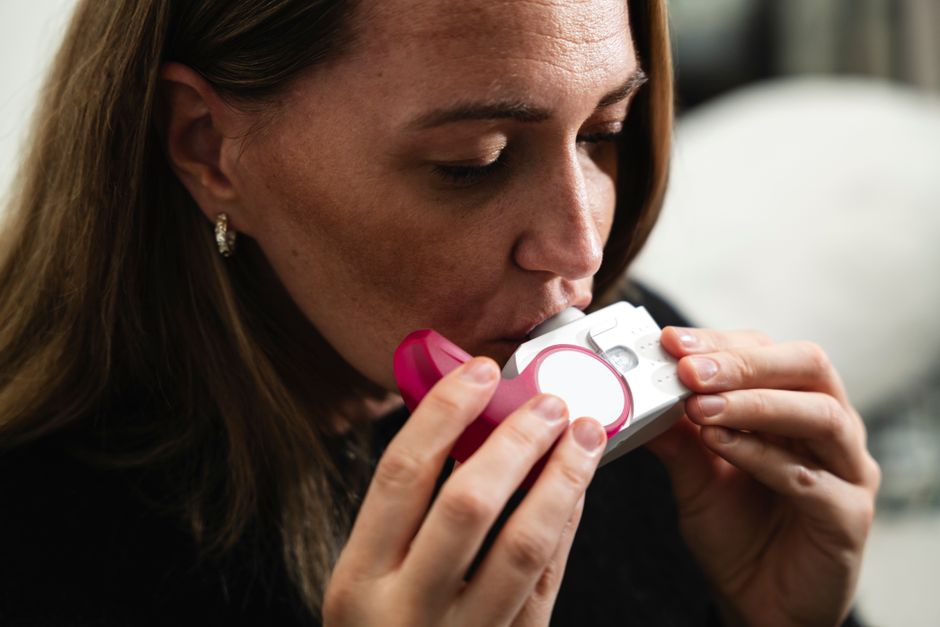
Bronchitis and pneumonia can start the same way — with a cough that will not quit. The difference is where the infection sits. Bronchitis lives in the bronchial tubes, the airways that carry air to your lungs. Pneumonia settles in the air sacs deep inside the lungs, where oxygen actually crosses into your blood. That location change is why pneumonia can become dangerous and bronchitis usually does not. The clearest signs that bronchitis is turning into pneumonia are a fever that returns or climbs after days of improvement, faster or harder breathing, chest pain when you breathe in, and feeling suddenly worse instead of slowly better.
How To Tell If Bronchitis Is Turning Into Pneumonia
The timeline matters more than any single symptom. Acute bronchitis typically peaks in a few days and then gradually improves, even though the cough can linger for weeks. Pneumonia often announces itself as a second wave — you start to feel better, then fever, chills, and breathlessness return and get worse.
Watch for these shifts:
- A fever that comes back after being gone, or a new fever above 100.4°F (38°C)
- Breathing that feels fast, shallow, or labored, especially at rest
- Sharp chest pain that worsens when you inhale deeply or cough
- Chills or shaking that you did not have before
- Confusion, unusual sleepiness, or lips and fingertips looking bluish
- A cough that brings up discolored, thick, or bloody mucus
One clarification worth knowing: the color of your mucus alone does not tell you whether it is bronchitis or pneumonia. Green or yellow sputum is common in both, and it reflects immune cells at work, not the specific diagnosis. Clinicians rely on the whole picture — symptoms, exam findings, and sometimes a chest X-ray — not mucus color by itself.
Why the Location of the Infection Changes Everything
Your bronchial tubes are built to move air and clear debris. They are lined with mucus and tiny hair-like structures called cilia that sweep irritants and germs upward. When these tubes are inflamed — which is what bronchitis is — you cough, you feel raw, and you may wheeze. But the airways stay open enough for oxygen to reach the air sacs.
Pneumonia is different. The infection reaches the alveoli, the tiny air sacs where oxygen passes into your bloodstream. These sacs can fill with fluid and inflammatory cells. When that happens, part of your lung cannot do its job. That is why pneumonia can drop your blood oxygen and why it can become a medical emergency, particularly in older adults and people with chronic conditions.
This is the core reason the two conditions feel similar at the start but diverge. Bronchitis irritates the pipes. Pneumonia blocks the exchange.
Who Is at Higher Risk for Pneumonia After Bronchitis
Most people who get acute bronchitis do not go on to develop pneumonia. But some groups face a higher risk, and for them the warning signs deserve faster attention.
- Adults over 65
- Children under 5, especially infants
- People with asthma, COPD, or other chronic lung disease
- Anyone with a weakened immune system, including from certain medications or conditions
- People with diabetes, heart disease, or difficulty swallowing
- Smokers and those exposed to heavy air pollution
In these groups, the threshold to seek care is lower. A mild illness in a healthy 40-year-old can behave very differently in a 75-year-old with COPD. Age and lung health change how well the body handles an infection that reaches the air sacs.





When Symptoms Point More Toward Pneumonia
Certain combinations raise suspicion. A high fever with shaking chills, rapid breathing, and chest pain on inhalation is a classic pattern. So is breathlessness that appears at rest, not just with exertion. If you feel winded walking across a room when you did not before, that is a meaningful change.
Low oxygen is a serious sign. If you have a pulse oximeter at home, a reading that is consistently below your normal range is a reason to seek medical care. Pulse oximeters are not perfect and can be less accurate on darker skin tones, so a low reading should be confirmed by a clinician rather than trusted alone. Symptoms matter as much as the number.
In older adults, pneumonia can show up without much fever. Confusion, weakness, or a sudden drop in function may be the main clue. This is a well-recognized pattern and one reason pneumonia is missed in the elderly.
What Doctors Look For During an Evaluation
A clinician starts with your history and a physical exam. They listen to your lungs with a stethoscope. Crackles or diminished breath sounds in one area can suggest fluid or inflammation in the air sacs, though the exam alone is not always conclusive.
Vital signs carry weight. A respiratory rate above the normal adult range of 12 to 20 breaths per minute, low oxygen saturation, or a high fever all raise concern. A chest X-ray is the standard way to confirm pneumonia and see where it sits in the lungs. Blood tests may be ordered in more serious cases.
Distinguishing bronchitis from pneumonia is not always possible from symptoms alone. That is not a failure of the patient’s judgment — it reflects how much the two overlap early on. It is why a persistent or worsening illness deserves a professional look rather than guesswork.
What Not to Assume About Treatment
Bronchitis is usually caused by a virus, and antibiotics do not help viral infections. This is well established. Pneumonia can be viral, bacterial, or caused by other organisms, and bacterial pneumonia often does require antibiotics. The treatment depends on the cause, which is another reason an accurate diagnosis matters.
Do not start leftover antibiotics or assume a prescription is needed for every cough. Equally, do not assume a cough is “just bronchitis” if you are getting worse. The decision to treat belongs with a clinician who can assess you.
Rest, fluids, and time help many mild respiratory infections. But if breathing becomes difficult, or you develop the warning signs above, those measures are not a substitute for medical care.
Red Flags That Mean Seek Care Now
Some signs should not wait. Get emergency care if you have trouble breathing, chest pain that is severe, lips or face turning blue, confusion, or you cannot stay awake. In children, look for fast or noisy breathing, flaring nostrils, or the skin pulling in around the ribs when they breathe.
For non-emergency but concerning changes — a fever that returns, a cough that worsens after a week, or new breathlessness — contact a doctor promptly. The earlier pneumonia is identified, the more straightforward it usually is to manage.
Frequently Asked Questions
How long does bronchitis take to turn into pneumonia?
There is no fixed timeline, and most cases of acute bronchitis do not progress to pneumonia at all. When it does happen, it often appears as a second wave of worsening symptoms after a few days of feeling stable or slightly better.
Can you have bronchitis and pneumonia at the same time?
Yes, this is possible. The infection can involve both the airways and the air sacs, and a clinician may diagnose both based on your symptoms and a chest X-ray.
Does green mucus mean I have pneumonia?
No. Green or yellow mucus appears in both bronchitis and pneumonia and does not by itself distinguish the two. Diagnosis depends on your overall symptoms, physical exam, and sometimes imaging.
When should I see a doctor for a cough that is getting worse?
See a doctor if your cough is worsening after a week, if a fever returns or climbs, or if you develop breathlessness or chest pain. Seek emergency care right away for severe trouble breathing or confusion.
