
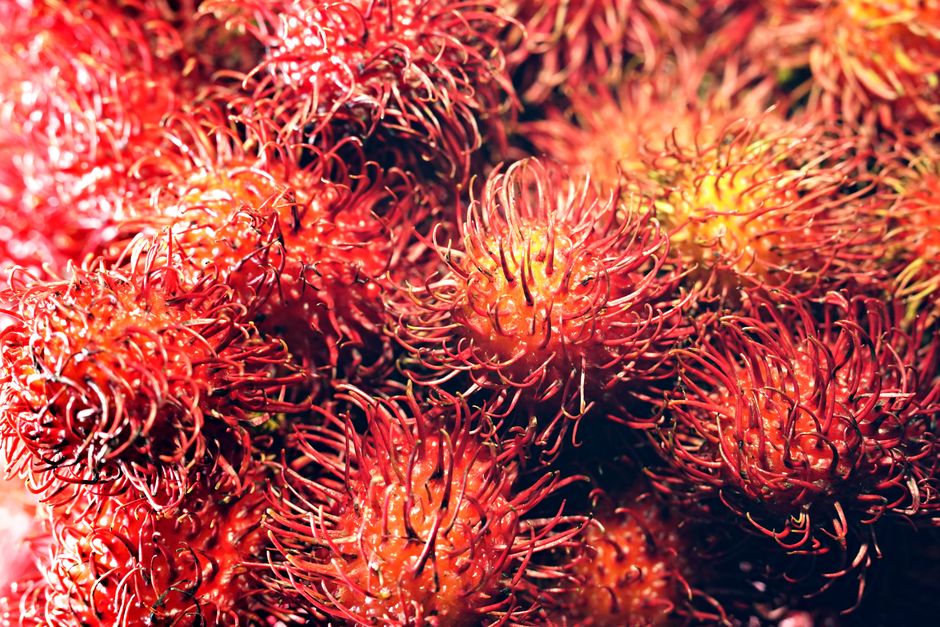
A rambutan is ripe when its spines (called spinterns) are red or yellow, the fruit gives slightly to gentle pressure, and the skin peels away easily. An overripe rambutan feels very soft or mushy, has dark brown or black spines, and may leak liquid or smell fermented. These tropical fruits do not ripen further after they are picked, so choosing the right one at the store matters more than waiting at home.
What Does a Ripe Rambutan Look Like?
The color of the skin is your first clue. A ripe rambutan has bright red or yellow-red spines and skin. Some varieties stay yellow or orange when fully ripe, so color alone is not a perfect test.
Look at the spines closely. On a ripe fruit, they are firm, plump, and stand upright. If the spines are still green, the fruit was picked too early. Green spines mean the rambutan will not sweeten on your counter.
The skin itself should look vibrant, not dull. A slight sheen is normal. Dull, wrinkled, or shriveled skin suggests the fruit has been sitting for a while and may be past its best.
How Should a Ripe Rambutan Feel?
Gently squeeze the fruit between your thumb and fingers. A ripe rambutan gives slightly under pressure, much like a ripe peach or avocado. It should feel firm but not hard.
A rock-hard rambutan is underripe. The flesh will be sour, watery, and difficult to separate from the seed. It will not improve at home.
An overripe rambutan feels noticeably soft or mushy. If your fingers leave an indent that does not bounce back, the fruit is past its prime. The flesh inside may be translucent, watery, or even fermented.
What Does the Flesh Tell You?
The only way to be certain is to open the fruit. Peel the skin with your thumbs or use a small knife to score it around the middle. Ripe rambutan skin comes off easily — it should separate cleanly with little effort.
The flesh of a ripe rambutan is white or pale cream, firm, and juicy. It looks similar to a peeled lychee. It should pull away from the seed without much struggle.
An overripe rambutan has flesh that looks translucent or slightly brown. It may be mushy, watery, or stringy. The flavor shifts from sweet and floral to sour or fermented. If the flesh is brown or the fruit smells like alcohol, discard it.





How To Tell If A Rambutan Is Ripe Or Overripe by Smell
Your nose is a reliable tool. A ripe rambutan has a mild, sweet, floral scent. It is subtle — if you smell nothing, that is normal.
A strong, sweet, or wine-like odor is a warning sign. Fermentation produces that smell. If the fruit smells sour, yeasty, or like alcohol, it is overripe and should not be eaten.
Trust your sense of smell especially when the fruit is in a bag or container. Overripe rambutans release their fermenting scent quickly. If one fruit in a bunch smells off, check the others carefully.
How Long Does a Rambutan Stay Ripe?
Rambutans have a short shelf life compared to many other fruits. At room temperature, a ripe rambutan stays good for about two to three days. In the refrigerator, it can last up to five to seven days.
Store them in a perforated plastic bag or a loosely covered container in the crisper drawer. The spines help the fruit breathe, but they also lose moisture. Too much airflow dries the fruit out; too little traps moisture and speeds up spoilage.
Rambutans do not continue ripening after harvest. The sugar content is fixed when the fruit is picked. Leaving a hard, green-spined rambutan on your counter for a week will not make it sweeter — it will just make it rot.
Can You Eat an Overripe Rambutan?
You can eat a slightly overripe rambutan if the flesh is still firm and smells normal. The texture may be softer and the flavor less bright, but it is not dangerous.
Do not eat a rambutan that is mushy, leaking, or smells fermented. Fermented fruit can cause digestive upset. The risk is not severe for most healthy adults, but it is simply not worth it.
If the flesh has any brown spots, mold, or an off odor, throw the whole fruit away. Mold on the skin can penetrate the flesh even if you cannot see it.
How to Choose the Best Rambutans at the Store
Buy rambutans that look freshly picked. Bright spines, taut skin, and a slight give under pressure are the signs you want.
Avoid fruits with cracked skin, oozing liquid, or dark, mushy spots. Check the stems — a green, fresh-looking stem indicates the fruit was harvested recently. A brown, dry stem means it has been sitting longer.
Buy only what you will eat within a few days. Rambutans are a treat best enjoyed fresh. They do not freeze well; freezing destroys their texture and turns the flesh watery.
Ripe vs. Overripe Rambutan at a Glance
| Feature | Ripe Rambutan | Overripe Rambutan |
|---|---|---|
| Skin color | Bright red or yellow-red | Dark brown, black, or dull |
| Spines | Firm, plump, upright | Wilted, brittle, or falling off |
| Feel | Gives slightly under pressure | Soft, mushy, or leaking |
| Smell | Mild and sweet | Sour, yeasty, or fermented |
| Flesh | White, firm, juicy | Translucent, watery, or brown |
| Taste | Sweet with floral notes | Sour, bitter, or alcoholic |
Rambutan vs. Lychee: A Quick Note
Rambutans are often compared to lychees, and the two fruits are related. Both belong to the soapberry family. The flesh looks similar and the flavors overlap, but they are not the same.
Rambutans are slightly larger and have a creamier, less floral taste than lychees. Their skin is covered in flexible spines, while lychee skin is bumpy and brittle. The ripeness tests, however, are nearly identical — firm flesh, easy peel, and no off smells apply to both.
If you enjoy lychees, you will likely enjoy rambutans. If you have never had either, rambutan is a gentle introduction to tropical fruits with a mild, approachable sweetness.
Frequently Asked Questions
Can you eat rambutan seeds?
No, rambutan seeds are not edible raw. They contain traces of compounds that can be toxic, and cooking them is not a common or recommended practice.
Should rambutan be refrigerated?
Yes, refrigerating ripe rambutans extends their shelf life to about five to seven days. Keep them in a perforated bag in the crisper drawer to balance moisture and airflow.
Why is my rambutan brown inside?
Brown flesh means the fruit is overripe or spoiled. Discard it — the flavor will be sour or fermented, and the texture will be unpleasant.
Can you ripen a rambutan at home?
No, rambutans do not ripen after picking. A fruit picked too early will stay sour and hard, so choose ripe fruits at the store.
