
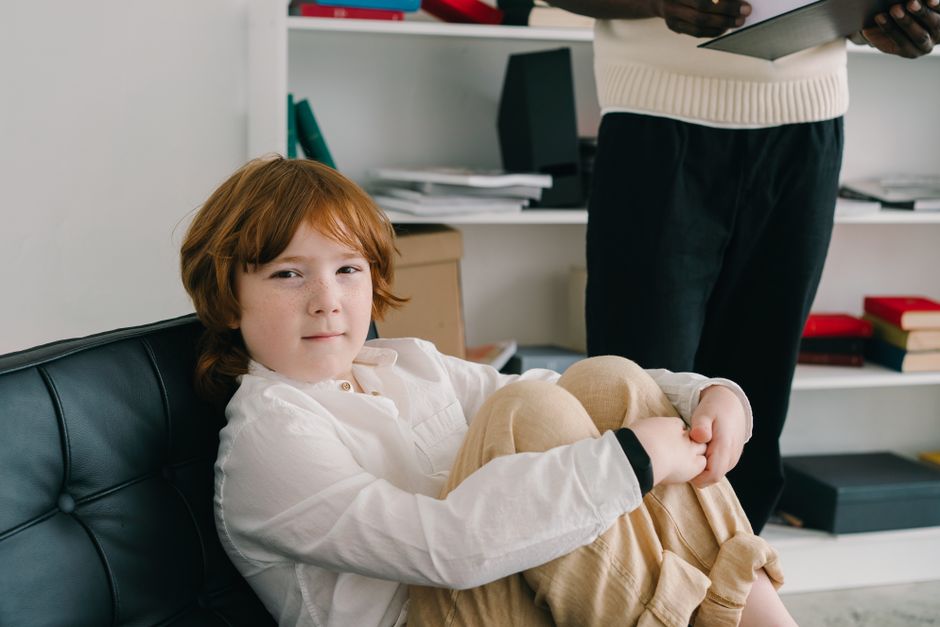
Autism signs can appear as early as 6 to 12 months, but they often become clearer between 12 and 24 months. The key is watching for missing milestones, not just unusual behaviors. No single sign confirms autism; a formal evaluation by a specialist is the only way to know for sure.
How To Tell If A Child Has Autism Signs At Every Age
Autism spectrum disorder (ASD) affects how a child communicates, socializes, and behaves. Because every child develops at their own pace, it can be hard to tell the difference between a late bloomer and a child who needs support. The signs change as a child grows, which is why knowing what to look for at each age matters.
Parents often notice differences before professionals do. Trust that instinct. If you are worried about your child’s development, early screening is available and does not require a referral in most states. Acting early gives a child the best chance to build skills during the years when their brain is most adaptable.
What Are the Earliest Signs in Babies Under 12 Months?
Most parents notice the first signs before a child’s first birthday, though a diagnosis is rarely made this early. Some research suggests that differences in social engagement can be spotted as early as 6 months. The signs are subtle and often look like things a baby is not doing rather than things they are doing.
By 9 months, most babies respond to their name, smile at people, and make eye contact during feeding or play. A baby who rarely smiles back, does not babble with inflection, or seems uninterested in faces may be showing early signs. Loss of any skill — such as babbling or social smiling that once happened — is a red flag at any age.
Some babies with autism show repetitive movements like hand flapping or rocking before age one. Others have unusual reactions to sensory input, like covering ears at normal household sounds or refusing certain textures of food. These behaviors alone do not mean autism, but they are worth mentioning to a pediatrician.
What Do Autism Signs Look Like in Toddlers Ages 1 to 3?
This is the age range where autism signs become most visible. Between 12 and 24 months, typically developing toddlers point to show interest, wave goodbye, and imitate actions like clapping or pretending to talk on a phone. A child who does not point by 14 months or does not use gestures by 12 months may need an evaluation.
Language delays are common but not universal in autism. Some toddlers with autism have no words by 16 months, while others speak in full sentences early. The difference is often in how language is used. A toddler who repeats phrases from videos verbatim but cannot ask for a drink is showing a pattern more typical of autism than a simple language delay.
Play differences also emerge in this period. Many toddlers with autism line up toys instead of playing with them, spin objects, or focus intensely on one item like a fan or a wheel. They may not engage in pretend play, such as feeding a doll or driving a toy car. Socially, they may prefer playing alone and show little interest in other children.





What Signs Appear in Preschoolers Ages 3 to 5?
By preschool age, social differences become harder to miss. A child with autism may not respond to their name consistently, avoid eye contact, or show little interest in sharing experiences with others. They may not bring a toy to show a parent or point out something interesting like an airplane in the sky.
Imaginative play is often limited or absent. Instead of pretending to be a firefighter or cooking a meal in a play kitchen, a child with autism may prefer arranging objects or repeating the same script from a favorite show. They may struggle with taking turns and following simple social rules like saying hello.
Sensory issues often intensify at this age. A preschooler may refuse to wear certain fabrics, have strong reactions to loud noises, or become distressed by tags in clothing. Transitions can be hard. Moving from one activity to another may trigger tantrums that last longer and are harder to soothe than typical preschooler meltdowns.
Some children at this age show exceptional abilities in specific areas, like memorizing facts about dinosaurs or reciting the alphabet. This is sometimes called “splinter skills.” These strengths exist alongside the challenges and do not rule out an autism diagnosis.
How Do Autism Signs Look in School-Age Children Ages 5 to 12?
In school-age children, autism often shows up as difficulty with peer relationships. A child may want friends but not know how to make them. They might talk at length about their own interests without noticing the other person is bored. Understanding sarcasm, jokes, and figurative language is often hard for autistic children.
Academic performance varies widely. Some autistic children excel in reading or math while struggling with written expression or organization. Others need significant academic support. Rigid thinking is common — a change in routine, like a substitute teacher or a different route to school, can cause significant distress.
Motor skills may lag behind peers. Some autistic children have trouble with tasks that require coordination, like catching a ball, tying shoelaces, or using scissors. Handwriting can be messy or laborious. These motor differences are not part of the diagnostic criteria but are frequently seen alongside autism.
Emotional regulation is often a challenge. Autistic children may have meltdowns that look like tantrums but are actually responses to sensory overload, social confusion, or unexpected change. They may also develop intense, narrow interests that dominate conversations and free time.
What Are the Signs in Teenagers Ages 13 and Up?
Autism in teenagers can look different from autism in younger children. Some teens who were diagnosed early continue to need support. Others may have had subtle signs that were missed in childhood and only become apparent as social expectations grow more complex.
Teens with autism often struggle with the unwritten rules of social interaction. They may stand too close when talking, miss nonverbal cues, or have trouble understanding when a conversation is over. Dating and friendship dynamics become more complicated in adolescence, and autistic teens often feel isolated or confused by peer behavior.
Executive function challenges become more noticeable in middle and high school. Managing multiple assignments, keeping track of a locker combination, and planning ahead for long-term projects can be overwhelming. A teen who managed elementary school well may suddenly struggle when organizational demands increase.
Mental health conditions like anxiety and depression are more common in autistic teens than in the general population. This is partly due to the stress of navigating a world not designed for them and partly due to biological factors. Sleep problems and sensory sensitivities often continue into adolescence.
When Should a Parent Seek an Evaluation?
The American Academy of Pediatrics recommends that all children be screened for autism at 18 and 24 months during well-child visits. But screening is not the same as diagnosis. If a screening suggests possible autism, or if you have concerns at any age, a comprehensive evaluation is the next step.
You do not need to wait for a pediatrician to suggest an evaluation. You can request one directly. In the United States, early intervention services are available through state programs for children under 3, and school districts must evaluate children ages 3 to 21 who may need special education services.
A full evaluation typically involves a developmental pediatrician, child psychologist, or a team of specialists. They will assess communication, social interaction, play, and behavior through structured observations and parent interviews. There is no blood test or brain scan for autism. Diagnosis is based on behavior and developmental history.
If you are wondering whether your child’s differences are “enough” to warrant an evaluation, err on the side of getting one. An evaluation that shows typical development brings peace of mind. An evaluation that identifies autism opens the door to supports that can make a meaningful difference.
What Should You Do If You Notice Signs?
Write down what you see. Note specific examples — “does not respond to name when called from across the room” is more useful than “seems distant.” Record when you first noticed each behavior and whether any skills have been lost. Bring these notes to your pediatrician.
If your child is under 3, contact your state’s early intervention program. You can find it by searching “early intervention [your state]” online. No referral is needed in most states, and services are free or low-cost. For children 3 and older, contact your local school district and ask for a special education evaluation.
Do not wait to see if your child “grows out of it.” Research consistently shows that early intervention improves outcomes in communication, social skills, and daily living abilities. The brain is most adaptable in the first few years of life, which is why acting early matters more than which specific therapy you choose.
Frequently Asked Questions
Can autism be diagnosed before age 2?
Yes, a reliable diagnosis can often be made by age 2, though many children are diagnosed later. Early signs like lack of eye contact, no response to name, and absent babbling or pointing can be identified before the second birthday.
What is the most common first sign of autism?
Delayed or absent speech is often the first sign parents notice, but missing social milestones like pointing, showing, and responding to their name frequently appear earlier. Regression — losing words or skills a child once had — is another common first sign.
Do all children with autism avoid eye contact?
No. Some autistic children make eye contact normally, while others avoid it or use it inconsistently. Eye contact differences are common but not required for a diagnosis, and many autistic children do make eye contact, especially with people they know well.
Can a child have autism and still talk early?
Yes. Some children with autism speak early and have large vocabularies. The difference often appears in how they use language — repeating scripts, talking about narrow interests, or struggling with back-and-forth conversation rather than having delayed speech.
