
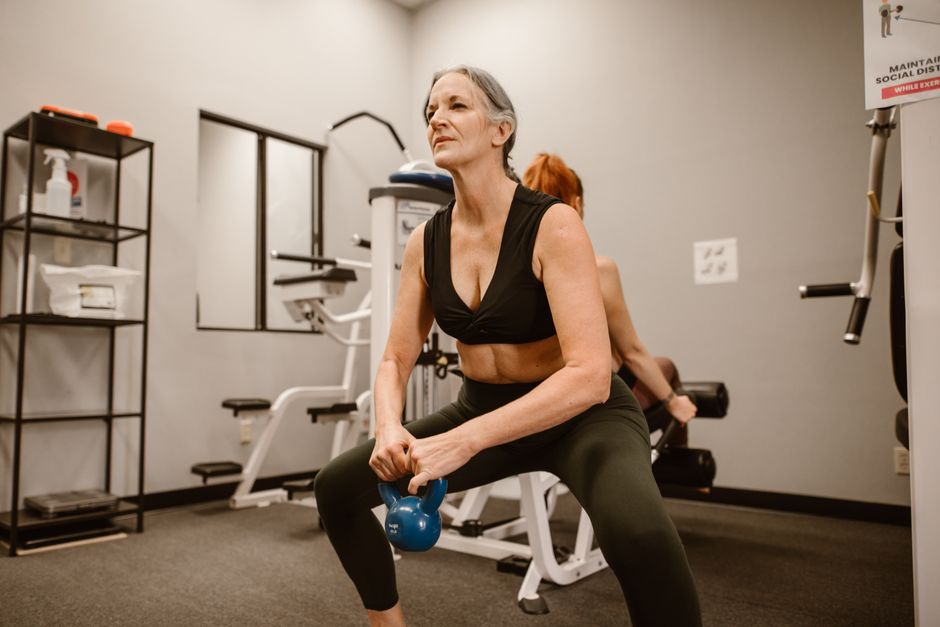
Most people squat to build their legs, but many end up with strong glutes and hamstrings while their quads lag behind. The fix is not a different exercise. It is a different way of performing the squat. To target your quads more on squats, you need to change your stance width, your foot angle, and the depth of your descent. Narrower stances, more vertical shins, and deeper knee travel shift the workload from the hips to the quadriceps. This is a mechanical change, not a magical one, and it works for most lifters who apply it consistently.
Why Do Standard Squats Miss the Quads?
The squat is a compound movement that uses many muscle groups. The quads extend the knee. The glutes and hamstrings extend the hip. When you squat with a wide stance and your toes pointed far outward, you shorten the distance your knees travel forward. That reduces knee extension demands and puts more load on the hips and inner thighs.
This is not a failure on your part. It is basic biomechanics. The more your hips do the work, the less your quads do. If your goal is quad growth, you need to design your squat so the knee joint does more of the lifting than the hip joint.
Many lifters also squat high, stopping well above parallel. The quads are most active in the bottom portion of the squat, particularly as you reverse direction out of the hole. Cutting that range short removes the very part of the movement that stresses the quads the most.
How To Target Quads On Squats For More Growth?
To shift emphasis to the quads, narrow your stance to about shoulder width or slightly narrower. Keep your toes pointing mostly forward, no more than 10 to 15 degrees outward. This alignment allows your knees to track forward over your toes as you descend, which increases knee flexion and puts the quadriceps under greater tension.
Depth matters more than most people think. Squat to at least parallel, meaning the crease of your hip drops below the top of your knee. Going deeper, when you have the mobility to do so safely, increases quad activation further. The deep squat position requires the quads to work hard to control the descent and to drive you back up.
Your torso angle also changes the emphasis. A more upright torso keeps the load over your midfoot and forces the knees forward. That is a quad-dominant position. Leaning forward shifts load to the posterior chain. Use a front squat or a goblet squat if you struggle to stay upright. Both naturally encourage a more vertical torso and greater quad involvement.
Foot position is one variable you can adjust immediately. Stance width is another. Do not change both at the same time. Adjust one variable, practice it for several sessions, then adjust the next. This lets you feel what is changing and keeps your technique from falling apart.
What About Squat Shoes and Heel Elevation?
Weightlifting shoes with a raised heel can help you target your quads. A heel elevation of about 1.5 centimeters (0.6 inches) allows your knees to travel farther forward while keeping your torso upright. This is why many lifters find front squats easier in weightlifting shoes than in flat shoes.
The raised heel does not weaken the muscles. It changes the joint angles so the quads are placed in a stronger position to produce force. If you do not own weightlifting shoes, you can place small plates under your heels as a temporary test. If this feels noticeably better on your knees and quads, consider investing in proper shoes.
Some lifters worry heel elevation is cheating or unsafe. It is neither. It is a tool used by Olympic weightlifters for decades. The key is to use an elevation that allows you to hit depth without your lower back rounding. If your heels are too high, you will feel unstable. Start small and adjust based on how it feels.





Does Stance Width Change Muscle Activation?
Research consistently shows that stance width changes where the work happens in a squat. A narrow stance, roughly shoulder width or less, increases quadriceps activation compared to a wide stance. A wide stance, beyond shoulder width, increases adductor and glute activation.
The mechanism is straightforward. A narrow stance brings your feet closer to your center of mass. This reduces the hip abduction moment and increases the knee extension moment. In plain terms, your knees have to do more work because your hips cannot spread the load as easily.
This does not mean wide squats are bad. It means they are better for glute and hip development. If your quads are the priority, narrow your stance. Some lifters find a stance slightly narrower than shoulder width feels best. Experiment within a range of about hip width to shoulder width and find where you feel your quads working hardest.
Foot angle should match your natural hip rotation. Forcing your toes straight forward when your hips naturally rotate outward can cause knee pain. Point your toes slightly outward, but keep the angle modest. The goal is knee tracking that follows your toe line without excessive external rotation.
What Are the Best Squat Variations for Quad Growth?
Front squats are the most reliable quad-focused squat variation. The barbell position in front of your body forces an upright torso, which keeps your knees forward and your quads under tension. Many lifters find they cannot front squat as much weight as they back squat, but the quad stimulus per rep is often higher.
Paused squats are another effective option. Lower to depth, hold for a full two to three seconds, then drive up. The pause removes the stretch reflex, so your quads must generate force from a dead stop. This increases time under tension and can improve strength out of the bottom position.
Box squats can be quad-focused if performed correctly. Sit back to a box at or below parallel, pause briefly, and drive up. The mistake most people make is using a high box and leaning back excessively, which turns the movement into a hip exercise. Use a low box and keep your shins vertical to maintain quad emphasis.
Goblet squats are excellent for beginners or for warm-ups. Holding a dumbbell or kettlebell at your chest naturally pulls your torso upright. This is a great way to practice the movement pattern before loading up with a barbell.
Leg press and hack squat machines can also target quads effectively. These machines allow you to place your feet low and close on the platform, which emphasizes knee extension. They are not a replacement for squats, but they are useful accessories for adding quad volume without taxing your lower back.
How Much Volume Do Your Quads Need?
Quad growth requires progressive overload and adequate volume. Most research suggests that trained individuals need roughly 10 to 20 working sets per muscle group per week to see meaningful growth. Your quads get worked by squats, but they also get worked by lunges, leg presses, and leg extensions.
If you squat twice per week, aim for 3 to 5 working sets each session. Add one or two accessory movements like leg extensions or walking lunges to bring total quad volume into the target range. Track your sets and reps so you can add weight or reps over time.
Recovery matters as much as training. The quads are large muscles and they need time to repair. If your quads are still sore from a previous session, you are likely not recovered enough to train them hard again. Two to three quad-focused sessions per week is a reasonable starting point for most lifters.
Do not chase soreness as a sign of effectiveness. Soreness is not a reliable indicator of muscle growth. Some soreness is normal, but excessive soreness that interferes with daily movement is a sign you did too much too soon.
What About Knee Pain and Safety?
Deep squats with knees tracking forward are safe for healthy knees. The old belief that knees should not pass the toes has been disproven by research. Restricting knee travel actually increases shear forces on the lower back and reduces quad activation.
If you experience knee pain during squats, do not ignore it. Check your foot angle and stance width first. Many knee issues come from feet that are angled too far outward or a stance that is too wide or too narrow for your hip structure. Adjust these variables before adding weight.
Ankle mobility is a common limiting factor for quad-focused squats. If your ankles cannot dorsiflex enough, your knees cannot travel forward, and your torso will lean forward to compensate. Work on ankle mobility with calf stretches and knee-to-wall exercises. Improving ankle range of motion can directly improve your ability to squat deep with an upright torso.
If you have a history of knee injury, consult a physical therapist or sports medicine professional before making major changes to your squat technique. They can assess your individual mechanics and identify any limitations you need to address.
Frequently Asked Questions
Is a narrow stance squat better for quads?
Yes, a stance at or slightly narrower than shoulder width increases quadriceps activation compared to a wide stance. Keep your toes pointed mostly forward to maximize knee extension demands.
Do I need to squat below parallel to grow quads?
Going to at least parallel is important, and deeper squats increase quad activation further. The bottom portion of the squat is where the quads work hardest to reverse the descent.
Can I use heel elevation to target my quads?
Yes, weightlifting shoes or small plates under your heels can help you stay upright and allow your knees to travel forward. This places more tension on the quads and can make deep squats more comfortable.
Are front squats better than back squats for quads?
Front squats generally produce greater quad activation because the barbell position forces a more upright torso. They are not inherently better, but they are a reliable way to shift emphasis to the quads.
