
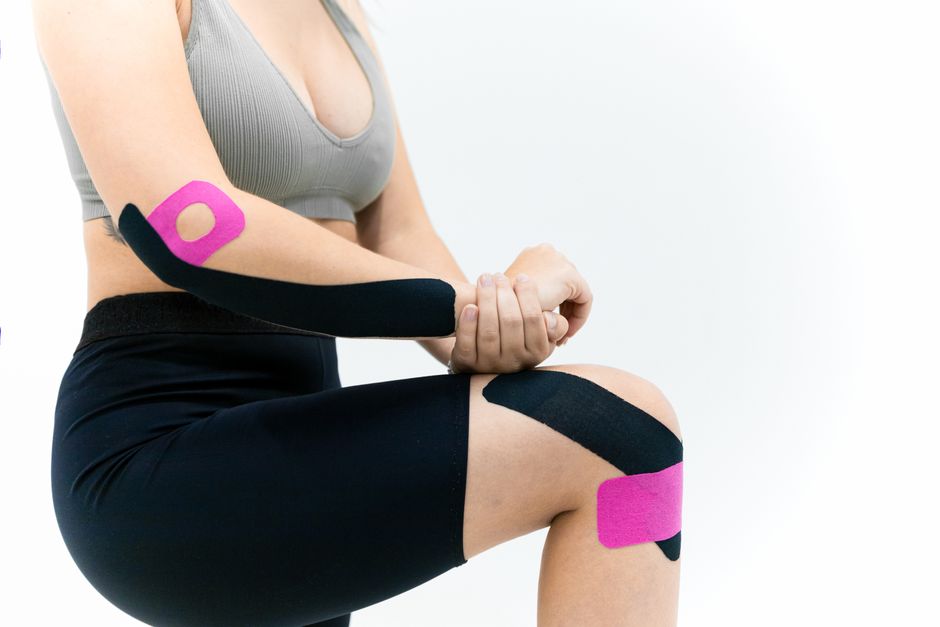
Knee taping for a meniscus injury is a short-term support strategy, not a treatment. The goal is to reduce stress on the injured side of the joint and give you a little more confidence during daily movement while the tissue settles. Athletic tape or kinesiology tape can be applied in a few different patterns, but the method matters less than getting an accurate diagnosis first — because taping the wrong structure, or taping over a torn meniscus that needs surgical evaluation, can delay proper care.
What Does The Meniscus Do And Why Does Taping Help?
The meniscus is a C-shaped pad of cartilage that sits between your thigh bone and shin bone. Each knee has two — one on the inner side (medial) and one on the outer side (lateral). They spread load across the joint, absorb shock, and help stabilize the knee during rotation.
When a meniscus tears, the knee can feel unstable, catch, or lock. Pain often shows up along the joint line — the gap you can feel on either side of the kneecap. Taping does not repair the tear. What it can do is apply gentle compression and proprioceptive feedback, which means it gives your brain more information about where your knee is in space. Some people find this reduces the sensation of instability and helps them move with less hesitation.
That said, the evidence for taping specifically for meniscus injuries is limited. Most taping research has been done on other knee conditions, like patellofemoral pain or ACL rehabilitation. Extrapolating those findings to meniscus tears is reasonable but not the same as direct proof. Think of taping as a temporary assist, not a fix.
How To Tape Your Knee For A Meniscus Injury: Step By Step
Before you tape, the knee should be clean, dry, and free of lotion or oil. Hair can be trimmed but not shaved — shaving creates micro-cuts that raise infection risk. Have someone help you if possible, since taping your own knee from a seated position is awkward.
This is a general support technique. It is not a substitute for evaluation by a clinician, and it should not be used if you have an open wound, a skin infection, or known tape adhesive allergy.
Supplies
- Rigid athletic tape, 1.5 inches wide (for joint-line support)
- Kinesiology tape, 2 inches wide (for broader compression and feedback)
- Pre-wrap or a thin underwrap to protect skin
- Scissors
Rigid Tape Method (Joint-Line Support)
- Sit with the knee bent to about 30 degrees. This is the position where the tape will do its work.
- Apply a strip of underwrap around the knee if your skin is sensitive.
- Anchor a strip of rigid tape on the outer thigh, just above the knee, running horizontally.
- Apply a second strip below the knee on the upper calf, also horizontal. These two anchors create a frame.
- Cut two or three shorter strips. Place them diagonally across the joint line — the side where your pain is — overlapping each strip by about half its width.
- Press all edges down firmly. Tape adheres better with friction and body heat.
Do not wrap circumferentially with rigid tape at full tension. A complete, tight circle around the knee can restrict blood flow and swelling has nowhere to go. Leave gaps, or use elastic tape for any full wrap.
Kinesiology Tape Method (Compression And Feedback)
- Measure a strip from mid-thigh to mid-calf while the knee is bent.
- Cut the strip and round the corners to reduce peeling.
- Peel the backing and apply the tape with light stretch — roughly 10 to 25 percent tension — along the side of the knee where you feel pain.
- Rub the tape firmly for 10 to 15 seconds to activate the adhesive.
- For a second strip, apply a shorter piece horizontally across the joint line with similar light tension.
Kinesiology tape stretches. It does not lock the joint. If you are looking for mechanical restraint, rigid tape is the better choice. If you want mild compression and a reminder to move carefully, kinesiology tape fits that role.
Which Tape Should You Use?
| Tape Type | What It Does | Best For | Limitations |
|---|---|---|---|
| Rigid athletic tape | Limits motion, provides firm support | Joint-line pain, short activity periods | Can loosen with sweat; not for long wear |
| Kinesiology tape | Light compression, skin feedback | All-day wear, swelling, mild instability | Minimal mechanical support |
| Elastic bandage | Compression, swelling control | Post-injury swelling | No directional support |
Neither type has strong evidence showing it speeds meniscus healing. Both are used clinically for symptom management. The choice usually comes down to what you need the tape to do — restrict motion or provide gentle support over hours.




How Long Should You Keep The Tape On?
Rigid tape is typically removed after activity, usually within a few hours. Leaving it on for extended periods can irritate skin and lose effectiveness as it stretches and loosens.
Kinesiology tape can stay on for several days, and manufacturers often state it can be worn for up to three to five days. That is a product guideline, not a clinical recommendation for meniscus injuries specifically. Remove it sooner if you notice itching, redness, or blistering.
If your knee swells more while taped, take the tape off. Increased swelling means the tape is not helping and may be interfering with circulation.
When Taping Is Not Enough
Some meniscus tears need more than tape. Seek medical evaluation if you have:
- A knee that locks and cannot fully straighten
- Significant swelling that develops within hours of injury
- Inability to bear weight
- Pain that worsens despite rest and support
- A tearing sensation with a pop at the time of injury
These signs suggest a tear that may need imaging, and possibly surgery. Large tears, tears in the outer zone of the meniscus, and tears that cause mechanical locking are often treated surgically. Smaller degenerative tears in older adults are frequently managed without surgery, though the evidence on which approach works best for which tear type continues to evolve.
Taping will not change the course of a tear that needs surgical repair. It may help you get through the day while you wait for an appointment, but it should not replace that appointment.
What Else Helps Alongside Taping
Taping works best as part of a broader plan. Relative rest — avoiding deep squatting, pivoting, and heavy loading — gives the tissue a chance to calm down. Ice can help with pain and swelling in the first 48 hours, though the evidence for icing as a healing tool is weaker than most people assume. It helps with comfort more than recovery.
Physical therapy is the mainstay for most meniscus injuries that do not need surgery. Strengthening the quadriceps and hamstrings takes load off the meniscus. Improving hip and ankle mechanics changes how force travels through the knee. These are slow changes, measured in weeks, not days.
Some clinicians recommend knee braces over taping for meniscus injuries because braces provide more consistent support and are easier to adjust. The evidence comparing braces to tape for this specific injury is thin. Either approach is reasonable as a temporary measure.
Common Mistakes To Avoid
Wrapping too tightly is the most frequent error. If your toes tingle, turn pale, or feel cold, the tape is too tight and needs to come off immediately.
Taping over an undiagnosed injury is another. If you have not had your knee examined, taping can mask symptoms and let you push through movement that makes the tear worse.
Expecting tape to heal the meniscus is the biggest misunderstanding. Tape supports. It does not repair cartilage. Meniscus tissue has limited blood supply, especially in the inner two-thirds, which is why many tears do not heal on their own regardless of what you put on the outside of your knee.
Frequently Asked Questions
Can you tape a meniscus tear yourself?
Yes, you can apply tape yourself, but the knee should be evaluated by a clinician first to confirm what is actually injured. Self-taping without a diagnosis risks supporting the wrong structure or masking a tear that needs medical care.
Does taping a knee help a meniscus tear heal?
No. Tape does not repair cartilage or speed meniscus healing. It can reduce pain and improve stability during movement, but it is a support tool, not a treatment.
How tight should knee tape be for a meniscus injury?
Snug enough to feel supported, never tight enough to cause tingling, numbness, or color change in the foot. If any of those occur, remove the tape right away.
Should you tape a swollen knee?
No. Significant swelling means the knee needs evaluation, and taping over it can restrict circulation and make things worse. Wait until swelling has been assessed by a clinician.
