
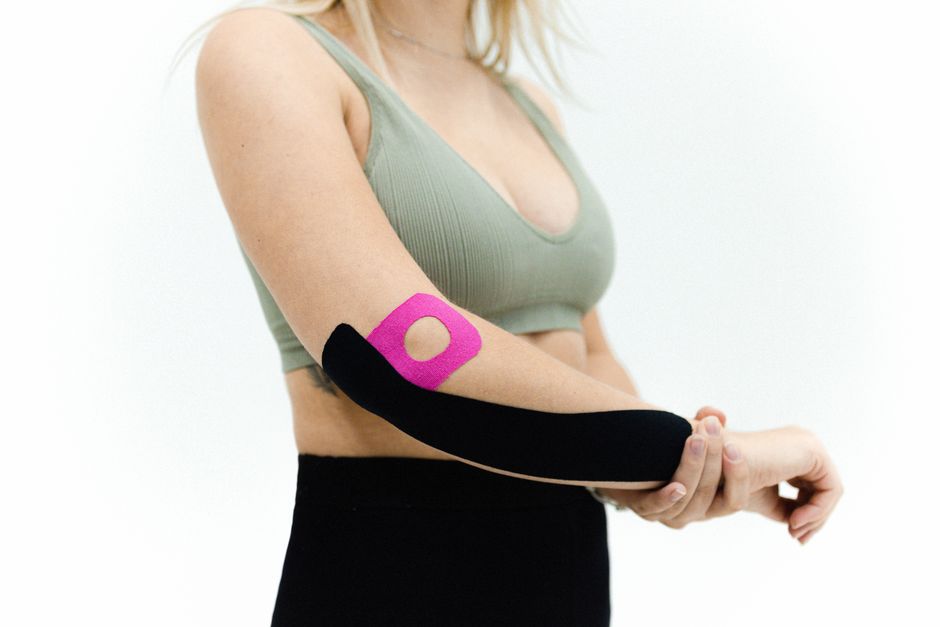
Kinesio tape is a thin, elastic cotton tape that stretches and recoils with your skin. To tape a wrist with it, you apply a Y-shaped or I-shaped strip along the muscles and ligaments you want to support, with the tape stretched only slightly or not at all over the joint itself. The tape is not a brace. It does not immobilize the wrist, and it will not hold a joint in place the way a rigid splint does. What it can do is provide light sensory feedback and mild support while you keep moving.
That distinction matters because most of the marketing around kinesio tape oversells it. The honest picture is more modest and more useful. This guide covers what the tape can and cannot do, how to apply it to a wrist, and when you should skip the tape and see a clinician instead.
What Does Kinesio Tape Actually Do for a Wrist?
The tape works mainly through the skin, not through mechanical bracing. Your skin is packed with sensory receptors that report position, stretch, and pressure to your brain. When tape sits on the skin and pulls slightly as you move, it adds a constant stream of that sensory input. Clinicians call this proprioceptive feedback.
Some studies suggest this added feedback can improve how a joint feels during movement and may modestly reduce pain perception. The evidence is mixed, and effects tend to be small. A review of the research on kinesio tape for musculoskeletal conditions found inconsistent results across studies, with some showing benefit and others showing none.
What the tape does not do is physically hold your wrist bones or ligaments in a corrected position. When you stretch the tape and press it down, it recoils and lifts the skin slightly. That lift is often described as improving circulation or lymphatic flow underneath. That mechanism is plausible and is widely cited, but strong human trial evidence confirming meaningful fluid movement from taping is limited.
The most defensible way to think about it: kinesio tape is a light-touch tool for comfort and body awareness. It is not a treatment for a structural injury on its own.
When Should You Not Tape Your Wrist?
Skip the tape and get medical care if you have a suspected fracture, a deformity, numbness or tingling in your fingers, or pain that is severe and getting worse. Those signs point to problems tape cannot address and that may need imaging or immobilization.
Do not tape over broken skin, a rash, an open wound, or an area that is infected. Do not tape if you have a known allergy to acrylic adhesives, which are common in kinesio tape. Test a small piece on your forearm first if you are unsure.
Taping is also not appropriate as a substitute for evaluation of a wrist injury that has not been diagnosed. If you do not know what is causing your pain, tape may mask symptoms while the underlying problem continues.
How To Tape Wrist With Kinesio Tape: Step by Step
This is the most common approach for general wrist support. You will need kinesio tape, scissors, and clean skin. Round the corners of your strips before applying — square corners catch on clothing and peel faster.
Prepare the skin. Wash and dry your wrist and forearm. Oils, lotion, and sweat weaken the adhesive. If you have body hair in the area, you may need to trim it, not shave it, to avoid irritation.
Measure and cut. For a Y-strip, measure from the middle of your forearm down to just past the wrist crease, then double that length and cut. Fold the strip and cut a split down the middle for roughly the last third to create two tails. For a simple I-strip, cut a single straight piece about the length of your forearm to just past the wrist.
Anchor the base. Peel a few inches of backing paper off the top of the strip. Place the anchor end on your forearm, roughly midway between your elbow and wrist, with no stretch on the tape. Rub it firmly to activate the adhesive.
Apply the tails. Peel the rest of the backing as you go. Lay the strip or tails down toward the wrist. Keep stretch at zero to very light over the wrist joint itself. The wrist is where you want the least tension, because the tape needs to move with the joint.
Rub and test. Press the whole strip down firmly, especially the ends. Move your wrist through its normal range. If the tape pulls, pinches, or restricts movement, remove it and reapply with less stretch.
The exact pattern depends on what you are supporting. A therapist treating a specific ligament or tendon may use a different shape and direction than the general approach above. If you are taping for a diagnosed condition, follow the pattern your clinician gives you.





How Tight Should Kinesio Tape Be?
Less tight than most people expect. The tape is designed to work with very little tension. If you can feel it pulling hard against your skin when you move, it is too tight.
For general wrist support, most applications use zero stretch over the joint and only light stretch along the muscle. Higher tension is sometimes used in specific clinical techniques, but that is a decision for a trained practitioner, not something to guess at on your own.
Signs the tape is too tight include:
- Numbness, tingling, or a pins-and-needles feeling in your fingers
- Skin turning pale, blue, or cold below the tape
- Sharp pain or a feeling that circulation is being cut off
- Visible deep grooves or dents in the skin when you remove it
If any of these happen, remove the tape right away. Kinesio tape should never interfere with blood flow or nerve function.
How Long Can You Wear It?
Kinesio tape is generally worn for a few days at a time. Many clinicians suggest leaving it on for up to three to five days, depending on the product and your skin. Some people tolerate it longer; others need to remove it sooner because of irritation.
Remove the tape immediately if you develop itching, a rash, or blistering. Adhesive reactions are the most common problem with kinesio tape, and they are more likely the longer you leave it on and the more often you reapply it.
To remove it, peel slowly back along the direction of hair growth. Warm water, soap, or a small amount of oil along the edge can help loosen the adhesive. Pulling it off fast can irritate or tear the skin.
Does Kinesio Tape Help Wrist Pain?
The evidence is mixed and modest. Some studies of kinesio taping for wrist and hand conditions report small improvements in pain or function. Others find the tape performs no better than a placebo tape or no tape at all.
A recurring problem in this research is that taping studies are hard to blind. People usually know whether they are wearing tape, which makes it difficult to separate a real physical effect from the expectation of feeling better. That does not mean the tape does nothing. It means the measured benefits are often small and hard to pin down.
What the research does not support is the idea that kinesio tape heals tissue, corrects alignment, or replaces rehabilitation. If you have a wrist injury, the exercises, loading, and activity changes your clinician recommends are doing the real work. Tape, if it helps at all, is a supporting player.
One practical point people miss: the tape’s effects, if any, tend to fade as the adhesive loosens and the tape loses its recoil. A stretched-out strip that has been on for a week is not doing much of anything. If you are using tape for feedback during activity, fresh tape matters more than wearing old tape longer.
When to See a Clinician Instead
See a doctor or physical therapist if your wrist pain lasts more than a couple of weeks, keeps you from normal activities, or comes with swelling, weakness, or numbness. These signs can point to conditions like a sprain, tendinopathy, or nerve compression that need proper evaluation.
Kinesio tape can be part of a recovery plan, but it should not be the whole plan. A clinician can tell you what is actually wrong, whether taping is appropriate, and what else your wrist needs. Taping a wrist you have not had assessed risks covering up a problem that needs treatment.
Frequently Asked Questions
How do you tape a wrist with kinesio tape?
Apply a Y-shaped or I-shaped strip from mid-forearm down toward the wrist, using no stretch over the joint and only light stretch along the muscle. Rub the ends firmly and test your range of motion before leaving it on.
How tight should kinesio tape be on a wrist?
It should feel light, not restrictive, with zero to very light stretch over the wrist joint. If you feel pulling, numbness, or tingling, the tape is too tight and should be removed.
How long can you leave kinesio tape on your wrist?
Many clinicians suggest leaving it on for up to three to five days, depending on the product and your skin. Remove it sooner if you notice itching, a rash, or blistering.
Does kinesio tape actually help wrist pain?
The evidence is mixed, with some studies showing small benefits and others showing none. It may provide light support and sensory feedback, but it is not a proven treatment for healing a wrist injury on its own.
