
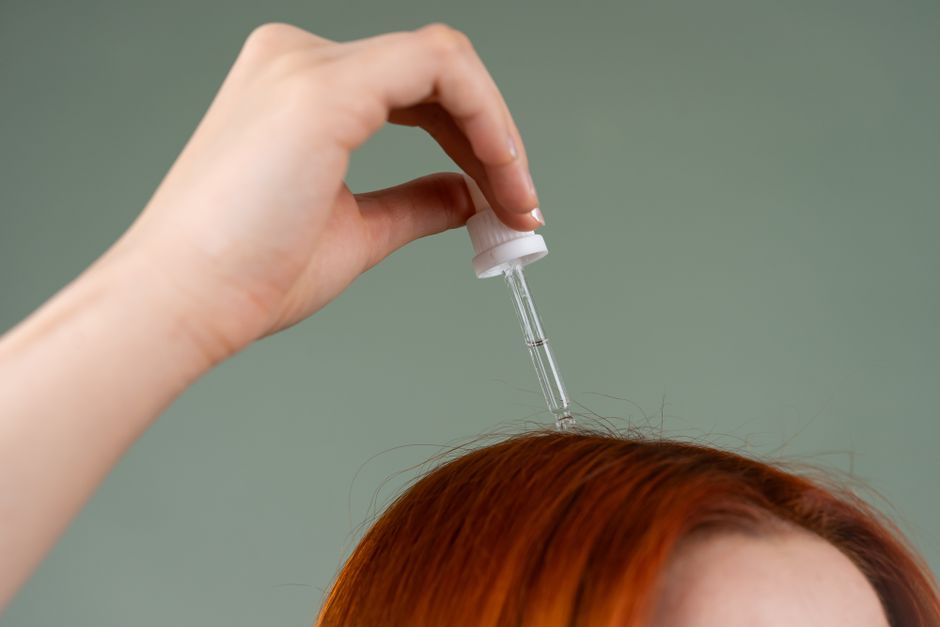
Healthy hair starts with understanding what it actually is. Hair is dead protein, so you cannot repair it once it is damaged. You can only protect what grows out of your scalp and keep your scalp healthy enough to produce good hair. The basics are simple: wash it enough, condition it, protect it from heat and the sun, and eat a diet with enough protein and iron. That is the honest foundation. Everything else is mostly marketing.
What Is Healthy Hair Made Of?
Hair is mostly a protein called keratin. Each strand has three layers. The outer layer, the cuticle, is made of overlapping scales. When those scales lie flat, hair looks shiny and feels smooth. When they are lifted or worn away, hair looks dull and feels rough.
The hair you see is dead. The living part is the follicle, which sits below the scalp. The follicle determines hair thickness, growth rate, and how long hair can grow before it falls out. You cannot change your genes. You can only give your follicles a good environment to work in.
Scalp health matters more than most people realize. Hair follicles live in the scalp. If the scalp is inflamed, infected, or starved of blood flow, hair quality suffers. This is why treating dandruff or scalp psoriasis is not just about comfort. It is about protecting the hair that is still growing.
How Often Should You Wash Your Hair?
There is no single correct answer. It depends on your scalp type, hair texture, and activity level. People with fine, straight hair often need to wash every day or every other day. People with thick, curly, or coily hair may go a week or longer between washes.
The goal is to remove excess oil without stripping the scalp completely. Sebum, the natural oil your scalp makes, protects hair and keeps it flexible. Washing too often removes that protection. Washing too rarely allows oil, dead skin, and product buildup to clog follicles.
Shampoo works by lifting oil and dirt off the hair and scalp. Conditioner works by smoothing the cuticle and adding slip so hair does not tangle. If your hair feels greasy by midday, wash more often. If it feels dry or brittle, wash less often. That is the practical rule.
Warm water is better than hot water. Hot water strips oils faster and can irritate the scalp. Rinse with cool or cold water at the end if you want extra shine. Cold water flattens the cuticle slightly, which increases light reflection.
How To Choose The Right Shampoo And Conditioner
Shampoo choice matters less than most marketing suggests. The main job is cleansing. Look for a product that cleans without leaving your scalp tight or itchy. If your scalp feels dry after washing, your shampoo is too harsh.
Sulfates are detergents that create foam. They clean effectively but can be drying. People with dry hair or a sensitive scalp often do better with sulfate-free formulas. People with oily scalps often find sulfate shampoos work well. Neither is universally better.
Silicones are ingredients that coat the hair to make it smooth and shiny. They are common in conditioners and styling products. They are not dangerous, despite internet claims. They can build up over time, which is why some people use a clarifying shampoo once a month to remove residue.
If you color your hair, use products designed for color-treated hair. These are usually gentler and less alkaline, which helps color last longer. If you have dandruff, look for shampoos with zinc pyrithione, ketoconazole, or salicylic acid. These are active ingredients with evidence behind them.



How To Dry And Style Hair Without Causing Damage
Wet hair is weaker than dry hair. When hair absorbs water, it swells and the cuticle lifts. This makes it more likely to stretch and snap. Rough towel drying is one of the most common causes of breakage.
Pat hair dry with a microfiber towel or an old cotton t-shirt. Do not rub. Do not wring it out. If you can, let hair air dry most of the way before you touch it with heat tools.
Heat styling damages hair by boiling the water inside the strand. This creates bubbles that weaken the hair shaft. The higher the temperature, the faster the damage. Use the lowest heat setting that works for your hair type. Fine hair needs less heat than coarse hair.
Always use a heat protectant spray or serum before blow drying, straightening, or curling. These products do not make hair immune to heat. They reduce moisture loss and smooth the cuticle, which lowers the risk of breakage. They are not optional if you use heat regularly.
Do not sleep on wet hair. Hair is most fragile when wet, and tossing and turning overnight causes friction damage. If you must sleep with wet hair, put it in a loose braid and use a silk or satin pillowcase.
What Actually Helps Hair Grow Faster
Hair grows about half an inch per month on average. That rate is mostly determined by genetics and age. No shampoo, oil, or supplement will change your growth rate beyond that range.
What you can control is breakage. Hair that does not break appears to grow faster because it retains length. Trimming does not make hair grow faster. It prevents split ends from traveling up the shaft and causing more breakage. That is why regular trims help hair look longer over time.
Scalp massage is one of the few things with some evidence behind it. Research suggests that regular scalp massage may increase hair thickness by stretching the cells in the follicle. The effect is modest. It is not a treatment for hair loss, but it is harmless and relaxing.
Hair growth supplements are a crowded market. The evidence is strongest for biotin in people who are actually deficient in biotin, which is rare. Iron, vitamin D, and zinc deficiencies are linked to hair shedding. If you are deficient, correcting the deficiency can help. If you are not deficient, extra supplements will not make hair grow faster.
If you are losing noticeable amounts of hair, see a doctor. Sudden shedding can be caused by stress, illness, hormonal changes, or medication. Pattern hair loss in men and women is genetic and responds best to treatments like minoxidil or finasteride. These require a prescription or medical advice.
How Diet Affects Hair Health
Hair is made of protein. If you do not eat enough protein, your body prioritizes other functions and hair growth slows. This is well established. Low protein intake can cause hair to become thin, brittle, and more likely to fall out.
Iron deficiency is a common cause of hair shedding, especially in women. If you have heavy periods or eat a vegetarian or vegan diet, you may be at higher risk. A simple blood test can tell you if your iron stores are low. Do not take iron supplements without a blood test. Too much iron is harmful.
Omega-3 fatty acids, found in fish and flaxseed, may support scalp health. The evidence is not strong, but these fats are healthy for other reasons. Zinc and vitamin D are also linked to hair health. Again, the evidence is strongest when you are correcting a deficiency.
Crash diets are bad for hair. Rapid weight loss is a known trigger for telogen effluvium, a condition where hair shifts into the shedding phase and falls out a few months later. If you are losing weight, do it gradually and keep protein intake adequate.
Common Hair Myths You Should Ignore
Trimming hair makes it grow faster. False. Trimming removes damage and prevents breakage, but it does not affect the follicle’s growth rate.
Brushing your hair 100 strokes a day makes it healthier. False. Excessive brushing causes friction, which damages the cuticle and increases breakage. Brush only to detangle and distribute natural oils.
Plucking a gray hair makes two grow back. False. Plucking damages the follicle and can eventually stop hair from growing there at all.
Washing your hair every day makes it fall out. False. Washing removes hair that was already shed and loose. It does not cause hair loss.
Hair products can repair split ends. False. No product can rejoin a split strand. Serums and oils can temporarily seal the split so it looks better, but the only permanent fix is cutting it off.
When To See A Dermatologist
Some hair changes are normal. Seasonal shedding happens. Hair thins with age. But certain signs warrant a medical visit.
See a doctor if you are losing hair in patches, if your hair is shedding in clumps, or if you have redness, scaling, or pain on your scalp. Sudden or severe hair loss can be a sign of an underlying condition like thyroid disease, anemia, or an autoimmune disorder.
Hair loss that follows a pattern — thinning at the crown or receding hairline — is usually genetic. It is treatable but not reversible without consistent medical treatment. The earlier you start, the more hair you keep.
Do not wait months to act. Hair loss conditions are easier to treat early. A dermatologist can examine your scalp, run blood tests, and tell you whether your concern is normal variation or something that needs treatment.
Frequently Asked Questions
How often should I wash my hair?
Wash when your hair looks or feels oily, which ranges from daily for some people to weekly for others. The right frequency is the one that keeps your scalp comfortable and your hair not greasy.
Does brushing hair 100 strokes a day make it healthier?
No, excessive brushing damages the cuticle and increases breakage. Brush only to detangle and distribute natural oils.
Can hair products repair split ends?
No product can rejoin a split strand permanently. Serums and oils can temporarily smooth the split, but the only real fix is trimming the damaged end off.
What vitamin deficiency causes hair loss?
Iron, vitamin D, and zinc deficiencies are all linked to increased hair shedding. A blood test can confirm which one applies to you, and correcting the deficiency usually helps.
