
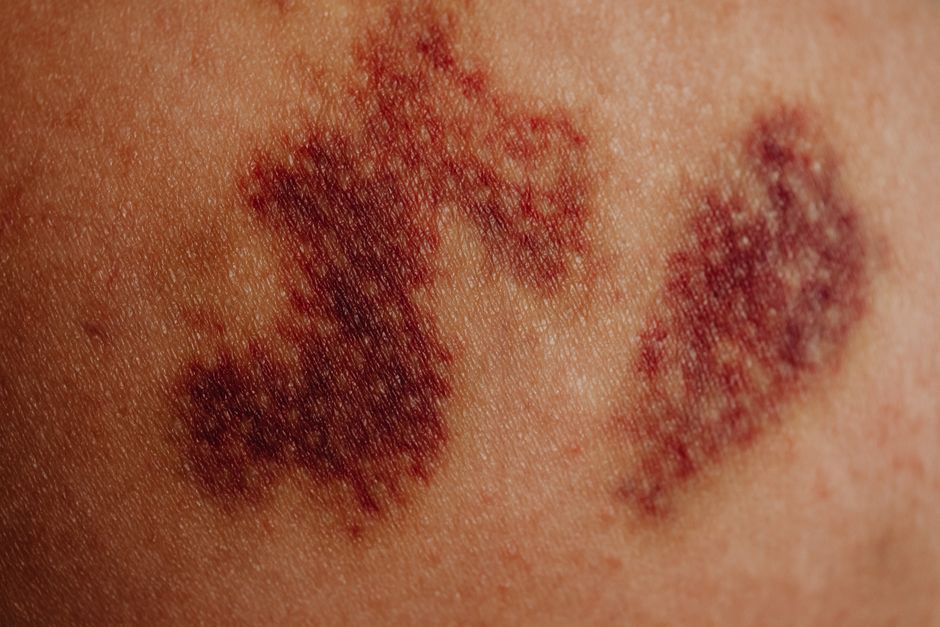
Ice first, heat later. That is the short answer. For the first 24 to 48 hours after a bruise forms, cold is the right choice. After that window, gentle warmth can help. Getting the order wrong won’t cause harm, but it can make a bruise feel worse and heal more slowly.
A bruise happens when blunt force breaks small blood vessels under the skin. Blood leaks into the tissue, and the body has to clear it out. The color changes you see are part of that cleanup process. How you treat the area in the first two days matters more than most people realize.
What Actually Happens Under a Bruise?
A bruise is a collection of leaked blood in the tissue, and the body treats it like a cleanup job. When small blood vessels called capillaries break, red blood cells spill into surrounding tissue. The skin stays intact. What you see is the blood underneath.
Within hours, the body starts breaking down those red blood cells. Hemoglobin, the oxygen-carrying protein inside them, gets converted into other compounds. That conversion is why a bruise shifts from red or purple to blue, then green, then yellow, then fades.
This process is normal and expected. The timing varies from person to person. Most bruises fade over roughly two weeks, though some last longer. Age matters here. Older adults bruise more easily and take longer to heal because skin and blood vessels thin with age. Some medications, especially blood thinners, make bruising more frequent and more dramatic.
One thing worth knowing: a bruise that keeps spreading or gets larger after 48 hours is not a normal healing pattern. That deserves a medical look.
How To Take Care Of A Bruise: Ice, Heat, and More
Cold is for the early phase. Heat is for the later phase. The switchover is not a hard rule, but the general guidance is cold for the first 24 to 48 hours and warmth after that.
Why ice works early: Cold narrows blood vessels. That reduced blood flow can limit how much blood leaks into the tissue and can ease swelling and pain. This is well established in sports medicine and general first aid.
How to apply it safely:
- Never put ice directly on bare skin. Wrap it in a thin cloth or towel first.
- Apply cold for about 15 to 20 minutes at a time.
- Leave the skin to return to normal temperature before reapplying.
- Do not leave ice on while you sleep.
Direct ice on skin for long periods can cause cold injury. That is why the cloth layer and the time limit matter. If you have poor circulation or reduced sensation in the area, be especially careful with cold and check the skin frequently.
Why heat works later: Once the initial bleeding has stopped, warmth can widen blood vessels and increase blood flow to the area. That may help the body clear away the breakdown products faster and can ease stiffness. The evidence for heat speeding bruise resolution is weaker than the evidence for cold reducing early swelling. It is widely used and generally reasonable, but it is not strongly proven to make bruises disappear faster.
How to apply heat safely: Use a warm, not hot, compress. A warm towel or a heating pad on a low setting works. Keep it to about 15 to 20 minutes. Never fall asleep on a heating pad, and never apply heat to skin that is numb or has reduced sensation.
Why Does a Bruise Change Color?
The color shifts are a visible record of the body breaking down blood, and each stage reflects a different chemical step. It is not a sign that something is wrong. It is the cleanup in progress.
Red or purple appears first, from fresh blood. Blue or dark purple follows as oxygen leaves the trapped blood. Green shows up as hemoglobin breaks into biliverdin. Yellow comes from bilirubin, a later breakdown product. Then it fades.
These stages overlap and the timing is not fixed. A bruise near the surface may show color changes faster than a deep one. Do not read too much into the exact shade on any given day.



When Should You Not Use Heat on a Bruise?
Skip heat in the first 48 hours. Applying warmth too early can increase blood flow to an area that is still bleeding into the tissue. That can make the bruise larger and the swelling worse.
There are other situations where heat is a poor choice at any stage:
- Any area that is still swollen or feels hot to the touch
- Skin that is broken, scraped, or blistered over the bruise
- Areas with reduced sensation, where you might not feel a burn developing
- If you have a condition that affects circulation, check with a clinician before using heat regularly
Cold is the safer default when you are unsure which phase you are in. It is harder to do harm with a properly wrapped cold pack used for short periods.
What Else Helps a Bruise Heal?
Rest and gentle elevation help in the early phase. If the bruise is on a limb, raising it above heart level when possible can reduce swelling. This is standard first-aid guidance.
Avoid massaging a fresh bruise. It can push more blood into the tissue. After the first couple of days, very gentle movement is fine, but aggressive rubbing is not helpful.
Over-the-counter pain relief is a personal decision. Some pain relievers, particularly those that thin the blood, may increase bleeding and bruising. If you bruise easily or are on other medications, it is worth asking a pharmacist or clinician which option fits your situation. This is not a recommendation to take or avoid any specific drug.
There is no strong evidence that creams or supplements marketed for bruising speed healing. Some products claim to reduce bruise appearance. No large human trials have confirmed these claims. A bruise will heal on its own timeline regardless.
When Should You See a Doctor About a Bruise?
Most bruises are harmless and heal without any treatment. Some are not. Knowing the difference matters.
See a clinician if:
- A bruise appears for no clear reason, or you cannot recall any injury
- You bruise very easily and often, especially in unusual places
- A bruise keeps growing after 48 hours or becomes very painful and swollen
- The area feels hard, tight, and increasingly painful, which can signal a collection of blood that needs medical attention
- You have a bruise along with unusual bleeding, such as bleeding gums or frequent nosebleeds
- The bruise does not fade after a few weeks
Unexplained or frequent bruising can have many causes, including medication effects and blood clotting problems. It is not possible to tell which from appearance alone. That is exactly why a clinician should assess it rather than you guessing.
The Bottom Line on Ice and Heat
Cold first, for the first 24 to 48 hours. Warmth after, once the area has settled. Wrap ice, limit it to short sessions, and never apply heat to numb or broken skin. Rest and elevation help early. Most bruises fade on their own over about two weeks.
The single most useful habit is patience. A bruise is the body doing its job. Your role is to support the early phase with cold and avoid making it worse. If a bruise seems unusual, get it checked rather than treating it at home.
Frequently Asked Questions
Should I use ice or heat on a bruise first?
Use ice first, for the first 24 to 48 hours after the injury. Cold helps limit swelling and bleeding, while heat is better saved for after that window.
How long should I leave ice on a bruise?
Apply a wrapped cold pack for about 15 to 20 minutes at a time. Let the skin return to normal temperature before you reapply, and never put ice directly on bare skin.
Can heat make a bruise worse?
Yes, if used too early. Heat in the first 48 hours can increase blood flow to tissue that is still bleeding, which may make the bruise larger.
How long does a bruise take to heal?
Most bruises fade over roughly two weeks, though timing varies by person and location. A bruise that does not fade after a few weeks, or appears without any injury, should be checked by a clinician.
