
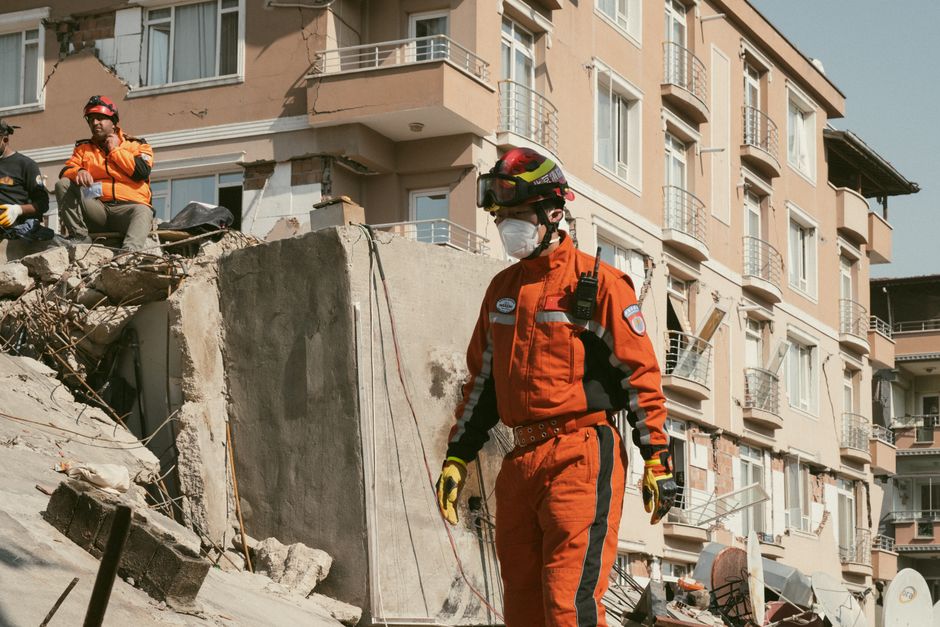
If a building collapses around you, your survival depends on decisions made in the first seconds and minutes. Drop to the ground immediately, take cover under a sturdy table or desk if one is nearby, and protect your head and neck with your arms. Once the shaking or falling stops, do not run through unstable areas; instead, stay put, cover your mouth to avoid breathing dust, and tap on a solid surface to signal your location to rescuers. Your primary goals are protecting your airway, conserving energy, and making yourself easy to find.
What Should You Do In The First Seconds Of A Collapse?
The moment you realize a building is collapsing, you have seconds, not minutes. Your instinct may be to run for an exit, but that is often the most dangerous choice. Stairwells and doorways are structural weak points during a collapse, and moving through a falling building puts you directly in the path of debris.
Drop to the ground immediately. If a sturdy desk or table is within reach, get under it. If not, curl into a fetal position next to a large, solid object like a heavy sofa or a reinforced interior wall. This creates a small pocket of air if debris falls around you. Cover your head and neck with your arms and hands. Do not stand in a doorway. Do not try to outrun the collapse.
Stay in this position until the movement stops completely. The initial collapse may be followed by secondary failures, so remain under cover for at least one full minute after things seem still. Protect your face from dust by breathing through your clothing or a handkerchief if you have one.
How Do You Protect Your Airway From Dust And Debris?
Building collapses create massive clouds of concrete dust, drywall particles, and insulation fibers. This dust is not just uncomfortable — it can suffocate you. Concrete dust contains silica, which irritates the lungs and can cause coughing so severe that you cannot breathe properly. In the first moments after the collapse, your airway is your most immediate concern.
Cover your mouth and nose with any available fabric. A shirt sleeve, a piece of clothing, or a handkerchief works. If you have water, dampen the fabric slightly — moist fabric filters dust particles better than dry fabric. Do not scream for help. Screaming inhales dust deep into your lungs and wastes the air in your small pocket. Breathing slowly and shallowly through your nose helps filter particles and conserves oxygen.
Move only if you must. Every movement stirs up more dust and can destabilize the debris around you. If you are in a pocket of space, stay still. Breathe through your nose, keep your mouth covered, and wait for the dust to settle before assessing your situation further.
How To Survive A Building Collapse If You Are Trapped: Signaling For Rescue
Once the dust settles and you can think clearly, your focus shifts to being found. Rescuers use sound and visual cues to locate survivors, but they cannot hear a weak voice through feet of concrete. You must make noise efficiently without exhausting yourself.
Tap on a solid surface — a pipe, a wall, a piece of metal, or a floor slab. Three taps in a row, pause, then three more. This pattern is recognized by search and rescue teams as a signal. Tap on metal if possible; it carries sound much farther than wood or drywall. Do not tap on loose debris that could shift and collapse your space further.
Shout only when you hear rescuers nearby. Shouting is physically exhausting and uses oxygen. If you hear voices, heavy equipment, or the sound of digging, yell then. Otherwise, conserve your voice. If you have a phone or flashlight, use it sparingly. A light beam visible through a crack can guide rescuers directly to you, but battery power is limited and you may need it later.
-
 Maya Hawke Weight Loss: What’s Really Going On After Stranger Things!
-
AquaSculpt Reviews: Do Claims Have Any Scientific Backing?
-
How a TDEE Calculator Helps You Understand Daily Calories!
-
BMI vs BMR: The Difference & Which Matters for Weight Loss?
-
Menopause Diet For Weight Loss. Practical Guide & Meal Plans





Should You Try To Dig Yourself Out?
This is one of the hardest decisions a trapped person faces. The instinct to claw your way out is powerful, but it is often the wrong choice. Moving debris can trigger another collapse that crushes the air pocket keeping you alive. Unless you can see daylight or an obvious exit within arm’s reach, do not dig.
Rescuers are trained to shore up debris as they dig. You are not. Your movements could bring down a wall of rubble on top of you. Instead, focus on making your location known and protecting your space. If you must move, move slowly and test every surface before putting weight on it. Never push upward on debris above you — that is the most likely direction for a secondary collapse.
There is one exception. If you are in immediate danger — such as fire, smoke, or rising water — moving to escape is justified. Otherwise, stay put and wait for rescue. Search and rescue teams are trained to find people in voids, and they will reach you if you can signal them.
How Long Can You Survive Trapped In A Collapse?
The human body can survive three days without water and much longer without food, but the real limits in a collapse are air, injury, and the environment. If your air pocket is sealed, oxygen runs out within hours. If there is airflow through cracks, you can survive much longer. This is why staying still and breathing slowly matters — every breath you take consumes the limited oxygen in your space.
Serious injuries change the picture. Heavy bleeding, head trauma, or crush injuries can be fatal within minutes to hours regardless of rescue timing. If you are bleeding, apply direct pressure with any fabric you have. If you suspect a spinal injury, do not move your neck or back unless you are in immediate danger. Do not attempt to remove objects that are impaled in your body.
Temperature is another factor. Concrete and debris hold cold and heat. In cold weather, huddle into a ball to preserve body heat. In hot conditions, remove excess layers and stay as still as possible to reduce sweating and fluid loss. Rescue operations can take hours or days depending on the scale of the collapse and the availability of heavy equipment.
What Should You Do After Being Rescued?
Once you are pulled from the debris, you are not out of danger. Crush injuries can cause a condition called crush syndrome, where damaged muscle tissue releases toxins into the bloodstream when pressure is relieved. This is a medical emergency that requires IV fluids and hospital care. Even if you feel fine immediately after rescue, you need medical evaluation.
Dehydration and dust inhalation are also concerns. Rescue teams will likely give you water and assess your breathing. Accept medical care even if you feel strong. Internal injuries may not be immediately painful, and adrenaline can mask serious problems for hours. Your body has been through significant physical stress, and a thorough medical check is not optional — it is essential.
Emotional recovery takes time as well. Survivors of building collapses commonly experience anxiety, nightmares, and difficulty in enclosed spaces for months afterward. This is a normal response to an abnormal event. If these feelings interfere with daily life, seek professional support. Many survivors benefit from talking to a counselor who specializes in trauma.
How Can You Prepare For A Building Collapse?
You cannot predict a building collapse, but you can prepare your response. Know the layout of buildings you spend time in — where the exits are, where sturdy furniture is located, and which areas are structurally reinforced. Stairwells, elevators, and exterior walls are the most dangerous places during a collapse. Interior rooms with heavy furniture offer better protection.
Carry a small emergency whistle on your keychain. A whistle is louder than a human voice and requires almost no energy. It can be heard through debris that muffles shouting. If you work in a high-rise or live in an earthquake zone, consider keeping a small kit with a whistle, dust mask, water bottle, and flashlight at your desk or in your car.
Pay attention to building condition. Cracks in load-bearing walls, sagging floors, and doors that stick are signs of structural problems. Report these to building management. In earthquakes, the “drop, cover, and hold on” protocol is the established recommendation — drop to the ground, take cover under a sturdy table, and hold on until shaking stops. This same protocol is your best response in any collapse scenario.
Frequently Asked Questions
Should I hide in a doorway during a building collapse?
No. Doorways are structural weak points and offer no protection from falling debris. Take cover under a sturdy table or desk instead.
How long can a person survive trapped in a collapsed building?
Survival time varies from hours to several days depending on injuries, air supply, and access to water. Staying still and breathing slowly conserves oxygen and extends survival time.
Is it better to shout for help or stay quiet when trapped?
Stay quiet and tap on solid surfaces to signal rescuers. Shouting uses energy and oxygen, and only call out when you hear rescuers nearby.
Should I try to move debris to escape a collapsed building?
Only move debris if you can see an exit within reach or face immediate danger like fire or flooding. Otherwise, stay still and wait for trained rescuers to reach you.
