
Cassava flour can replace all-purpose flour in many recipes, but it does not swap one-for-one by volume. A good starting point is about 3/4 cup of cassava flour for every 1 cup of all-purpose flour, plus roughly 1/4 teaspoon of a binder like xanthan gum or psyllium husk per cup for most baked goods. Cassava flour has no gluten, so it cannot build the elastic structure that wheat flour provides on its own.
That single fact explains most of the differences you will notice. Cassava flour absorbs more liquid, browns differently, and behaves more like a dense, thirsty powder than the light, stretchy flour most people grew up baking with. Once you understand those differences, substitution becomes a matter of adjusting a few variables rather than following a strict rule.
What Is Cassava Flour and How Is It Different From All-Purpose Flour?
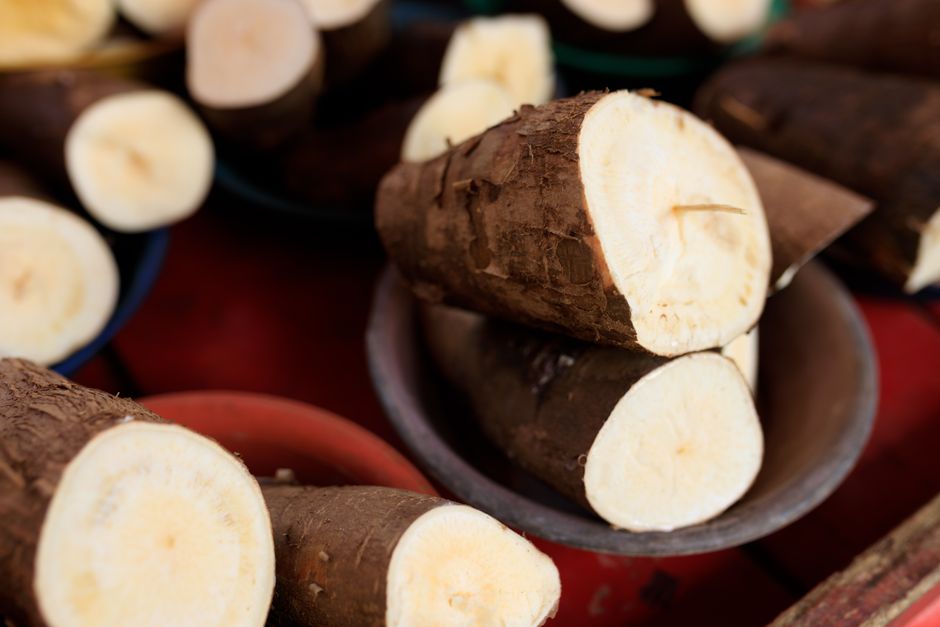
Cassava flour is made by peeling, drying, and grinding the whole root of the cassava plant, also called yuca or manioc. The whole root is used, which is why it retains more fiber and starch than refined wheat flour.
All-purpose flour is milled from wheat and contains gluten-forming proteins. When you add water and work the dough, those proteins link together into a stretchy network. That network traps gas from yeast or baking powder, which is what makes bread rise and gives cakes their crumb. Cassava flour has no gluten proteins at all, so that network never forms.
This is the central difference, and everything else follows from it. Cassava flour also absorbs noticeably more water than wheat flour, so a batter made with the same amount of liquid will come out thicker. It has a mild, slightly earthy flavor that works in both sweet and savory recipes. And it tends to brown faster in the oven because of its natural sugar content.
One clarification worth making: cassava flour is not the same as tapioca starch or tapioca flour. Tapioca is a starch extracted from the cassava root, while cassava flour is the whole ground root. They behave differently in recipes and are not interchangeable.
How To Substitute Cassava Flour For All Purpose Flour?
Use less cassava flour than the recipe calls for, add a binder, and increase the liquid. That three-part adjustment covers most situations.
A common starting ratio is 3/4 cup of cassava flour for every 1 cup of all-purpose flour. Cassava flour is denser, so measuring it the same way by volume gives you more flour than you intended. Weighing your ingredients removes the guesswork if you have a kitchen scale.
Because there is no gluten, most recipes need a binder to hold things together. Options include xanthan gum, psyllium husk powder, or ground flaxseed. A typical starting amount is about 1/4 teaspoon of xanthan gum or psyllium per cup of cassava flour, though this varies by recipe and some bakers use more. Eggs also act as a binder, which is why egg-based recipes often convert more easily than yeast breads.
Liquid is the third variable. Cassava flour soaks up more moisture than wheat flour, so batters and doughs will feel dry unless you add more. Start by adding a small amount of extra liquid, mix, and let the batter rest for a few minutes before deciding whether it needs more. The flour continues to absorb liquid as it sits.
Here is a quick reference for the main adjustments:
- Flour amount: start with about 3/4 cup cassava flour per 1 cup all-purpose flour
- Binder: about 1/4 teaspoon xanthan gum or psyllium husk per cup of cassava flour
- Liquid: add extra, then let the batter rest before adjusting again
- Leavening: keep baking powder or baking soda the same at first, then adjust if needed
- Rest time: let batters sit for several minutes so the flour can hydrate
These are starting points, not fixed rules. Cassava flour brands vary in how finely they are ground and how much moisture they absorb, so results differ from one bag to the next.
Which Recipes Work Well With Cassava Flour and Which Do Not?
Recipes that rely less on gluten structure convert most easily. Quick breads, muffins, pancakes, cookies, brownies, and many savory dishes like flatbreads and coatings tend to work well with cassava flour.
Yeast breads are the hardest to convert. A loaf of sandwich bread depends on a strong gluten network to trap gas and hold its shape as it rises. Without gluten, you need a blend of flours and binders to imitate that structure, and even then the texture is different. Most gluten-free bread recipes use a combination of flours rather than cassava alone.
Cakes fall somewhere in the middle. A simple cake with eggs and a fair amount of fat often converts reasonably well, while a light sponge cake that depends on airy gluten structure is much harder to reproduce.
Thickening sauces and gravies is a different case. Cassava flour can thicken liquids, but it tends to clump if added directly. Mixing it with a little cold water first helps. Tapioca starch is often a better choice for thickening because it is pure starch and dissolves more smoothly.
If you are new to cassava flour, start with pancakes or a simple muffin recipe. They give you a feel for how the flour behaves without the pressure of a loaf that needs to rise.
Do You Need a Binder When Using Cassava Flour?
For most baked goods, yes. Without gluten, there is nothing to hold the structure together as the product bakes and cools, so it tends to crumble.
Xanthan gum and psyllium husk are the two most common binders in gluten-free baking. Xanthan gum is a fermented sugar derivative that adds elasticity and helps trap air. Psyllium husk absorbs water and forms a gel that mimics some of gluten’s stretch. Both are widely used, though they produce slightly different textures. Some bakers prefer one over the other depending on the recipe.
Eggs are a natural binder and often do the job on their own in recipes that already call for them. Ground flaxseed mixed with water is a common egg-free alternative, though it adds its own flavor and color.
Not every recipe needs a binder. Cookies and some quick breads hold together fine without one, especially if they contain eggs or a lot of fat. For anything that needs to slice cleanly or hold its shape, a binder helps.
Common Mistakes When Swapping Cassava Flour Into Recipes
The most frequent mistake is substituting one-for-one by volume. Because cassava flour is denser, using a full cup where the recipe calls for a cup of wheat flour gives you too much flour and a dry, crumbly result.
Another common problem is not adding enough liquid. Cassava flour absorbs more water than wheat, so a batter that looks right at first can turn stiff within minutes. Letting it rest before you judge the consistency prevents this.
Some people skip the binder entirely and then wonder why their muffins fall apart. Others use too much binder, which makes baked goods gummy and rubbery. Start with a small amount and adjust from there.
Expecting an identical result is another trap. Cassava flour baked goods taste good, but they are not the same as wheat baked goods. The texture is denser and the crumb is different. Treating it as its own ingredient rather than a perfect stand-in leads to better outcomes.
Finally, flour brands vary. A finely milled cassava flour behaves differently from a coarser one. If a recipe works with one brand and fails with another, the grind may be the reason.
Is Cassava Flour Healthier Than All-Purpose Flour?
Not automatically. Cassava flour is gluten-free and contains more fiber than refined white flour, which matters for people with celiac disease or a diagnosed gluten sensitivity. For everyone else, the health difference is smaller than marketing often suggests.
Cassava flour is still a starchy flour. It is higher in carbohydrates than many people expect, and it does not provide the protein that wheat flour does. It is also lower in some nutrients that refined wheat flour is fortified with, such as certain B vitamins and iron. Anyone relying on fortified wheat flour as a nutrient source should be aware of that.
For people with celiac disease, avoiding gluten is not optional, and cassava flour is one of several gluten-free options. For people without a medical reason to avoid gluten, there is no strong evidence that cassava flour is healthier than wheat flour. It is simply a different ingredient with a different nutritional profile.
If you are managing a health condition or following a specific diet, a registered dietitian can help you decide whether cassava flour fits your needs.
Frequently Asked Questions
How much cassava flour replaces all-purpose flour?
Start with about 3/4 cup of cassava flour for every 1 cup of all-purpose flour. The exact amount depends on the recipe and the brand of flour.
Can I substitute cassava flour for all-purpose flour in bread?
Yeast bread is the hardest recipe to convert because it depends on gluten to rise and hold its shape. Most gluten-free bread recipes blend several flours and binders rather than using cassava flour alone.
Do I need xanthan gum when baking with cassava flour?
For most baked goods, a binder like xanthan gum or psyllium husk helps hold the structure together. A common starting amount is about 1/4 teaspoon per cup of cassava flour.
Is cassava flour the same as tapioca flour?
No. Cassava flour is made from the whole ground root, while tapioca flour is a starch extracted from that root. They behave differently and are not interchangeable in recipes.
