
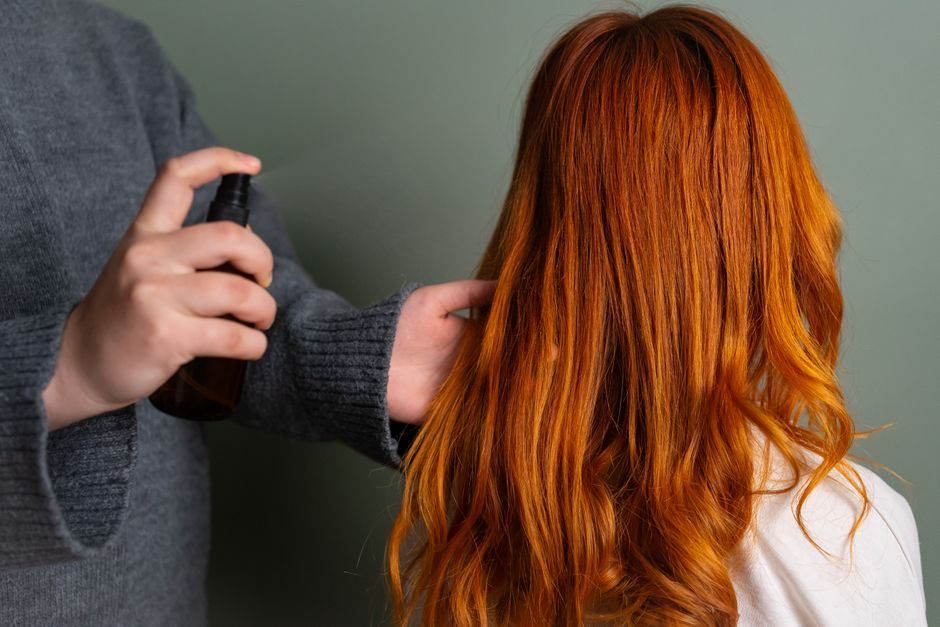
Red dye is the hardest color to remove from hair. The dye molecules are larger and they sit deeper in the hair shaft than almost any other color, which is why red fades into a stubborn pink or orange rather than disappearing. You cannot strip red out in a single wash, and no at-home method removes it completely. What works is a combination of fading methods, timing, and in many cases a professional color correction.
Why Is Red Hair Dye So Hard To Remove?
Hair has three layers. The outer layer is the cuticle, a protective shell of overlapping scales. Under that is the cortex, where color lives. Permanent dye works by lifting the cuticle open with an alkaline agent, usually ammonia, then pushing dye molecules inside the cortex. The cuticle closes back down and traps them there.
Red dye molecules are larger than blonde or brown dye molecules. That matters for two reasons. Large molecules take longer to work their way into the cortex, which is why red dye often needs a longer processing time. But once inside, they also take longer to work their way out. Shampoo and water open the cuticle only slightly, so red pigment leaks out slowly over many washes instead of all at once.
There is a second issue. Red dye is usually applied to hair that has been lightened first. Lightening removes natural pigment from the cortex, leaving the hair more porous. Porous hair absorbs dye fast and releases it slowly. The result is a color that seems to stain the hair rather than coat it.
This is also why red fades to pink or orange rather than to your natural color. As the dye breaks down and washes out, what is left is a lighter, warmer version of the original red. You are not seeing your natural color return. You are seeing the last traces of the dye.
How To Strip Red Color Out Of Hair: What Actually Works
No method removes red completely at home. The realistic goal is significant fading, not full removal. If you need the red gone entirely, plan on a salon visit. Here is what each option does and does not do.
Color removers are sold as either “color oops” style reducers or bleach-based strippers. Reducers shrink dye molecules so they can be rinsed out. They work best on dye that is fresh and on hair that has not been heavily lightened. They do not work well on old, oxidized red. Bleach-based strippers do remove pigment, but they also damage the hair and often leave a yellow or orange tone behind that still needs toning.
Clarifying shampoo is the gentlest option. It strips surface oils and slightly opens the cuticle, letting a small amount of dye escape with each wash. Expect gradual fading over weeks, not days. It will not remove red on its own.
Vitamin C treatments are popular online. The idea is that ascorbic acid opens the cuticle and helps lift dye. Some people report visible fading. The evidence is anecdotal. There are no controlled studies showing vitamin C removes hair dye, and the acidic mixture can dry out or irritate the scalp.
Dish soap and dandruff shampoo are sometimes recommended for the same reason. Both are harsh detergents. They may speed fading slightly, but they strip natural oils and can leave hair brittle. Used repeatedly, they cause more harm than the fading is worth.
Salon color correction is the only reliable route to full removal. A colorist can assess how much pigment is left, how damaged the hair is, and whether lightening is safe. This usually takes more than one appointment. Going from red to blonde in one session is often not possible without breaking the hair.
What Should You Avoid When Trying To Remove Red Dye?
The biggest mistake is bleaching over red at home. Bleach does not remove red pigment cleanly. It breaks the dye down into smaller pieces that often read as orange or yellow. You end up with a lighter, warmer color that is harder to correct than the red you started with. Bleach also weakens the hair, and hair that has already been colored is more likely to break or feel gummy afterward.
Do not layer a new color over fading red either. If you dye brown over red, the red often shows through within a few washes because the underlying pigment is still there. Colorists call this “bleed through.” It is one of the most common reasons people end up back in the salon.
Skip the boxed “color remover” kits if your hair has been bleached or lightened. These products are designed for virgin hair with a single layer of dye. On lightened hair, they can push the color into a weird in-between shade that is harder to fix.
Do not apply heat tools on high settings while you are trying to fade red. Heat opens the cuticle, which sounds helpful, but it also causes damage that makes the hair more porous. More porous hair holds onto dye longer.
And do not assume a single treatment will do it. Red removal is a process. Most people need several rounds of fading plus a salon appointment, spread over weeks.





How Long Does It Take To Fade Red Hair Dye?
There is no fixed timeline. It depends on how porous your hair is, how many times it has been colored, how often you wash it, and what products you use. Hair that was lightened before dyeing holds red much longer than hair that was dyed dark.
Some people see noticeable fading in two to four weeks with frequent clarifying washes. Others still see pink or orange tones after several months. The color often lingers longest in the mid-lengths and ends, where hair is older and more porous.
If you are trying to fade red before a big event, give yourself at least a month. Rushing it usually means damage or an uneven result.
Can You Speed Up Red Fading Without Damaging Your Hair?
You can speed fading somewhat without wrecking your hair. The key is to be consistent and patient rather than aggressive.
- Wash more often than usual with a clarifying shampoo. Every wash opens the cuticle slightly and lets a little dye out.
- Use warm water, not hot. Hot water opens the cuticle more, which helps fading, but it also dries the scalp and can fade the color unevenly.
- Skip conditioner on the days you are actively fading. Conditioner seals the cuticle, which slows dye loss.
- Use a weekly deep conditioner on other days to limit damage from frequent washing.
- Get regular trims. The ends hold the most pigment and are usually the last part to fade.
None of these methods removes red on their own. They work together to move the process along faster than waiting it out.
When Should You See A Professional?
See a colorist if you want the red gone completely, if your hair is already damaged or breaking, or if you have tried home methods and the color is uneven. A professional can assess whether your hair can handle lightening and can build a plan that may take more than one visit.
Color correction is not cheap and it is not fast. But it is the only reliable way to get from red to a completely different shade without causing serious damage. If your goal is blonde, expect the process to take multiple sessions over weeks or months. Trying to do it in one sitting at home is how hair gets broken off at the root.
Frequently Asked Questions
Can I remove red hair dye at home completely?
No, at-home methods fade red but rarely remove it completely. Full removal usually requires a professional color correction.
Does dish soap strip red hair dye?
It can speed fading slightly because it is a harsh detergent, but it also strips natural oils and can leave hair dry and brittle. It is not a reliable method on its own.
How many washes does it take to fade red hair dye?
There is no set number. Some people see noticeable fading in a few weeks of frequent washing, while others still see pink or orange tones after several months.
Can I dye over red hair without bleaching it first?
You can, but the red often shows through within a few washes because the underlying pigment is still in the hair. This is called bleed-through and is a common reason people end up needing a salon correction.
