
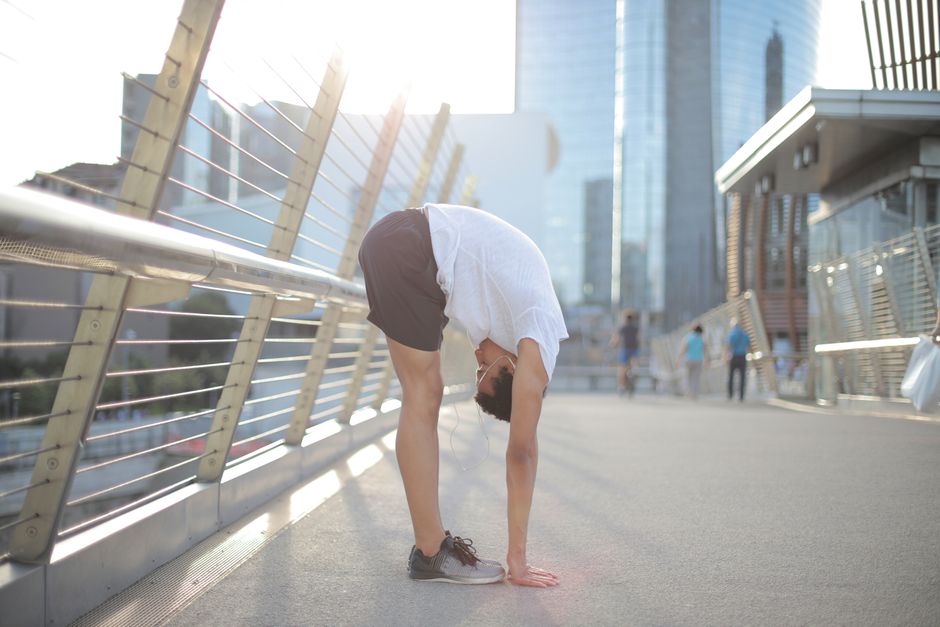
You cannot stretch an ACL. The anterior cruciate ligament is a short, thick band of connective tissue that connects the thigh bone to the shin bone, and unlike a muscle, it has very little elastic give. Trying to lengthen it with force does not make it more flexible. It makes it more likely to tear.
If your goal is flexibility, mobility, or injury prevention around the knee, the right approach is to stretch and strengthen the muscles that surround the joint — the hamstrings, quadriceps, calves, and hip muscles — while leaving the ligament itself alone. That is what actually protects the knee and improves how it moves.
What Is the ACL and Why Can’t You Stretch It?
The ACL is one of the four main ligaments inside the knee. It runs diagonally through the joint and keeps the shin bone from sliding too far forward, and it helps control rotation.
Ligaments are made mostly of collagen, a tough protein built for stability rather than stretch. Their job is to hold bones together and limit movement in directions the joint is not designed to go. A muscle is elastic and meant to lengthen and shorten. A ligament is the opposite — it is meant to stay firm.
When a ligament is stretched beyond its normal range, the collagen fibers begin to tear. Mild stretching is a sprain. More force causes a partial or complete tear. So the phrase “stretching your ACL” describes something that is not really possible in a safe way. The tissue does not respond to stretching the way a hamstring does.
This is the part many people miss: a flexible ligament is not a healthy ligament. Knee stability depends on the ACL staying taut.
Why Does the “Stretch Your ACL” Idea Keep Spreading?
Most of the confusion comes from mixing up different structures in the knee.
People hear about “tight knees” or “stiff knees” and assume the ligament is the problem. In most cases, the tightness is coming from the muscles and connective tissue around the joint, not the ACL itself. The hamstrings, the quadriceps, the calf muscles, and the iliotibial band all affect how freely the knee moves.
There is also a common mix-up with the IT band. The iliotibial band is a thick strip of tissue that runs down the outside of the thigh. Some people describe trying to “stretch” it, and the same basic problem applies — it is not very elastic, and aggressive stretching does not lengthen it much. What helps is addressing the muscles that pull on it.
Another source of confusion is general fitness advice that treats every structure in the body as something to stretch. That works for muscles. It does not work for ligaments.
What Should You Do Instead to Improve Knee Flexibility?
Stretch and strengthen the muscles that control the knee. That is where real, safe improvement comes from.
Here are the areas worth focusing on:
- Hamstrings. These run down the back of the thigh. Tight hamstrings can limit how far the knee straightens and can change how the joint moves during activity.
- Quadriceps. These are the muscles on the front of the thigh. They support the knee and help absorb force.
- Calves. The calf muscles affect how the ankle and knee work together. Tight calves can change your walking and running pattern.
- Hips and glutes. Weak or tight hip muscles change the angle of the whole leg and put extra stress on the knee.
Static stretching — holding a stretch for a period of time — can improve muscle flexibility. Dynamic warm-ups, where you move the joint through its range before activity, prepare the muscles and joint for exercise. Both have a place.
Strength work matters just as much as stretching, and often more. Strong muscles around the knee act as a support system. They help control the joint and reduce the load that lands on the ligaments.





How Do You Actually Protect the ACL?
You protect the ACL by training movement patterns, not by stretching the ligament. Most ACL injuries do not come from a direct hit. They come from the knee collapsing or rotating in an awkward way, often during landing, cutting, or stopping suddenly.
Programs built around proper landing mechanics, balance, and controlled change of direction have been studied for years in athletes. Research consistently shows that these neuromuscular training programs can reduce the risk of knee and ACL injuries, especially in sports with lots of jumping and pivoting. The exact numbers vary by sport, age, and program, so it is hard to put one figure on it.
What these programs generally include:
- Learning to land softly with the knee tracking over the toes, not caving inward
- Balance and single-leg stability work
- Strengthening the hamstrings, glutes, and core
- Practicing cutting and pivoting with good body control
This kind of training is widely used in organized sports, and the general direction of the evidence supports it. It is not a guarantee against injury, but it is one of the better-supported approaches available.
When Should You See a Doctor About Knee Tightness or Pain?
See a doctor if you have knee pain that does not improve, swelling, a feeling that the knee is giving way, or a specific injury where you felt or heard a pop.
Those signs can point to a ligament injury rather than simple muscle tightness. A torn ACL often causes rapid swelling, instability, and a sense that the knee cannot be trusted. Only a proper exam and, when needed, imaging can confirm what is going on.
If your knee simply feels stiff without pain, swelling, or instability, muscle-focused stretching and strengthening are a reasonable place to start. If it does not improve, or if anything changes, get it checked.
One thing to be clear about: no stretch, supplement, or gadget has been shown to lengthen the ACL. Be cautious of anything marketed that way.
Does Stretching Ever Help the Knee at All?
Yes — just not by stretching the ligament. Stretching the surrounding muscles can improve your range of motion, reduce feelings of tightness, and help you move more comfortably.
The key is knowing which structure you are working on. When you stretch your hamstrings, you are lengthening muscle tissue that is designed to lengthen. When you try to stretch your ACL, you are pulling on tissue that is designed to stay firm. One is helpful. The other is risky.
If you are recovering from a knee injury or surgery, follow the guidance of your doctor or physical therapist. Rehabilitation after an ACL injury is a structured process, and the timing and type of movement matter. General advice from an article cannot replace that.
Frequently Asked Questions
Can you stretch your ACL?
No. The ACL is a ligament made of collagen, and it is built for stability rather than stretch. Trying to lengthen it can cause a sprain or tear instead of improving flexibility.
What should I stretch instead for knee flexibility?
Focus on the muscles around the knee — the hamstrings, quadriceps, calves, and hip muscles. These are elastic tissues that respond to stretching and strengthening, and they affect how freely your knee moves.
How do you prevent an ACL injury?
Neuromuscular training that teaches proper landing, balance, and controlled cutting has been shown to reduce knee and ACL injury risk, especially in athletes. Strength work for the hamstrings, glutes, and core is a core part of these programs.
When should I see a doctor for knee tightness?
See a doctor if you have pain, swelling, a feeling that the knee gives way, or an injury where you felt a pop. These signs can point to a ligament injury rather than simple muscle tightness.
